Diagnosis and Development Research
Transforming rare disease outcomes in children with earlier, more precise insights through multi-omics
Our interdisciplinary team in the Diagnosis and Development research group at MCRI, brings together experts in genetics and genomics, including laboratory scientists, genetic counsellors, psychologists, clinical scientists, postgraduate researchers, statisticians, and bioinformaticians.
Our emphasis is on the research and development of unique technologies to improve services provided by Victorian Clinical Genetic Services (VCGS), a wholly-owned subsidiary of Murdoch Children's Research Institute.
Our research goal
Our goal is to enable earlier diagnoses and more precise, personalised treatments for inherited rare diseases.
Cutting-edge technologies
We use advanced multi-omics technologies and cohort studies to uncover new insights that improve the lives of children and families affected by inherited rare diseases.
These include conditions associated with intellectual disability, autism, life-threatening obesity, seizures.
We use multi-omics to study biological data such as DNA, RNA, proteins, and metabolites; to provide a more complete understanding of rare diseases and enable earlier, more precise diagnoses and treatments.
Our research focus
Our research program focuses on three key areas, each targeting specific rare diseases. These include:
- Fragile X syndrome
- Prader-Willi syndrome (PWS)
- Angelman syndrome
- Dup15q syndrome
- Turner syndrome
- Sex chromosome aneuploidies such as XXY, XXXY, and XXYY
Key research
Epi-genomic newborn screening (EpiGNs)
Examines feasibility of using a new approach (developed by our group) to screen for these conditions on 100,000 Victorian infants in order to enable diagnosis from birth. This is in contrast to the current standard of care diagnostic testing, where the diagnosis is typically made between 3 and 5 years of age.
More about our Epi-genomic newborn screening program
Watch more about EpiGNs
Rare disease cohort studies
Involves longitudinal rare disease cohort studies that aim to improve our understanding of molecular and neuro-developmental trajectories associated with these conditions.
Australian Chromosome 15 imprinting Disorder Biobank
Aims to identify novel points of prognostic utility and intervention through multi-omics studies in the brain and peripheral tissues and in silico drug repurposing studies.
More about the Australian Chromosome 15 Imprinting Disorder Biobank
Contact us
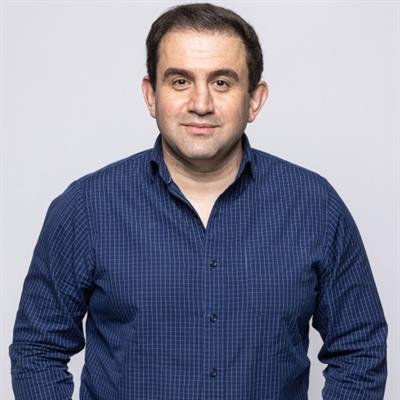
Associate Professor David Godler
Group Leader / Principal Research Fellow
Email:
show email address
Group Leaders
Group Members

Our projects
Australian Biobank for Chromosome 15 Imprinting Disorders
We have established and operate the first biobank in Australia aimed at improving research and treatments for rare genetic diseases caused by changes to genes on chromosome 15, including Prader-Willi syndrome (PWS) and Angelman syndrome (AS).
Read more...
Biological predictors of disease severity in Prader-Willi Syndrome (PWS)
This project addresses a pressing need for people with Prader-Willi syndrome (PWS), their families, and clinicians. We aim to define biological predictors of disease severity in PWS, and to enable evidence-based choices of targeted treatments used for other conditions.
Read more...
FREE FX study
Developing new tests for X-linked and chromosome 15 imprinting disorders. To improve outcomes for children and their families through earlier diagnosis.
The aim of this research is to study the methylation patterns of specific genes in individuals who have a genetic condition.We are interested in looking at methylation changes that may be unique to that condition to see if we can improve diagnostic testing.
Read more...Epi-genomic newborn screening (EpiGNs) program
Examines feasibility of using a new approach (developed by our group) to screen for these conditions on 100,000 Victorian infants in order to enable diagnosis from birth. This is in contrast to the current standard of care diagnostic testing, where the diagnosis is typically made between 3 and 5 years of age.
Funding
Thank you to our funders for their support.
- National Health and Medical Research Council (NHMRC)
- Genomics Health Futures Mission
- Medical Research Future Fund (MRFF)
- Foundation for Prader Willi Research (USA)
- Angelman Syndrome Foundation (USA)
- Foundation for Angelman Syndrome Therapeutics (AUS)
- Prader-Willi Research Foundation of Australia
- Prader-Willi Association of Australia
- Perpetual IMPACT program
- Victorian Medical Research Acceleration Fund
- Financial Markets Foundation for Children, Australia
- Pierce Armstrong Foundation
- The Royal Children’s Hospital Foundation
- Marian & EH Flank Trust
- Thrasher Research Fund
Collaborations
We partner with leading institutions worldwide, including:
National
- Genomic Screening Consortium for Australian Newborns (GenSCAN)
- The University of Melbourne
- The Florey Institute
- The Royal Children’s Hospital (RC)
- GenV
- Australian Genomics
- Genetic Support Network of Victoria
- Fragile X Association of Australia
- Monash Children’s Hospital
- Mercy Hospital for Women
- University of Adelaide
- University of Technology Sydney
- Hunter Genetics
- Monash University
- Rare Voices Australia
- Foundation for Angelman Syndrome Therapeutics (AUS)
- Prader-Willi Research Foundation Australia
- Lifebit
- Foundation for Prader-Willi Research (USA)
International
- UC Davis
- RTI International
- University of Kansas Medical Center
- Etrecht (Netherlands)
- Boston (Philadelphia, USA)
- INTA - Instituto de Nutrición y Tecnología de los Alimentos, Chile
- Greenwood Genetic Centre, USA
Featured publications
Godler DE, Singh D, Butler MG. (2025). Genetics of Prader-Willi and Angelman syndromes: 2024 update. Curr Opin Psychiatry, 38(2): 95-100. doi: 10.1097/YCO.0000000000000981. Epub 2024 Dec 18. PMID: 39804213.
Alshawsh, M., Wake, M., Gecz, J., Corbett, M., Saffery, R., Pitt, J., Greaves, R., Williams, K., Field, M., Cheong, J., Bui, M., Arora, S., Sadedin, S., Lunke, S., Wall, M., Amor, D. J., & Godler, D. E. (2024). Epigenomic newborn screening for conditions with intellectual disability and autistic features in Australian newborns. Epigenomics, 16(18): 1203–1214.
Baker EK, Merton CF, Tan WH, Dudding-Byth T, Godler DE, Sadhwani A (2022) Methylation analysis and developmental profile of two individuals with Angelman syndrome due to mosaic imprinting defects. European Journal of Medical Genetics 65(4):104456.
Baker EK, Arora S, Cross M, Simons C, O'Brien J, Date P, Goodall S, Amor D, Slee J, Godler DE (2021) The Cost of Raising Individuals with Fragile X or a Chromosome 15 Imprinting Disorder in Australia. Journal of Autism and developmental Disorders 53(4):1682-1692.
Godler DE, Ling L, Gamage D, Baker EK, Bui M, Field MJ, Rogers C, Butler MG, Murgia A, Leonardi E, Polli R, Schwartz CE, Skinner CD, Alliende AM, Santa Maria L, Pitt J, Greaves R, Francis D, Oertel R, Wang M, Simons C, Amor DJ. (2021) Feasibility of Screening for Chromosome 15 Imprinting Disorders in 16,579 Newborns Utilizing a Novel Genomic Workflow. JAMA Netw Open. 5(1):e2141911.
Godler DE, Amor DJ. (2019). DNA methylation analysis for screening and diagnostic testing in neurodevelopmental disorders. Essays Biochem, 63(6): 785-795. doi: 10.1042/EBC20190056. PMID: 31696914.
Baker EK, Arpone M, Aliaga SM. et al. (2019). Incomplete silencing of full mutation alleles in males with fragile X syndrome is associated with autistic features. Molecular Autism 10, 21
Kraan CM, Bui QM, Amor DJ, et al. Godler DE. (2018) FMR1 allele distribution in 35,000 males and females: a comparison of developmental delay and general population cohorts. Genetics in Medicine. 20(12):1627-1634.
Baker EK, Godler DE, Bui M, Hickerton C, Rogers C, Field M, Amor DJ, Bretherton L. (2018) Exploring Autism Symptoms in an Australian Cohort of Patients with Prader-Willi and Angelman Syndromes. Journal of Neurodevelopmental Disorders. 10(1):24
Godler DE, Inaba Y, Schwartz CE, Bui QM, Shi EZ, Li X, Herlihy AS, Skinner C, Hagerman RJ, Francis D, Amor DJ, Metcalfe SA, Hopper JL, Slater HR (2015). Detection of Skewed X-chromosome Inactivation in Fragile X Syndrome and X chromosome Aneuploidy using Quantitative Melt Analysis. Expert Reviews in Molecular Medicine. 17:e13