
Tropical Diseases
Improving the health outcomes for children and communities affected by tropical diseases through innovative research, global partnerships, and equitable solutions.
The Tropical Diseases group at MCRI is dedicated to improving the health and wellbeing of children and adolescents affected by infectious diseases globally.
Our group is a multi-disciplinary research team with numerous active projects focusing on understanding and preventing infectious diseases across three main areas:
- Prevention of Strep A infection, including vaccine research and development
- Control of scabies and other neglected tropical diseases
- Prevention and control of rheumatic heart disease .
These illnesses can cause severe acute illness, long-term disability, impaired development, and death. Poverty, limited access to healthcare, and climate change further exacerbate these challenges, leaving many young people vulnerable to preventable and treatable conditions.
Our group views meaningful and positive collaboration as central to conducting impactful projects and we are involved in several partnerships, including:
- As a World Health Organization (WHO) Collaborating Centre for Scabies Control
- Holding leadership positions in the International Alliance for the Control of Scabies (IACS)
- The Lancefield Society for Streptococcal and Streptococci disease and the Strep A Vaccine Global Consortium (SAVAC).
By generating high-quality evidence and strengthening local research and clinical capacity, our research helps inform better care, vaccines, and public health interventions for children.
Group Leaders

Team Leaders




Group Members
























Our projects
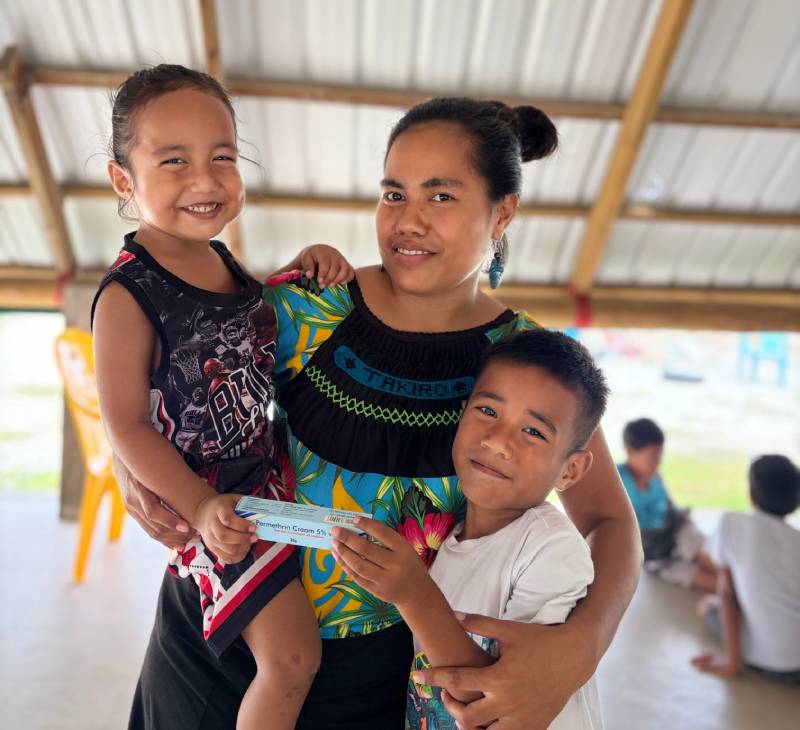
World Scabies Program
The World Scabies Program is working with governments and partners to eliminate scabies as a public health problem.
This program aims to put scabies control on national and global agendas, implement community wide treatment strategies, and strengthen health systems to monitor and manage scabies.
Read more...Strep A - Vaccine challenges
The MCRI Vaccine Challenges program uses innovative approaches, including controlled human infection models (CHIM), to advance prevention of serious infectious diseases affecting children, starting with Streptococcus pyogenes (Strep A).
We have developed the world’s only Strep A human challenge model. Working with global partners, we study how the immune system responds to infection to support vaccine development and reduce diseases such as strep throat, invasive infections, and rheumatic heart disease.
By analysing blood, saliva, and throat samples, we examine immune responses in detail, from antibodies to gene activity to better understand protection.
Accelerating vaccine development
Our model enables real-world testing of Strep A vaccines in development. We collaborate with major developers to assess how well these vaccines prevent infection.
We are also improving lab tools to measure immune responses, helping speed up vaccine development and delivery.
Our Sore Throat and Microbe Prevention study (STAMPS) has provided insights into how often children are exposed to Strep A, supporting future vaccine trials. Research using donated tonsil tissue is also helping us better understand immunity.
Beyond vaccines
As there is currently no vaccine for Strep A, we are also focused on prevention and treatment. Our research explores:
- Improved use of antibiotics and other treatments for severe infections
- Preventing infection in close contacts
- Long-term care to protect heart health after rheumatic fever or rheumatic heart disease
Lymphatic Filariasis (LF)
Lymphatic filariasis (LF) is a mosquito-borne parasitic disease that can cause long-term disability, including lymphoedema and elephantiasis. It continues to affect millions worldwide.
Global efforts
The World Health Organization aims to eliminate LF through mass drug administration (MDA). While progress has been strong globally, challenges remain in some regions, including the Pacific.
Our research
We identify effective combinations of anti-parasitic treatments that are safe, accessible, and acceptable to communities. We work with local partners to improve delivery and uptake.
Broader impact
Our research also examines how LF programs can reduce other diseases, such as scabies and parasitic worms, improving overall community health.
Funding
Thanks to our funders and supporters.
- National Health and Medical Research Council (NHMRC)
- Macquarie Group Foundation
- Medical Research Futures Fund
- World Health Organisation
- Viertel Charitable Foundation
- The Scobie and Claire Mackinnon Trust
- CureKids New Zealand
Collaborations
We partner with leading institutions worldwide, including:
Molecular and clinical epidemiology of Strep A disease
- Lancefield Society
- SAEFVIC (Surveillance of Adverse Events Following Vaccination In the Community)
- Wellcome Institute
- Fiji Ministry of Health
Strep A vaccine advancement
- Telethon Kids Institute
- The University of Melbourne
- International Vaccine Institute
- University of Auckland
Scabies control and elimination
- Fiji Ministry of Health and Medical Services
- Solomon Islands Ministry of Health Medical Services
- Kirby Institute
- International Alliance for the Control of Scabies
- Live and Learn Environmental Education
Rheumatic heart disease control and prevention
- CureKids New Zealand
- Fiji Ministry of Health and Medical Services
- Cincinnati Children’s
- Makere University - Kampala
Others
- Griffith University
- University of Melbourne Centre for International Child Health (CICH)
Featured publications
Osowicki J, Frost HR, Azzopardi KI, Whitcombe AL, McGregor R, Carlton LH, Baker C, Fabri L, Pandey M, Good MF, Carapetis JR, Walker MJ, Smeesters PR, Licciardi PV, Moreland NJ, Hill DL, Steer AC. Streptococcus pyogenes pharyngitis elicits diverse antibody responses to key vaccine antigens influenced by the imprint of past infections. Nat Commun. 2024 Dec 3;15(1):10506. doi: 10.1038/s41467-024-54665-5. PMID: 39627204; PMCID: PMC11614873
Anderson J, Imran S, Frost HR, Azzopardi KI, Jalali S, Novakovic B, Osowicki J, Steer AC, Licciardi PV, Pellicci DG. Immune signature of acute pharyngitis in a Streptococcus pyogenes human challenge trial. Nat Commun. 2022 Feb 9;13(1):769. doi: 10.1038/s41467-022-28335-3. PMID: 35140232; PMCID: PMC8828729.
Beaton AZ, Okello E, Rwebembera J, Grobler A, Engelman D, Alepere J, Canales L, Carapetis JR, DeWyer A,Lwabi P,Mirabel M, Mocumbi AO, Murali M, Nakitto M, Ndagire E, Nunes MCP, Otim Omara I, Sarnacki R, Scheel A, Wilson N, Zimmerman M, Zühlke L, Karthikeyan G, Sable CA, STEER AC. Secondary Antibiotic Prophylaxis for Latent RheumaticHeart Disease. NEW ENGLAND JOURNAL OF MEDICINE 2022;386:230-240
Engelman D, Cantey PT, Marks M, Solomon AW, Chang AY, Chosidow O, Enbiale W, Engels D, Hay RJ, Hendrickx D,Hotez PJ, Kaldor JM, Kama M, Mackenzie CD, McCarthy JS, Martin DL, Mengitsu B, Maurer T, Negussu N, Romani L, Sokana O, Whitfeld MJ, Fuller LC, SteerAC. The public health control of scabies: priorities for research and action.The Lancet 2019;394:81-92
Osowicki J, Azzopardi KI, Fabri L, Frost HR, Rivera-Hernandez T, Neeland MR, Whitcombe AL, Grobler A, Gutman SJ, Baker C, Wong JMF, Lickliter JD, Waddington CS, Pandey M, Schuster T, Cheng AC, Pollard AJ, McCarthy JS, GoodMF, Dale JB, Batzloff M, Moreland NJ, Walker MJ, Carapetis JR, Smeesters PR, Steer AC. A controlled human infection model of Streptococcus pyogenes pharyngitis (CHIVAS-M75): an observational, dose-finding study. The Lancet Microbe 2021;2:291-299
Smeesters PR, de Crombrugghe G, Tsoi SK, Leclercq C, Baker C, Osowicki J, Verhoeven C, Botteaux A,Steer AC. Global Streptococcus pyogenes strain diversity, disease associations, and implications for vaccine development. The Lancet Microbe. 2024;5:e181-193
Thean LJ, Romani L, Engelman D, Wand H, Jenney A, Mani J, Paka J, Cua T, Taole S, Silai M, Ashwini K, Sahukhan A, Kama M, Tuicakau M, Kado J, Parnaby M, Carvalho N, Whitfeld M, Kaldor J, STEER AC. Prevention of bacterialcomplications of scabies using mass drug administration: A population-based, before-after trial in Fiji, 2018-2020. The Lancet Regional Health Western Pacific 2022;22:100433
Abo YN, Oliver J, McMinn A, Osowicki J, Baker C, Clark JE, Blyth CC, Francis JR, Carr J, Smeesters PR, Crawford NW, Steer AC. IIncrease in invasive group A streptococcal disease among Australian children coinciding with northern hemisphere surges. The Lancet Regional Health Western Pacific 2023;41:100873
Susanna J Lake, John M Kaldor, Myra Hardy, Daniel Engelman, Andrew C Steer, Lucia Romani, Mass Drug Administration for the Control of Scabies: A Systematic Review and Meta-analysis, Clinical Infectious Diseases, Volume 75, Issue 6, 15 September 2022, Pages 959–967
Andersson S, Parnaby M, Lake S, Zinihite J, Bechu V, Kaurasi R, et al. (2026) National control programs for scabies: Experiences from Fiji and Solomon Islands. PLoS Negl Trop Dis 20(2): e0013874.
Hardy M, Samuela J, Kama M, Tuicakau M, Romani L, Whitfeld MJ, King CL, Weil GJ, Grobler AC, Robinson LJ, Kaldor JM, Steer AC. Individual Efficacy and Community Impact of Ivermectin, Diethylcarbamazine, and Albendazole Mass Drug Administration for Lymphatic Filariasis Control in Fiji: A Cluster Randomized Trial. Clin Infect Dis. 2021 Sep 15;73(6):994-1002. doi: 10.1093/cid/ciab202
Hardy M, Samuela J, Kama M, Tuicakau M, Romani L, Whitfeld MJ, King CL, Weil GJ, Schuster T, Grobler AC, Engelman D, Robinson LJ, Kaldor JM, Steer AC. Community control strategies for scabies: A cluster randomised noninferiority trial. PLoS Med. 2021 Nov 10;18(11):e1003849. doi: 10.1371/journal.pmed.1003849. PMID: 34758017; PMCID: PMC8612541.
Hardy M, Engelman D. Evidence based choices for first line scabies treatment. BMJ. 2026 Mar 2;392:s380. doi: 10.1136/bmj.s380. PMID: 41771639.
Abo YN, Oliver J, McMinn A, Osowicki J, Clark JE, Blyth CC, Francis JR, Britton PN, Carr JP, Smeesters PR, Crawford NW, Steer AC. Increased burden of invasive group A streptococcal disease among Australian children, 2023-2024: a prospective cohort study. Lancet Reg Health West Pac. 2026 Apr 9;69:101850. doi: 10.1016/j.lanwpc.2026.101850. PMID: 42004581; PMCID: PMC13091357.