Heart Disease research
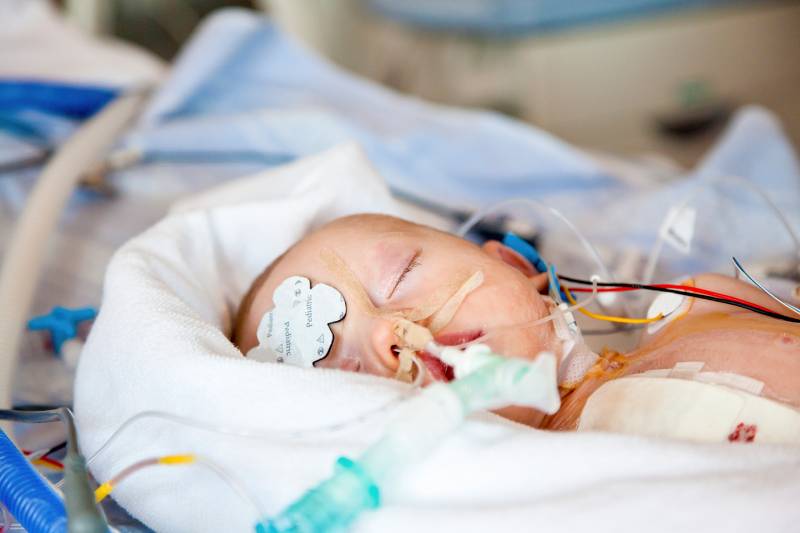
Our vision is to develop new treatments for children with cardiotoxic heart damage and cardiomyopathies.
The Heart Disease group aims to develop new therapies for children with cardiotoxic heart damage and cardiomyopathies using stem cell technologies.
Our laboratory utilises pluripotent stem cells to create human models of disease as a platform for therapeutic development.
Our research pipeline spans the full spectrum from the clinic to the single cell, taking full advantage of the unique capacity of the multidisciplinary team at the Melbourne Children’s campus.
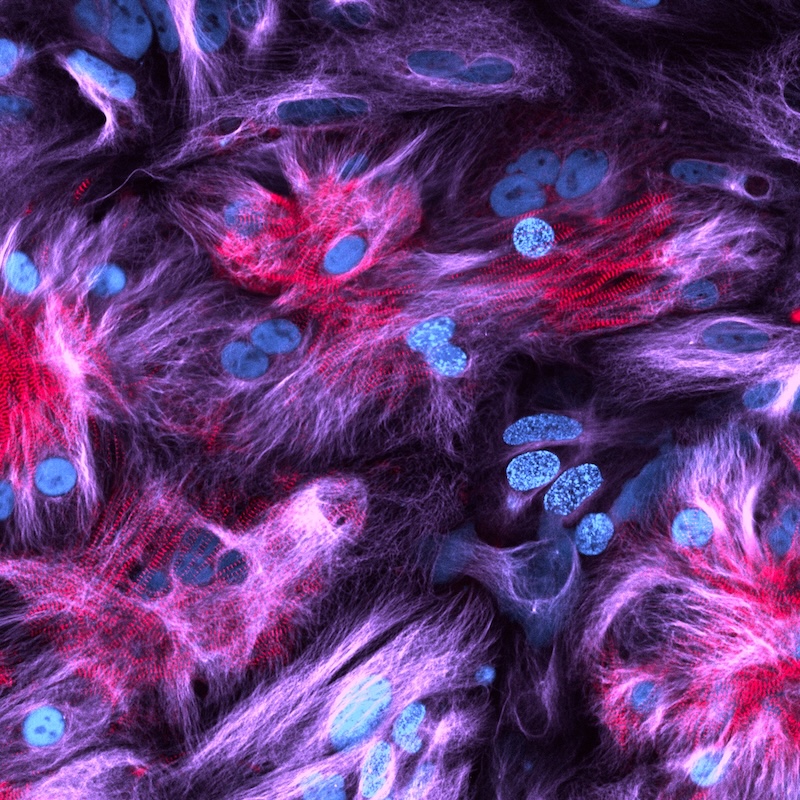
The Team are generating heart organoids from patient stem cells, which can be used to investigate genetic causes of childhood heart disease in patients, as well as to screen for drugs that damage or regenerate heart tissue.
More information
- Visit our Heart Regeneration page
- Learn more about our Melbourne Children’s collaborations at the Heart Flagship
- Visit our A-Z Child and Adolescent Health section for more information about Childhood Heart Disease
- Our group works closely with the Australian Cardio-Oncology Registry (ACOR)
- Learn more about our Stem Cell Medicine Strategic Initiative
- Our team collaborates with Novo Nordisk Foundation Center for Stem Cell Medicine (reNEW) on several core projects
Contact us
For more information on Heart Disease research, please contact us.
Adam Piers, Program Manager
Email:
show email address
Group Leaders

Team Leaders



Group Members




Our projects

Australian Cardio-Oncology Registry (ACOR)
Promoting cardioprotection in stem cell models of cardiotoxic heart damage from cancer patients. ACOR is a world's first paediatric and young adult prospective cardio-oncology registry designed to capture the clinical, epidemiological and pharmaceutical data from every Australian child and young adult that receives cardiac toxic therapies (chemotherapy, radiotherapy, molecular and immunotherapy).
Read more...Identifying new therapeutic avenues for cardiomyopathies
Our disease modelling and drug screening pipeline focuses on identifying novel compounds to treat children with cardiotoxic heart damage and cardiomyopathies. The goal of this research is to provide patients with new therapies that treat the cause of their heart disease and protects them from heart failure.
Funding
- National Health and Medical Research Council (NHMRC)
- Australian Research Council (ARC)
- Medical Research Future Fund (MRFF)
- RCH Foundation
- HeartKids
- Heart Foundation
- reNEW
Collaborations
- Ben Parker, The University of Melbourne
- James Hudson, QIMR Berghofer Medical Research Institute
- Paul Gregorevic, The University of Melbourne
- Michael Cheung, The Royal Children's Hospital (RCH)
- Robert Weintraub, RCH
- Christian Brizard, RCH
Featured publications
McNamara JW, Parker BL, Voges HK, Mehdiabadi NR, Bolk F, Ahmad F, Chung JD, Charitakis N, Molendijk J, Zech ATL, Lal S, Ramialison M, Karavendzas K, Pointer HL, Syrris P, Lopes LR, Elliott PM, Lynch GS, Mills RJ, Hudson JE, Watt KI, Porrello ER, Elliott DA. Alpha kinase 3 signaling at the M-band maintains sarcomere integrity and proteostasis in striated muscle. Nat Cardiovasc Res. 2023 Feb;2(2):159-173. doi: 10.1038/s44161-023-00219-9. Epub 2023 Feb 15. PMID: 39196058; PMCID: PMC11358020.
Anderson DJ, Kaplan DI, Bell KM, Koutsis K, Haynes JM, Mills RJ, Phelan DG, Qian EL, Leitoguinho AR, Arasaratnam D, Labonne T, Ng ES, Davis RP, Casini S, Passier R, Hudson JE, Porrello ER, Costa MW, Rafii A, Curl CL, Delbridge LM, Harvey RP, Oshlack A, Cheung MM, Mummery CL, Petrou S, Elefanty AG, Stanley EG, Elliott DA. NKX2-5 regulates human cardiomyogenesis via a HEY2 dependent transcriptional network. Nat Commun. 2018 Apr 10;9(1):1373. doi: 10.1038/s41467-018-03714-x. PMID: 29636455; PMCID: PMC5893543.
Phelan DG, Anderson DJ, Howden SE, Wong RC, Hickey PF, Pope K, Wilson GR, Pébay A, Davis AM, Petrou S, Elefanty AG, Stanley EG, James PA, Macciocca I, Bahlo M, Cheung MM, Amor DJ, Elliott DA, Lockhart PJ. ALPK3-deficient cardiomyocytes generated from patient-derived induced pluripotent stem cells and mutant human embryonic stem cells display abnormal calcium handling and establish that ALPK3 deficiency underlies familial cardiomyopathy. Eur Heart J. 2016 Sep 1;37(33):2586-90. doi: 10.1093/eurheartj/ehw160. Epub 2016 Apr 22. PMID: 27106955.
Mills RJ, Titmarsh DM, Koenig X, Parker BL, Ryall JG, Quaife-Ryan GA, Voges HK, Hodson MP, Ferguson C, Drowley L, Plowright AT, Needham EJ, Wang QD, Gregorevic P, Xin M, Thomas WG, Parton RG, Nielsen LK, Launikonis BS, James DE, Elliott DA, Porrello ER, Hudson JE. Functional screening in human cardiac organoids reveals a metabolic mechanism for cardiomyocyte cell cycle arrest. Proc Natl Acad Sci U S A. 2017 Oct 3;114(40):E8372-E8381. doi: 10.1073/pnas.1707316114. Epub 2017 Sep 15. PMID: 28916735; PMCID: PMC5635889.
McOwan TN, Craig LA, Tripdayonis A, Karavendzas K, Cheung MM, Porrello ER, Conyers R, Elliott DA. Evaluating anthracycline cardiotoxicity associated single nucleotide polymorphisms in a paediatric cohort with early onset cardiomyopathy. Cardiooncology. 2020 May 21;6:5. doi: 10.1186/s40959-020-00060-0. PMID: 32477593; PMCID: PMC7243302.
Heart news

From checkout to children’s heart research

MCRI’s 40th Anniversary Gala celebrates four decades of discovery

Multi-pronged plan to address childhood obesity crisis

Accelerating discoveries into genetic and childhood heart diseases
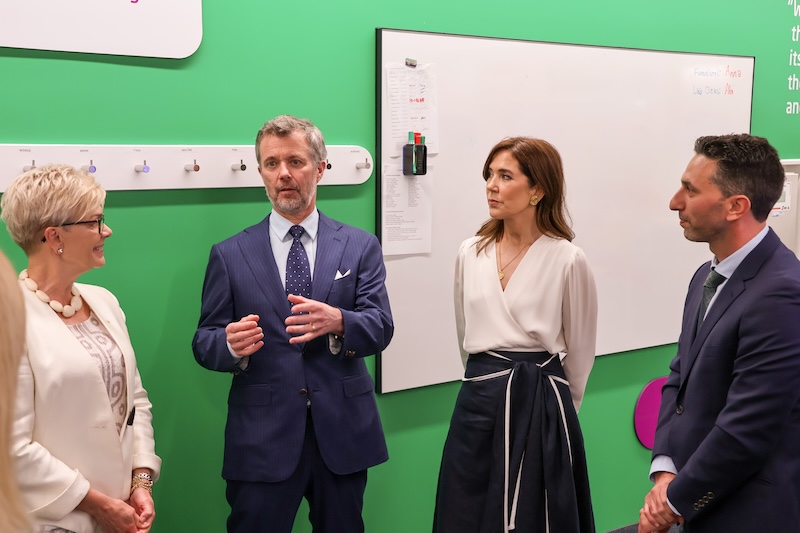
Denmark’s Queen Mary and King Frederik tour MCRI

New biotech company to accelerate treatments for heart disease

Celebrating Australian excellence across the arts and sciences

Artwork from the heart
Heart Foundation Future Leader fellowship for Dr Holly Voges
Infant and family wellbeing after cardiac surgery: life as a pre-schooler
Decoding Broken Hearts
