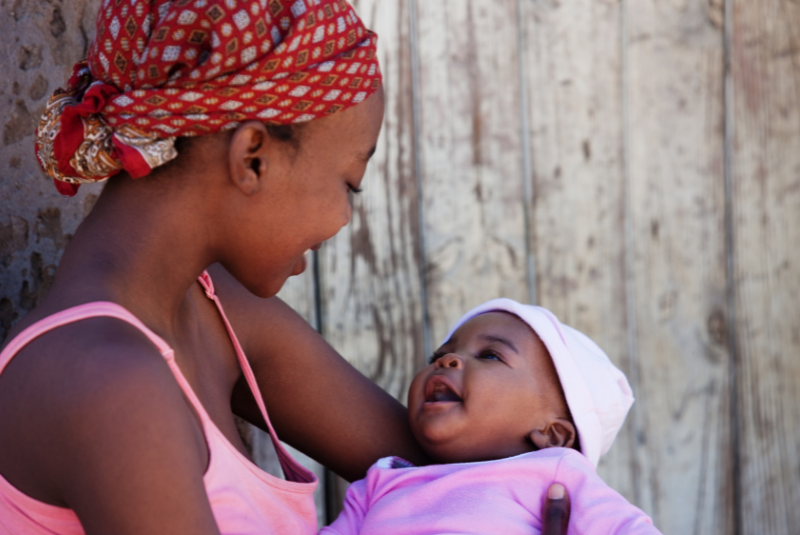
Enteric Diseases Research
We aim to reduce disease burden and deaths due to enteric diseases.
RV3-BB rotavirus vaccine
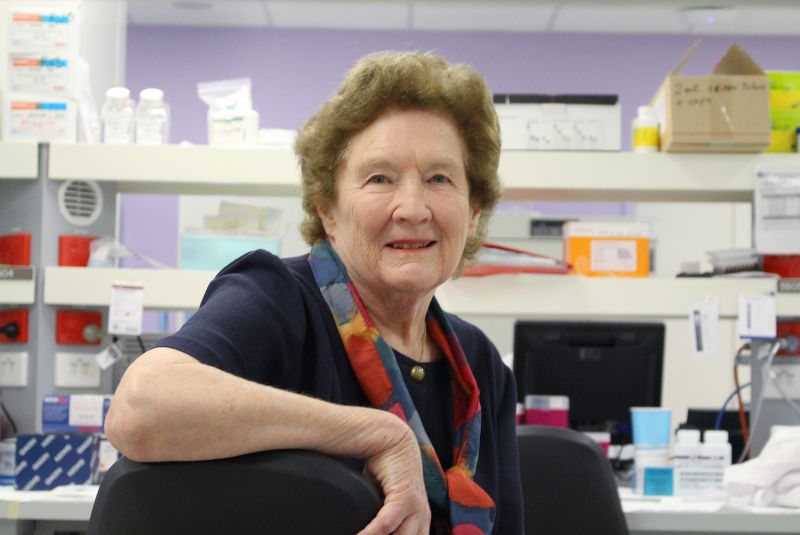
The development of a novel human neonatal oral rotavirus vaccine (RV3-BB) vaccine is the culmination of over four decades of research in Australia by the Murdoch Children's Research Institute, The Royal Children's Hospital Melbourne and the University of Melbourne, following the discovery of rotavirus by the team led by Professor Ruth Bishop in 1973.
The aim is to develop a safe, effective and affordable vaccine to protect babies from severe rotavirus disease from birth. RV3-BB vaccine has now been studied in adults, children, infants and newborns in trials conducted in Australia, New Zealand, Indonesia and Malawi, Africa. RV3-BB vaccine has been shown to be safe and produce a good immune response in babies and infants - the target population.
In Indonesia, where rotavirus causes over 8,000 deaths per year in children less than five years of age, our major clinical trial in tested three doses of RV3‑BB, with the first given within the first five days of life. The results showed:
- 94 percent protection against severe rotavirus gastroenteritis in the first year of life
- 75 percent protection up to 18 months of age
As a novel neonatal rotavirus vaccine delivered from birth, RV3-BB vaccine has the potential to address some of the key barriers to effective rotavirus immunisation and improve the safety and protection offered by a rotavirus vaccine.
Our group hosts the World Health Organization (WHO) Collaborating Centre for Child Health, the WHO Rotavirus Regional Reference Laboratory for the Western-Pacific Region and the Australian Rotavirus Surveillance Program.
More information
Group Leaders

Team Leaders


Group Members












Our projects
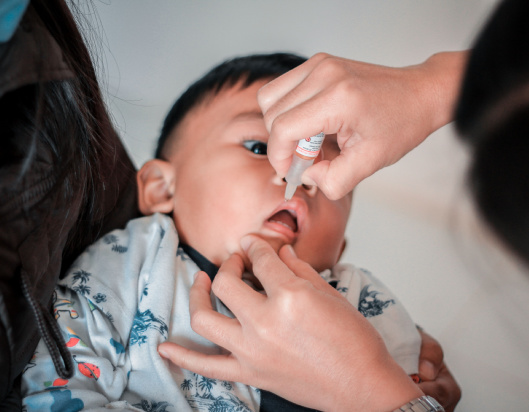
RV3-BB Rotavirus Vaccine Program
Despite this global progress, over 50 million infants still do not have access to a rotavirus vaccine. Barriers include cost, reduced vaccine efficacy in low‑income settings, and ongoing safety concerns.
To address these challenges, the oral RV3‑BB rotavirus vaccine was developed at MCRI with the goal of preventing severe rotavirus gastroenteritis from birth.
Read more...
SETIA Program: Surveillance of Enteric Typhoid Fever in Indonesia
The SETIA program examined the economic impact of typhoid illness and evaluated the potential value of introducing typhoid conjugate vaccine (TCV) into Indonesia’s National Immunisation Program.
A multisite cost-of-illness study estimated the direct and indirect costs associated with typhoid fever using data collected from hospitals, primary health centres and households across six provinces in Indonesia, from over 1,500 patients.
The study results will be published in 2026.
Read more...
STEVIA project: Confirmation of hospitalised typhoid cases in Indonesia
Typhoid fever remains an important cause of illness for children and adolescents in many parts of Asia, including Indonesia.
However, it is difficult to measure how common severe typhoid is because some diagnostic tests can miss infections or produce uncertain results, which can make it difficult to confirm whether a patient’s illness is caused by Salmonella Typhi, the bacteria that causes typhoid fever.
Our project aims to generate stronger evidence on the prevalence of typhoid fever among patients admitted to hospital in Indonesia.
Read more...
TWESP: Typhoid Wastewater Environmental Surveillance Project
Typhoid fever remains an important cause of illness for children and adolescents in many parts of Asia, including Indonesia.
However, understanding how widely the disease is circulating can be difficult because clinical surveillance is limited and laboratory confirmation is rarely performed.
Our project is using wastewater surveillance to generate evidence on typhoid circulation to inform vaccine policy in Indonesia.
Read more...Exploring the barriers to oral rotavirus vaccine performance in low resource settings
Currently licensed rotavirus vaccines provide less protection against severe rotavirus disease in infants in low-income countries compared with that observed in high-income countries, such as Australia. There have been many theories proposed as to why this may occur. Embedded within the clinical trials of RV3-BB we have included studies that explore the impact of maternal immunity and breast milk antibodies on vaccine take. We are also exploring the role of the gut microbiome, histo-blood antigens, co-administration of other vaccines such as oral polio vaccine and the developing immune responses in babies.
Australian Rotavirus Surveillance Program
The Australian National Rotavirus Reference Centre undertakes surveillance and characterisation of rotavirus strains, causing severe diarrhoea in children and adults throughout Australia. This program undertakes molecular epidemiological studies on the rotavirus strains circulating in the population, which allows researchers to track seasonal changes in rotavirus strains causing severe disease.
Specific projects include:
- Annual rotavirus surveillance of genotypes circulating in Australian children and adults with gastroenteritis.
- Genetic characterisation of rotavirus strains emerging in the vaccine era.
- Evolutionary analysis of strains to investigate selective pressures on strains circulating in the vaccine era.
WHO International Rotavirus Surveillance
The WHO Regional Reference Laboratory at Murdoch Children's Research Institute supports Government and Reference Laboratories in the Western-Pacific region in the laboratory diagnosis of rotavirus infection.
Specific projects include:
- The Laboratory takes part in the WHO annual proficiency testing, quality control program and the inter-regional quality control program. Support is provided to national network laboratories in addressing laboratory problems and takes part in the training of national laboratory staff.
- Surveillance of rotavirus genotypes in the Western Pacific region
COVID-19
The Laboratory is involved in a range of projects through the COVID-19 at The Melbourne Children’s Campus project aimed to gain insights into how SARS-CoV-2 transmits, infects and causes disease in children.
Specific projects include:
- SARS-CoV-2 testing of urine and stool samples collected through the FFX family transmission study
- Full genome sequencing and phylogenetic analysis of SARS-CoV-2 positive samples
Funding
- Gates Foundation
- World Health Organisation
- Australian Government Department of Health
- GlaxoSmithKline
- Australian National Health and Medical Research Council
- PATH USA
Collaborations
- Gates Foundation
- World Health Organisation
- PT Bio Farma Ltd, Indonesia
- The University of Melbourne
- Malawi Liverpool Wellcome Trust
- University of Liverpool, UK
- Universitas of Gadjah Mada, Indonesia
- Menzies School of Health Research, Northern Territory, Australia
- University of Otago, Dunedin, New Zealand
- Monash University
- London School of Tropical Medicine and Health
Featured publications
Neonatal rotavirus vaccine (RV3-BB) immunogenicity and safety in a neonatal and infant administration schedule in Malawi: A randomized, double-blind, four-arm parallel group dose-ranging study.
Witte D, Handley A, Jere K, Bogandovic N, Mpakiza A, Turner A, Pavlic D, Bonidace K, Mandolo J, Suryawijaya Ong D, Bonnici R, Justice F, Bar-zeev N, Iturriza-Gomara M, Donato CM, Cowley D, Barnes GL, Cunliffe NA, Bines JE. Lancet Infectious Disease 2021 (in press).
Human Neonatal Rotavirus Vaccine (RV3-BB) to Target Rotavirus from Birth.
Bines JE, At Thobari J, Satria CD, Handley A, Watts E, Cowley D, Nirwati H, Ackland J, Standish J, Justice F, Byars G, Lee KJ, Barnes GL, Bachtiar N, Viska Icanervilia A, Boniface K, Bogadanovic-Sakran N, Pavlic D, Bishop RF, Kirkwood CD, Buttery JP, Soenarto Y. New England Journal of Medicine. 2018; 378:719-30.
Safety and immunogenicity of RV3-BB human neonatal rotavirus vaccine administered in a birth dose or an infant dose schedule: A randomised, double blind, placebo controlled trial.
Bines JE, Danchin MD, Jackson P, Handley A, Watts E, Crowley D, Lee K, West A, Chen M-Y, Barnes GL, Justice F, Buttery J, Taylor B, Kirkwood C. Lancet Infectious Diseases, 2015; 15(12):1389-97. Phase IIa trial provides evidence that the RV3-BB vaccine was safe and immunogenic when given in a neonatal of infant schedule.
Rotavirus disease and genotype diversity in older children and adults in Australia.
Donato CM, Roczo-Farkas S, Kirkwood CD, Barnes GL, Bines JE. The Journal of Infectious Diseases. 2020 July 21
The impact of rotavirus vaccines on genotype diversity: a comprehensive analysis of two decades of Australian surveillance data.
Roczo-Farkas S, Kirkwood C, Cowley D, Barnes G, Bishop R, Bogdanovic-Sakran N, Boniface K, Donato C, Bines JE. Journal of Infectious Diseases 2018 ; 218:5 46-554
Rotavirus news
MCRI WHO Collaborating Centre for Child Health continues

RV3-BB rotavirus vaccine given at birth positively impacts gut bacteria
MCRI and Incepta Pharmaceuticals partner to protect children from rotavirus
New Ruth Bishop Fellowship created to honour her legacy
Asia-Pacific Health

Preventing Rotavirus in children in Australia and around the world
RV3-BB rotavirus vaccine could save millions of babies worldwide
Dose-finding trial paves way for novel rotavirus vaccine to prevent a deadly diarrhoeal disease from birth
Leader in Rotavirus research recognised with national award
Rotavirus vaccination leads to reduced hospitalisations, fewer infant deaths
Rotavirus licensing agreement signed with new pharmaceutical company