On a mission to wipe out scabies worldwide
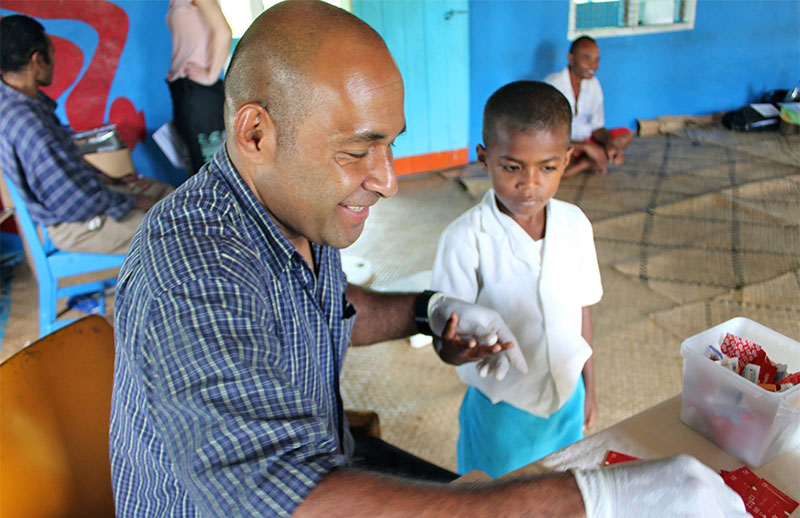
The World Scabies Program is working with partners and governments to wipe out scabies
Scabies is a highly contagious skin disease that affects about 200 millions of people worldwid at any one time, with about 455 million new cases each year.
The greatest burden falling on children living in overcrowded and disadvantaged communities. Intense itching disrupts sleep and daily life, and scratching can lead to infected skin sores that cause serious health complications.
Despite its impact, scabies is preventable and treatable when addressed at scale using proven public‑health approaches.
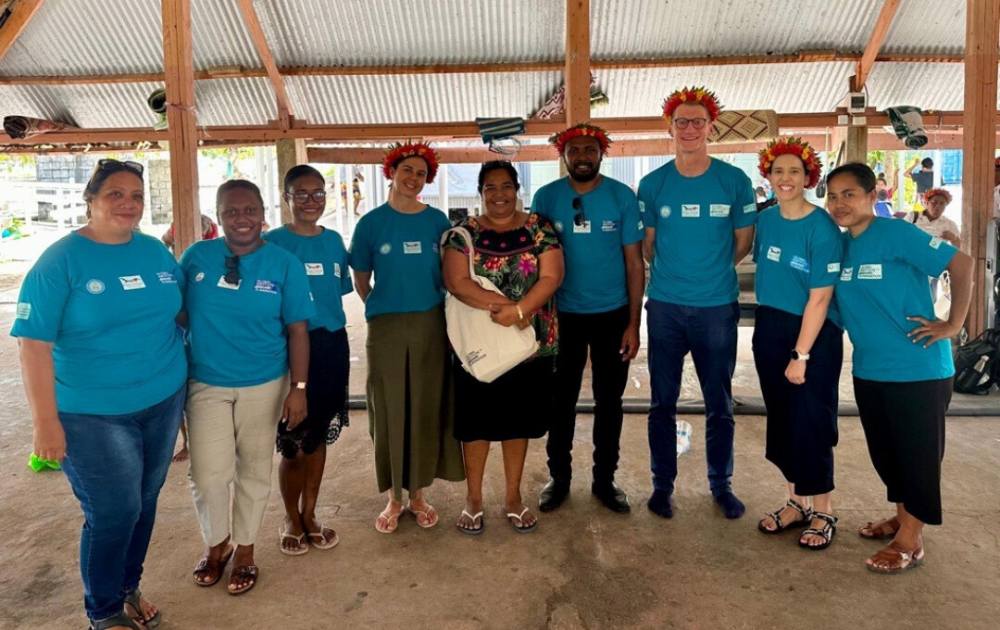
Image: Professor Andrew Steer, Director of Infection, Immunity and Global Health with Kiribati and Solomon Islands colleagues. Shared as part of World Skin Day 2025.
Scabies is a highly contagious skin disease that affects about 200 millions of people worldwid at any one time, with about 455 million new cases each year.
The greatest burden falling on children living in overcrowded and disadvantaged communities....
Scabies is a highly contagious skin disease that affects about 200 millions of people worldwid at any one time, with about 455 million new cases each year.
The greatest burden falling on children living in overcrowded and disadvantaged communities. Intense itching disrupts sleep and daily life, and scratching can lead to infected skin sores that cause serious health complications.
Despite its impact, scabies is preventable and treatable when addressed at scale using proven public‑health approaches.
Image: Professor Andrew Steer, Director of Infection, Immunity and Global Health with Kiribati and Solomon Islands colleagues. Shared as part of World Skin Day 2025.
Why scabies is such a problem
Scabies spreads easily through close skin‑to‑skin contact and thrives in conditions of overcrowding and limited access to healthcare. Micoscopic mites burrow under the skin to lay eggs, resulting in itching so severely that people cannot sleep and may scratch until their skin bleeds.
Children are affected most, often experiencing chronic itch, stigma and missed school. When skin sores become infected, sores can be life-threatening and can lead to severe complications including blood poisoning, kidney failure and heart disease.
The standard treatment of ointment may be ineffective because the routine application is often low and reinfestation from family members is common.
How are we tackling scabies: World Scabies Program
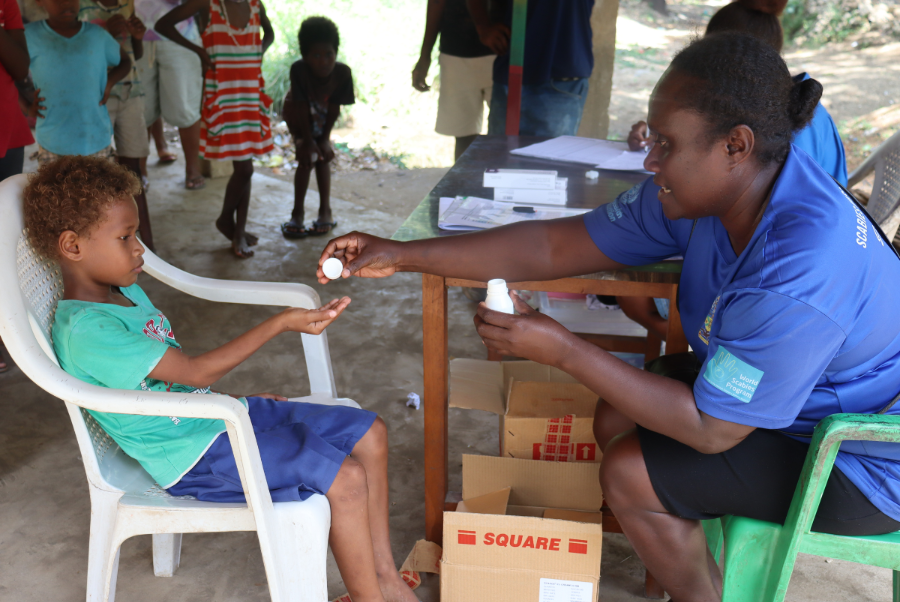
Our research has shown in multiple countries that community‑wide oral Ivermectin can reduce scabies prevalence by up to 90 per cent. This population‑level approach rapidly reduces transmission, protects those most at risk, and is paired with community engagement and health‑system strengthening to support sustainable control.
MCRI leads the World Scabies Program (WSP) in partnership with national Ministries of Health to implement mass drug administration (MDA) using ivermectin. MDA offers the medicine to everyone in a target area, regardless of diagnosis, which rapidly reduces the number of infections and protects those most at risk. This population‑level approach is paired with intensive community engagement and health‑system strengthening so countries can sustain low scabies prevalence over time.
These results demonstrate that a simple oral regimen, delivered through local health services and community campaigns, can effectively treat scabies as a public health problem while improving quality of life for children and families.
Impact to date
We are working with partners and governments to wipe out scabies. Our World Scabies Program is the first global program dedicated to eliminating scabies and aims to equip low and middle-income countries with tools and resources to detect, monitor, and wipe out scabies in affected communities.
- Global policy impact: In 2025, scabies was formally recognised as part of a World Health Assembly resolution identifying skin diseases as a global public health priority, marking a major shift in global attention to scabies prevention and treatment.
- World‑first national delivery: In 2024, the Solomon Islands became the first country in the world to complete two nationwide mass drug administrations for scabies, reaching the entire population through community‑based campaigns.
- Sustained national commitment: Government‑led events and public reporting in the Solomon Islands have marked the success of the program and shared results from post‑MDA prevalence surveys such as the post-MDA prevalence survey complete in Kiribati.
- Regional leadership: Knowledge sharing and collaboration across the Pacific, including Solomon Islands, Fiji and Kiribati, are strengthening local capability and supporting long‑term scabies control.
- $10 million Macquarie Group grant: This grant is funding the treatment of all 1.5 million residents of Fiji and the Solomon Islands where prevalence is about 20 percent, with the level of child scabies about 40 per cent.
What’s next?
With partners across the Pacific, MCRI will continue to support scabies control programs world-wide, strengthen surveillance and clinical care, and share learnings globally.
Scabies newsroom
ASMR Peter Doherty Leading Light Award for A/Prof Amanda Gwee

VaxPulse project

New partnership to improve child health in the Asia-Pacific
Gustav Nossal Medal awarded to researcher
World Scabies Program achieves milestone in Solomon Islands and Fiji
Anti-parasitic drug to treat scabies on mass scale in Solomon Islands

One dose of anti-parasite drug just as effective as two at reducing scabies

Research group chosen as Collaborating Centre for Scabies Control

Leading a worldwide effort to better prevent and treat scabies

World Scabies Program holds first National Steering Committee in Fiji