Immunocompromised Infections
To eliminate the burden of infectious complications of childhood cancer treatment or transplantation.
The challenge
Infections remain one of the leading complications of childhood cancer treatment and solid organ or haematopoietic cell transplantation. For children with weakened immune systems, even common infections can become life-threatening.
Beyond the immediate health risks, infections can delay life-saving cancer treatment, prolong hospitalisation, increase healthcare costs and place a substantial physical and emotional burden on children and their families.
Our vision is to eliminate the burden of infection for children with cancer and transplantation through personalised, evidence-based supportive care.
Our research focus
The Immunocompromised Infections research group is a multidisciplinary team bringing together clinicians, scientists, epidemiologists, health economists and consumers to improve the prevention, diagnosis and treatment of infections in immunocompromised children.
Our research focuses on:
- Defining risk by using large national and international clinical cohorts, registries and real-world data to understand who develops infections, why they occur and how risk varies across different cancer and transplant populations.
- Enhancing diagnostics by evaluating innovative diagnostic approaches that enable earlier, more accurate detection of infection and support precision clinical decision-making.
- Optimising treatment through clinical trials, advanced observational studies and implementation research, we identify safer and more cost-effective approaches to preventing and treating serious infections.
- Driving translation and impact by working closely with patients, families, healthcare professionals and policymakers to ensure research findings are rapidly translated into clinical practice. Using implementation science, consumer partnerships and education, we develop sustainable models of care that improve outcomes both locally and globally.
Our impact
Our research is designed to deliver real-world impact. Through collaborations across Australia and international research networks, we generate evidence that informs clinical guidelines, shapes health policy and transforms care for immunocompromised children worldwide.
Contact us
For more information please contact us.
Claudia Corrente, Program Manager
Email:
show email address
Group Leaders

Group Members


Our projects
Australian Predicting Infectious ComplicatioNs of Cancer (PICNICC)
Not every child with fever during cancer treatment has a life-threatening infection. This is a national prospective cohort study that developed and validated prediction models to identify which children are at highest risk, enabling safer, more personalised care. The findings have informed international guidelines and support earlier discharge and home-based treatment for low-risk patients.
Prophylaxis and CT Imaging for Invasive Fungal Infections in Children with Cancer (PACIFIC)
Invasive fungal infections remain one of the deadliest complications of childhood cancer. PACIFIC is multisite cohort study that is improving fungal prevention, diagnosis and imaging by identifying children at highest risk and evaluating antifungal prophylaxis and advanced diagnostic strategies. The goal is targeted antifungal therapy that improves outcomes while reducing unnecessary treatment.
Retrospective Evaluation of Antimicrobial Tolerance and Heteroresistance in Bloodstream Infections (RACER3)
Some bloodstream infections fail to respond to antibiotics despite appearing susceptible in standard laboratory testing. RACER3 combines clinical data with advanced microbiology to investigate antimicrobial tolerance and heteroresistance in children with cancer. In partnership with St. Jude Children's Research Hospital, the study aims to improve treatment of difficult-to-treat infections.
Early versus Late Stopping of Antibiotics in Children with Cancer and High-Risk Febrile Neutropenia (ELSA-FN)
Can antibiotics be stopped earlier without compromising safety? ELSA-FN is a randomised trial, embedded into the electronic medical record (EMR), that is testing whether children with high-risk febrile neutropenia can safely stop antibiotics before their white blood cell count recovers. Results have the potential to reduce antibiotic exposure, shorten hospital stays and improve antimicrobial stewardship worldwide. The EMR technology developed as part of this trial has been used to open a similar trial in adult patients at Peter Mac and Royal Melbourne Hospital.
PROTECTing Children from CMV through Letermovir Prophylaxis (PROTECT-CMV)
Cytomegalovirus (CMV) is a major cause of illness after stem cell transplantation. PROTECT-CMV uses real-world data to evaluate whether early letermovir prophylaxis prevents CMV infection in children undergoing transplantation. We are using novel target trial emulation methodology to answer this important question and performing a robust economic evaluation of the medication.
There's No Place Like Home
Many children with low-risk fever during cancer treatment can be safely managed at home. Building on the PICNICC program, this study evaluates the clinical, economic and family impact of expanding home-based care across Australia while identifying what matters most to children, families and clinicians to support successful implementation.
Signatures of Host Immunity for Early Longitudinal Defence against viral infection (SHIELD)
Some children naturally control viruses such as CMV, EBV, adenovirus and BK virus after transplantation, while others develop serious infections. This study combines clinical data with advanced immune profiling to identify the immune responses that protect against viral reactivation. By defining the biological markers of antiviral immunity, we aim to personalise antiviral prophylaxis, reduce unnecessary treatment and improve outcomes for children undergoing stem cell or solid organ transplantation.
Invasive Fungal Infection Surveillance (IFIS)
Invasive fungal infections are rare but life-threatening complications of cancer treatment and transplantation. Led by the National Centre for Infections in Cancer in partnership with BioGrid, IFIS is an automated national surveillance platform that identifies and tracks invasive fungal infections in high-risk adult and paediatric patients using routinely collected clinical data. By monitoring disease burden, emerging pathogens, antifungal resistance and trends in clinical practice, IFIS generates real-world evidence to improve prevention strategies, optimise treatment and inform national policy and clinical guidelines.
Funding
Thank you to our supporters
- NHMRC
- MRFF
- Tour de Cure
- University of Melbourne
- Victoria Cancer Agency
- Better Care Victoria
Collaborations
We collaborative with researchers from the following organisations and institutions:
- Immunocompromised Host Society (ICHS)
- National Centre for Infections in Cancer (NCIC)
- National Centre for Antimicrobial Stewardship (NCAS)
- Centre for Health Economic Research and Evaluation (CHERE)
- Paediatric Integrated Cancer Service (PICS)
- BioGrid
- Centre for Health Analytics
- Australia and New Zealand Children Haematology Oncology Group (ANZCHOG)
- The Royal Children’s Hospital
- Monash Children’s Hospital, Monash Health
- Peter MacCallum Cancer Centre
- Victorian Comprehensive Cancer Centre (VCCC)
- Perth Children’s Hospital
- Queensland Children’s Hospital
- Sydney Children’s Hospital, Randwick
- Children’s Hospital at Westmead
- John Hunter Children’s Hospital, Newcastle
- Women and Children’s Hospital, Adelaide
- Candelighters Supportive Care Research Centre, United Kingdom
- St Jude Children’s Research Hospital, Memphis, USA
Key publications
Lehrnbecher T, Robinson PD, Ammann RA, Fisher B, Patel P, Phillips R, Beauchemin MP, Carlesse F, Castagnola E, Davis BL, Elgarten CW, Groll AH, Haeusler GM, Koenig C, Santolaya ME, Tissing WJE, Wolf J, Alexander S, Hu H, Dupuis LL, Sung L. Guideline for the Management of Fever and Neutropenia in Pediatric Patients With Cancer and Hematopoietic Cell Transplantation Recipients: 2023 Update. J Clin Oncol. 2023 Mar 20;41(9):1774-1785. doi: 10.1200/JCO.22.02224. Epub 2023 Jan 23. PMID: 36689694; PMCID: PMC10022858.
Haeusler GM, Dashti SG, James F, Babl FE, Borland ML, Clark JE, Padhye B, Tapp H, Alvaro F, Raj TS, Walwyn T, Ziegler DS, Super L, Hall L, Yeoh DK, Butters C, McMullan B, Hanna DMT, De Abreu Lourenco R, Slavin MA, Phillips B, Thursky KA; Australian PICNICC and There is No Place Like Home study groups. Impact of time to antibiotics on clinical outcome in paediatric febrile neutropenia: a target trial emulation of 1685 episodes. Lancet Reg Health West Pac. 2024 Nov 2;53:101226. doi: 10.1016/j.lanwpc.2024.101226. PMID: 39553416; PMCID: PMC11566883.
Yeoh DK, Blyth CC, Clark JE, Abbotsford J, Corrente C, Cook S, Kotecha RS, Wang SS, Spelman T, Slavin MA, Thursky KA, Haeusler GM. Invasive fungal disease and antifungal prophylaxis in children with acute leukaemia: a multicentre retrospective Australian cohort study. Lancet Reg Health West Pac. 2024 Sep 12;52:101201. doi: 10.1016/j.lanwpc.2024.101201. PMID: 39318715; PMCID: PMC11417227.
Vargas C, Haeusler GM, Slavin MA, Babl FE, Mechinaud F, Phillips R, Thursky K, Lourenco RA; Australian PICNICC Study Group. An analysis of the resource use and costs of febrile neutropenia events in pediatric cancer patients in Australia. Pediatr Blood Cancer. 2023 Nov;70(11):e30633. doi: 10.1002/pbc.30633. Epub 2023 Aug 17. PMID: 37592047.
Butters C, Thursky K, Hanna DT, Cole T, Davidson A, Buttery J, Haeusler G. Adverse effects of antibiotics in children with cancer: are short-course antibiotics for febrile neutropenia part of the solution? Expert Rev Anti Infect Ther. 2023 Mar;21(3):267-279. doi: 10.1080/14787210.2023.2171987. Epub 2023 Feb 10. PMID: 36694289.
Haeusler GM, Lehrnbecher T, Agyeman PKA, Loves R, Castagnola E, Groll AH, van de Wetering M, Aftandilian CC, Phillips B, Chirra KM, Schneider C, Dupuis LL, Sung L. Clostridioides difficile infection in paediatric patients with cancer and haematopoietic stem cell transplant recipients. Eur J Cancer. 2022 Aug;171:1-9. doi: 10.1016/j.ejca.2022.05.001. Epub 2022 Jun 10. PMID: 35696884.
Haeusler GM, Garnham AL, Li-Wai-Suen CS, Clark JE, Babl FE, Allaway Z, Slavin MA, Mechinaud F, Smyth GK, Phillips B, Thursky KA, Pellegrini M, Doerflinger M. Blood transcriptomics identifies immune signatures indicative of infectious complications in childhood cancer patients with febrile neutropenia. Clin Transl Immunology. 2022 May 17;11(5):e1383. doi: 10.1002/cti2.1383. PMID: 35602885; PMCID: PMC9113042.
Tew M, De Abreu Lourenco R, Gordon JR, Thursky KA, Slavin MA, Babl FA, Orme L, Bryant PA, Teh BW, Dalziel K, Haeusler GM. Cost-effectiveness of home-based care of febrile neutropenia in children with cancer. Pediatr Blood Cancer. 2022 Jul;69(7):e29469. doi: 10.1002/pbc.29469. Epub 2021 Dec 2. PMID: 34854550.
Haeusler GM, Gaynor L, Teh B, Babl FE, Orme LM, Segal A, Mechinaud F, Bryant PA, Phillips B, Lourenco RA, Slavin MA, Thursky KA. Home-based care of low-risk febrile neutropenia in children-an implementation study in a tertiary paediatric hospital. Support Care Cancer. 2021 Mar;29(3):1609-1617. doi: 10.1007/s00520-020-05654-z. Epub 2020 Aug 1. PMID: 32740894.
Haeusler GM, Phillips R, Slavin MA, Babl FE, De Abreu Lourenco R, Mechinaud F, Thursky KA; Australian PICNICC study group and the PREDICT network. Re-evaluating and recalibrating predictors of bacterial infection in children with cancer and febrile neutropenia. EClinicalMedicine. 2020 Jun 15;23:100394. doi: 10.1016/j.eclinm.2020.100394. PMID: 32637894; PMCID: PMC7329706.
Haeusler GM, Thursky KA, Slavin MA, Babl FE, De Abreu Lourenco R, Allaway Z, Mechinaud F, Phillips R; Australian PICNICC study group and the PREDICT network. Risk stratification in children with cancer and febrile neutropenia: A national, prospective, multicentre validation of nine clinical decision rules. EClinicalMedicine. 2020 Jan 7;18:100220. doi: 10.1016/j.eclinm.2019.11.013. PMID: 31993576; PMCID: PMC6978200.
Infection news

Pioneering safer radiotherapy for children with cancer
Safeguarding children undergoing cancer treatments

Protecting children receiving cancer treatment from infections
Needle-free flu vaccine aims to boost children’s immunity

Dr Sohinee Sarkar receives Strategic Research Fund Fellowship

Clinical data gaps keeping life-saving antibiotics from children

AUS-POND: Australian Paediatric Pharmacogenetics Oncology Network for Drug Safety

COUCHE study: characteristics and outcomes of children hospitalised with pleural empyema

NHMRC Ideas Grants to advance childhood treatments and diagnoses
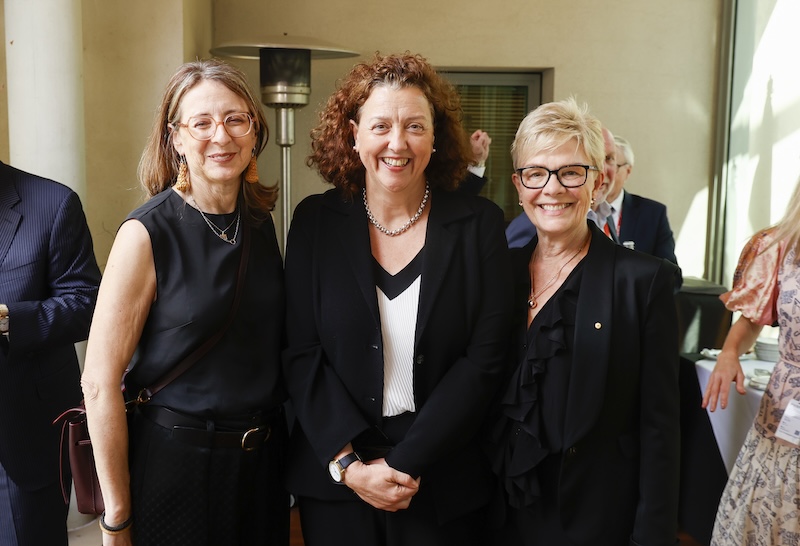
Prof Kathryn North AC delivers inaugural keynote address for Marie Krogh Prize
ASMR Peter Doherty Leading Light Award for A/Prof Amanda Gwee