Patient stories
New tool key to diagnosis
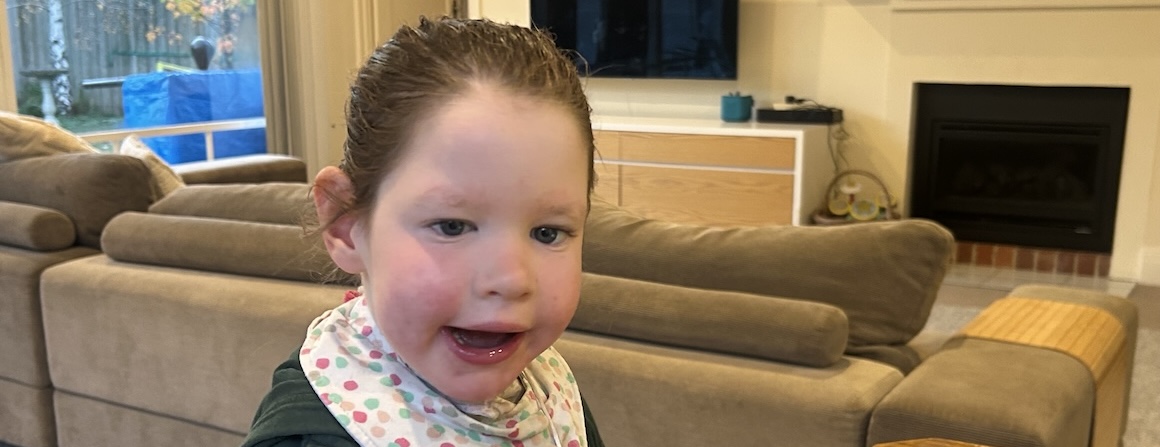
Music reaches Annabelle like nothing else can.
Every time mum Kiera turns the music up on the TV or radio, Annabelle’s whole face lights up. She is engaged, calm and happy, allowing her to connect with the world around her.
"Everything else seems unfamiliar or overwhelming to Annabelle, but music is different. It brings her true joy and comfort," Kiera said.
Annabelle, 5, has ReNU syndrome, a rare genetic disorder, which causes severe intellectual and physical disabilities. She is visually impaired, non-verbal and has significant developmental delays. Until about a year ago, she also experienced frequent seizures.
Kiera said there were no signs before birth that Annabelle would face lifelong health challenges.
"Within 24 hours of being born Annabelle was taken to The Royal Children's Hospital's Intensive Care Unit," she said.
"Annabelle couldn't breathe or eat on her own and without modern medicine she would have died. It took six weeks for doctors to stabilise her before we could take her home. We had no answers at that point besides the suspicion she had an undiagnosed genetic condition."
Annabelle was enrolled in the Acute Care Genomics study, led by Murdoch Children's Research Institute (MCRI) and Victorian Clinical Genetics Services (VCGS), which delivers ultra-rapid genomic testing for critically ill newborns with suspected genetic conditions.
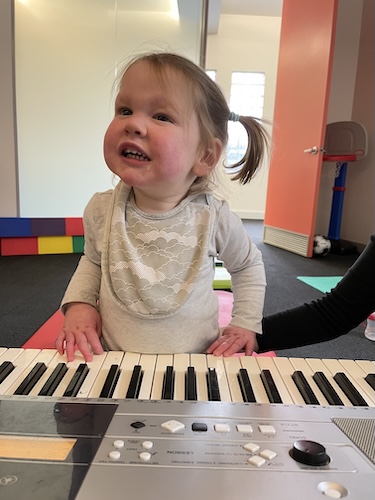
Image: Annabelle finds joy in listening to music
Her genomic data was kept on file and reanalysed years later using a newly developed open-source tool.
The tool, Talos, integrates monthly updates of new knowledge about genes and variants and their role in disease, automatically only flagging potential new diagnoses. A new study led by MCRI found that Talos, was able to discover hundreds of new rare disease diagnoses.
ReNU syndrome was identified in 2025, and soon after, Annabelle received a diagnosis thanks to the tool.
“Having a severely sick child is extraordinarily overwhelming and traumatising,” Kiera said.
“A diagnosis helps provide a framework amongst the chaos and uncertainty. It also means you're not left blaming yourself for something that happened entirely by chance."
Kiera said Talos would ensure families impacted by rare disease received more timely answers.
“Annabelle experienced frequent seizures for years, seizures that, left uncontrolled, cause permanent brain damage,” she said. “Knowing her diagnosis sooner could have led to earlier, more targeted seizure management.”
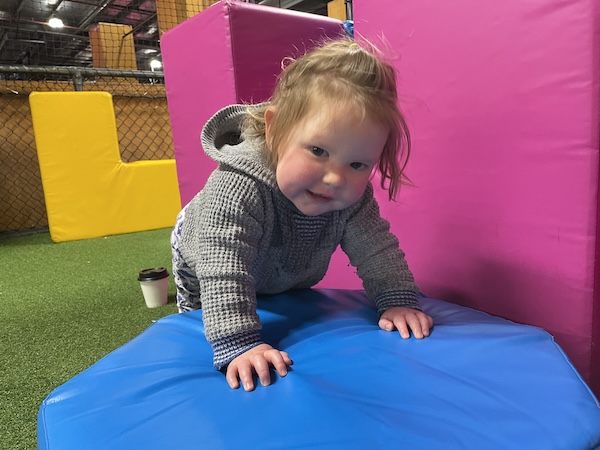
Image: The Talos tool was used to diagnose Annabelle's condition
Kiera said having a diagnosis meant she could also connect with other affected families.
"The diagnosis connects you to a community of families who truly understand," she said.
"When you have a child with a rare disease, the isolation is profound. Finding others who are living the same reality makes an enormous difference."
Kiera said that sense of shared purpose led her and Maryanne, whose child also has ReNU, to co-found ReNU Foundation Australia, a not-for-profit organisation raising awareness and funding research into treatments that could improve quality of life.
To help manage her condition, Annabelle’s has weekly therapy sessions including physio and speech, as well as taking multiple medications to control her seizures.
“Developmentally, Annabelle functions at the level of a six-month-old baby, requiring around the clock care,” Kiera said.
“She just started at a specialist school, which almost seemed impossible a year ago. Any improvement, even small gains in awareness or comfort is meaningful beyond words. And the way medicine is moving, that gives us real hope."
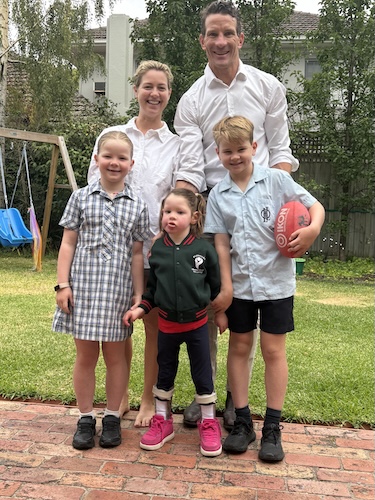
Image: Annabelle on her first day of prep with her mum Kiera, dad Ben, sister Grace and brother William.