
Patient stories
Recovering from a devastating infectious disease
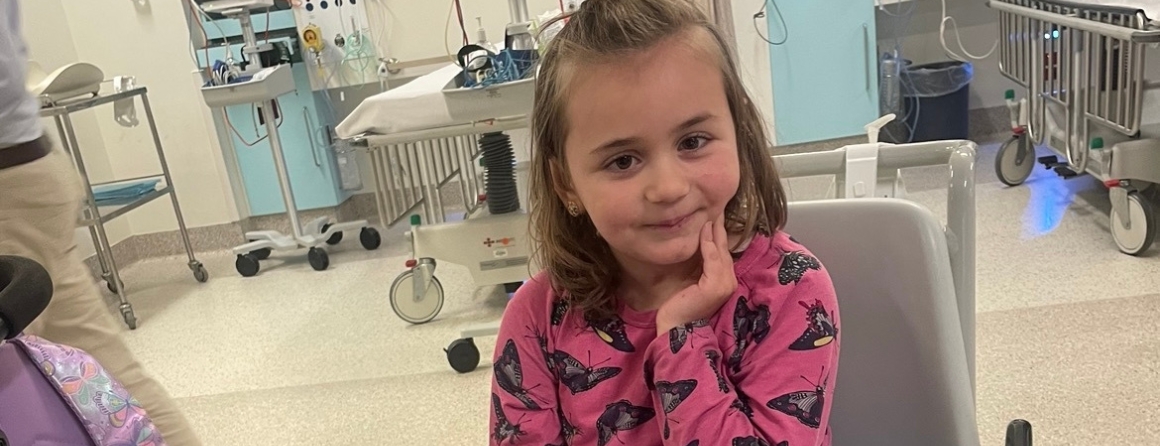
Asi had been counting down the days to turn five so she could start school, her face lighting up every time she talked about it. But the day she had been dreaming of took a heart-breaking turn – instead of preparing for this exciting new adventure with her mum Medine and dad Walid, she was rushed to intensive care (ICU) fighting for her life.
Asi had experienced flu–like symptoms days earlier. She then developed a rash and rapidly deteriorated from there. Medine, along with Asi’s grandmother Safija, had taken her to a GP super clinic where they were told it was ‘just a virus’ and sent home.
But despite doctors’ assurances, Medine and the family felt something more sinister was causing their daughter’s illness.
“They said it was nothing to worry about, but I knew it was more serious than that,” Medine said. “We went to the GP three times, and I kept saying ‘there’s something wrong with her, can you please look at her rash?’, but they kept dismissing it and sending us home.”
After being sent home for the third time, Asi turned blue.
Medine and Walid raced to emergency. This time, there was no question – Asi was obviously severely unwell. Soon, the cause was clear. Asi had severe sepsis and a massive empyema (lung infection) caused by Strep A, short for the bacteria Streptococcus pyogenes or Group A Streptococcus (GAS).
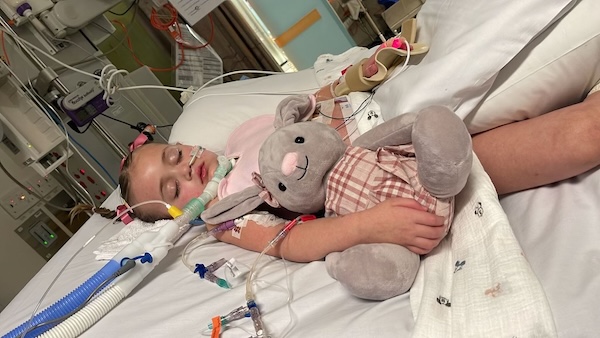
Image: Asi developed life-threatening invasive group A Strep disease after contracting a Strep A bacterial infection a few days before her fifth birthday
Strep A is a common type of bacteria that causes a range of infections, from mild to severe. While it often leads to mild illnesses like ‘strep throat’ and minor skin infections, it can, in rare cases, cause serious and life-threatening conditions like invasive GAS (iGAS) disease.
Asi’s organs started shutting down and the doctors needed to intubate her (a life-saving medical procedure that involves inserting a plastic tube down the windpipe to keep a patient’s airway open).
“Asi was in and out of consciousness and it felt like she barely had any life in her,” Medine said. “She was looking around for me and calling out ‘Mummy’ but couldn’t see me even though I was right next to her holding her hand.”
Because Asi was so sick, the doctors said she needed to go on a special life support machine called ECMO and be transferred to The Royal Children’s Hospital (RCH).
While on the way to the RCH, the unthinkable happened.
“Asi had a cardiac arrest and they had to revive her in the ambulance,” Medine said. “So they were forced to take her back to the local hospital and wait until she was stable enough to travel again.”
“When we finally got to the RCH, the doctors said there was a fifty-fifty chance she wouldn’t live through the night. Thankfully she did survive that first 24 hours, but it was a waiting game. At times we felt there was no hope and she wasn’t going to survive.”
“We weren’t [initially] allowed to go in to see Asi, but once we were cleared to enter her room she was unrecognisable. I remember walking into ICU, and I felt so sick to my stomach. She didn’t look like my Asiyah,’’ Medine said.
By this stage Asi was gravely ill. She had multi–organ failure, encephalopathy (her brain wasn’t working properly), extensive black skin ulcers, severe pneumonia that was eating away at her lungs which were full of pus, nerve damage, and a range of other complications, including a fungal infection of her sternum.
Tragically, one of the complications for Asi was severe brain damage, caused by the severe infection and the times, like when her heart stopped, that not enough blood and oxygen were reaching her brain.
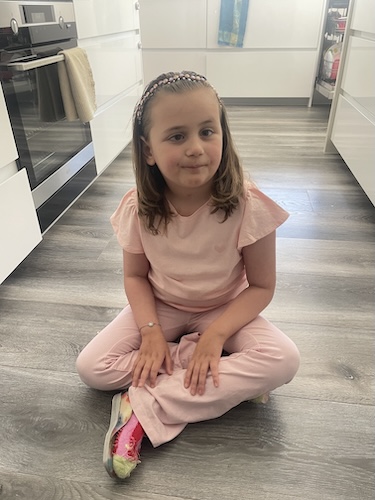
Image: Asi, now seven, has ongoing movement, thinking, and communication issues from her infection
MCRI Clinician-Scientist and Paediatric Infectious Diseases Physician at the RCH Dr Josh Osowicki said, “The severity of Asi’s infections meant that it took a big team to save her life and then help her to recover, in the ICU at first, then on the ward, and now in the community.
“Because there is no vaccine to prevent life-threatening Strep A infections, looking after children like Asi is a lot like caring for someone after a terrible car crash – the worst injuries have already happened, and we start way behind.”
Despite Asi’s dire condition, Medine said she still had hope.
“Due to the brain damage, the doctors said she would not be able to understand me, but I kept trying to get her to do things on command to see if she could comprehend it. I asked her to ‘move your finger for Mama’, and she did. When I saw that small finger movement, I just knew she could understand me, and there was hope.”
Asi spent most of her fifth year in hospital, but thanks to the care during those desperate early days, the continuing support that followed, and rehabilitation, she eventually recovered and returned home with her parents after eight months.
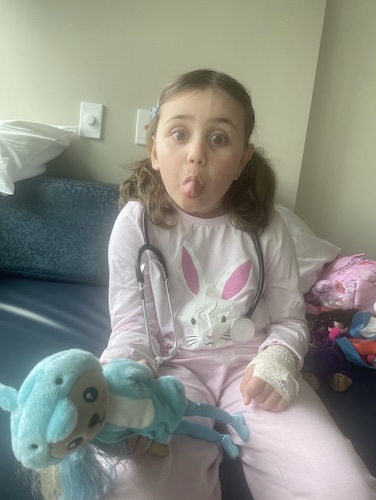
Image: Asi made a wonderous recovery and went home after eight months in hosptial
Now seven years old, Asi is in grade one at school. “She loves playing pretend, dressing up and playing with her Barbie dolls – and she particularly loves Elsa from the Disney movie Frozen. She has one of the funniest personalities and loves a good banter,” Medine said.
Asi has some mobility issues so she has a walker, but she can take a few steps without it. Although Asi’s movement, thinking, and communication are affected in many ways from her terrible infection, Medine said she was improving each day.
Medine said Asi was doing well but she was traumatised by the experience, often acting out distressing scenes she remembers from the hospital with her dolls.
The harrowing experience inspired Medine in her journey to become a nurse. Alongside her now completed nursing studies, she has contributed to Strep A research at MCRI led by Dr Osowicki and others.
Medine has some advice for other parents, that she will always carry with her as a mother – always trust your instinct. “Even if it’s a simple virus, don’t leave it. You know your child better than anyone. We never thought this would happen to our family, but it can happen to anyone.”
Learn more about Strep A and how MCRI researchers including Dr Osowicki are working to prevent severe disease in children like Asi.