Patient stories
Tackling cerebral palsy with a strong spirit

Cooper's fighting spirit was evident from the moment he entered the world.
He had been a healthy baby during pregnancy, but a tragic complication during birth caused a severe brain injury. Doctors gave his mother, Bron, the heartbreaking news that not only had Cooper sustained significant brain damage, but he was unlikely to survive the night.
Despite the prognosis, Cooper defied the odds. Three days later, he was still alive.
MRI scans confirmed the extent of the brain injury with doctors warning that Cooper would most likely develop cerebral palsy as he grew older.
Cerebral palsy, a group of disorders that affect movement and posture, is caused by problems to the developing brain, most often before birth. Children with cerebral palsy experience movement difficulties that range from very mild to extremely severe, including muscle stiffness, weakness, involuntary, shaky movements and reduced balance.
Cooper started receiving therapy immediately to help manage his symptoms. But despite the intervention, Bron was told that Cooper may never walk and could eventually be contained to a wheelchair.
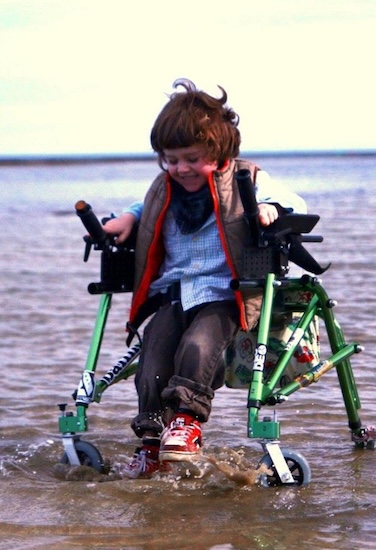
Image: Cooper, age 5, before learning to walk
“A lot of the therapists assumed Cooper wasn’t going to be mobile," Bron said. “But when he was a toddler he could sit in a w–position on his knees, which was encouraging because I was told if a child with cerebral palsy could sit by the age of two they had a good chance of walking.
“I would use doonas and blankets to prop Cooper up, which helped train his body. Once he built that core strength, everything else followed suit.”
A year later, Cooper started seeing Dr Dinah Reddihough at The Royal Children’s Hospital (RCH) for management followed by Murdoch Children’s Research Institute’s (MCRI) Associate Professor Adrienne Harvey for involvement in research.
By this stage he had been diagnosed with dystonic cerebral palsy, an uncommon form of the disorder where messages that are sent to the muscles get mixed up, resulting in uncoordinated muscles, involuntary movements and speech impairment.
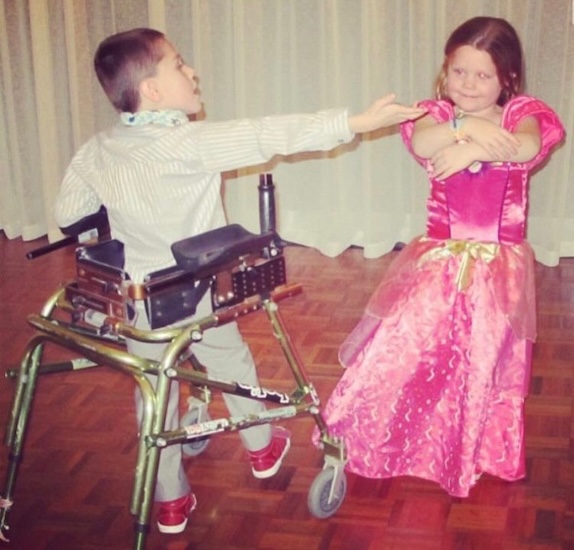
Image: Cooper and sister Pepper
Under their care, Cooper went from using a walker to being able to walk on his own. He is now fully mobile and despite his movement issues, has taught himself how to DJ, playing at a various venues and events and releasing his own music.
Passionate about helping other young people with cerebral palsy, Cooper uses his platform to raise disability awareness and promote inclusion. He was an International Day of People with a Disability ambassador in 2024 and he is currently helping Associate Professor Harvey’s research project, which aims to improve pain management for children with cerebral palsy.
Cooper said, "I wanted to use my insight for Adrienne's team and help them out. I have lived experience of things like drug trials so I can help children who are nonverbal.
"I really want to mentor kids with cerebral palsy, because when I was growing up there was no one who really understood what I was going through. It's not that hard to make someone's life better," he said.

Image: Cooper is now 20 and is thriving as a producer and DJ
Cooper has ongoing challenges, however, particularly with speaking, eating and swallowing.
“The biggest hurdle for Cooper is talking, which requires so many muscles in the tongue and jaw,” Bron said. “This means his speech is hard to understand for new people.
“Despite these obstacles, Cooper is an amazing communicator and uses nonverbal communication skills such as hints and clues, or synonyms when people don’t understand what he’s saying.”
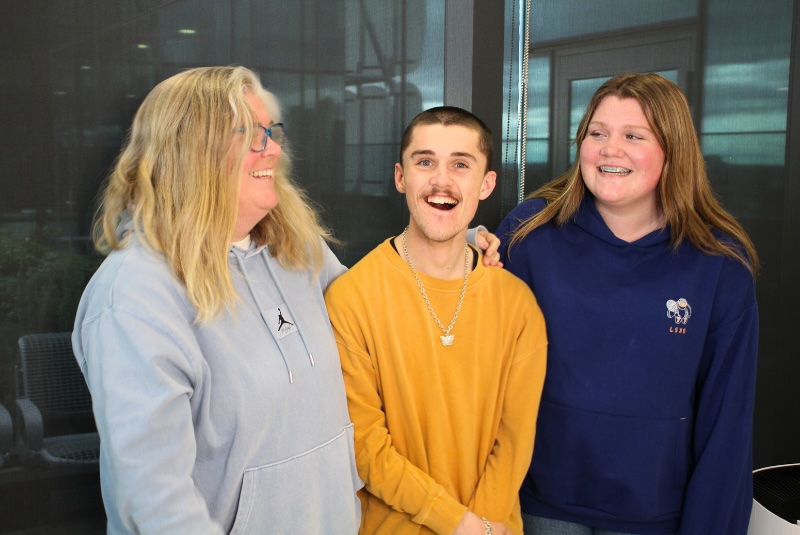
Image: Cooper with his mum Bron (left) and sister Pepper, 17, (right)
Bron said Cooper, now 20, has a positive mindset, refusing to let his condition or others define him.
“He's in the gym every day and takes boxing classes twice a week to improve his coordination,” said said. “He also practices DJing every day which helps with his dexterity.”
“Cooper has this great grit and determination, nothing is going to stop him. He has fought, despite all odds, for the life he enjoys today.”