Patient stories
Getting answers too late to prevent common virus
As a childcare worker, Shanie thought she would have been well briefed on the risks her job posed to her unborn baby. But when doctors advised Shanie that her eight–day–old son Knox was profoundly deaf caused by a common infection, she felt at a loss.
During her third pregnancy Shanie was advised to have a blood test for cytomegalovirus (CMV) due to working with children.
“A blood test when I was eight weeks pregnant with Knox showed I had CMV previously, but I was given no information on how to manage this,” Shanie said. I was left thinking I was immune due to having CMV antibodies.
“I wasn’t aware of the lifestyle choices I had to change so I kept to the normal routine with my other children, toddlers at the time, such as kissing them and sharing food and drinks and changing nappies at childcare.”
But Shanie said those seemingly harmless activities, greatly increased the risk of CMV transmission.

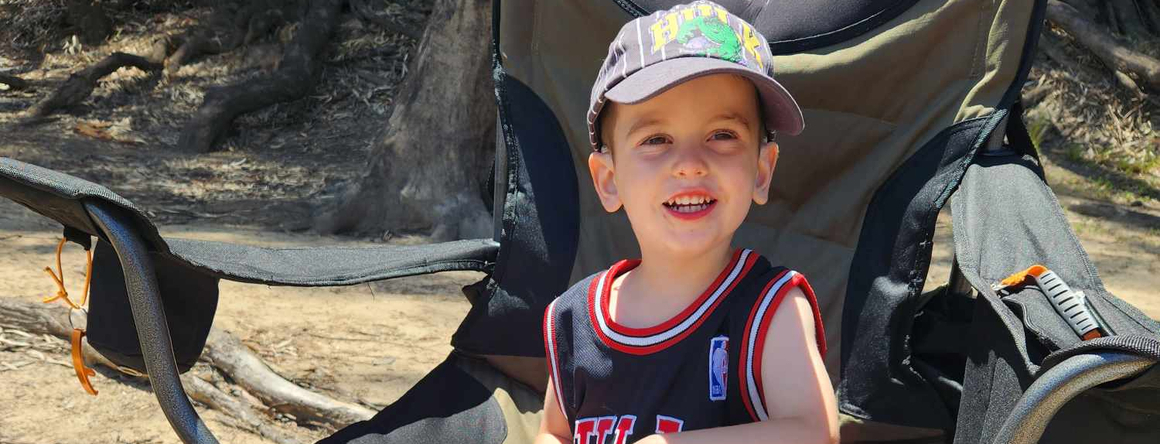
Image: Knox at eight days old.
Knox was born 12 days early with a petechial rash, small reddish-purple spots caused by bleeding from the smallest blood vessels in the body. Petechial rashes can be associated with CMV.
A few days later, Knox did not pass his newborn hearing screening test. Further testing revealed Knox was profoundly deaf and was diagnosed with CMV. He was also fitted with hearing aids at just three weeks old.
A common virus, CMV affects more than 60 per cent of adults in Australia. The virus can stay inactive in a person’s system for years with no symptoms.
For pregnant women who become infected with CMV for the first time, or if CMV re-activates during the pregnancy, there is a small risk their baby will also be infected too. Most babies with cCMV remain well but some may develop deafness, vision problems and/or a neurodevelopmental disability.
After the diagnosis, Knox was referred to The Royal Children’s Hospital (RCH) where the family met RCH paediatrician and Murdoch Children’s Research Institute (MCRI) Associate Professor Valerie Sung.
Knox was started on an antiviral medication, followed by weekly hospital visits for bloods tests and weigh-ins to monitor for other disabilities such motor skill impairments.
“Knox didn’t crawl until he was 10 months old or walk until he was 22 months, so we were nervously waiting for him to make that progress,” Shanie said. It was a huge relief when he reached those milestones because it meant he was in the clear for cerebral palsy and global developmental delay.”
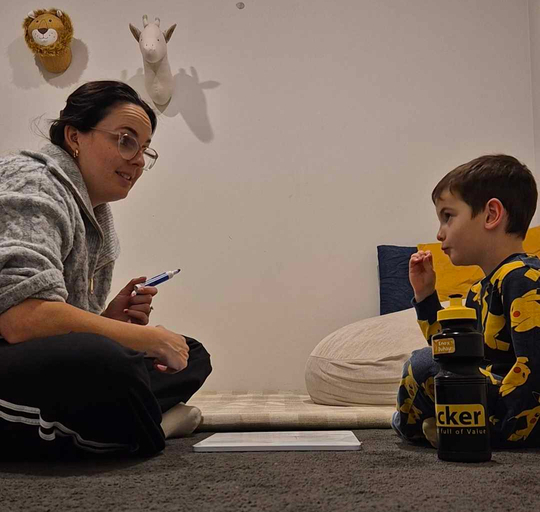
Image: Knox learning Auslan with Shanie.
Knox wears cochlear implants in both earsand is learning Auslan.
“He has a deaf mentor at his kindergarten and he has benefitted from early intervention support services,” Shanie said.
“Due to all this support, Knox is just like any other four-year-old boy. He is very sporty, plays cricket and loves being around animals.
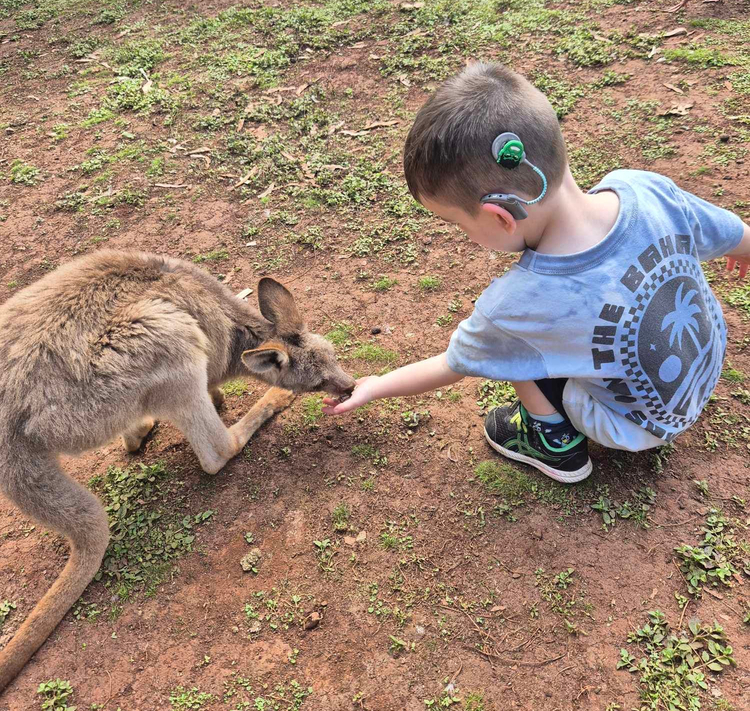
Image: Knox feeding a kangaroo.
Shanie said she would have done things differently if she had known the CMV risks.
“We don’t have proper CMV education or screening for pregnant women and their unborn babies who are the most at risk,” she said. There needs to be more education for pregnant women so they can make better informed choices.”
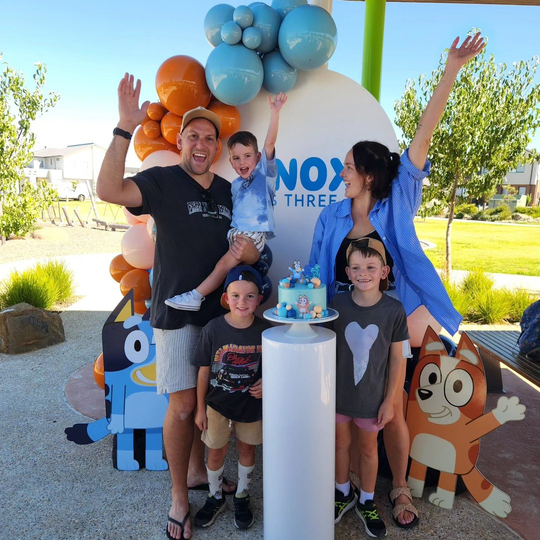
Image: Knox, with hisdad Andrew, Shanie and brothers Nate and Aston celebrating his third birthday, is now thriving.
Learn more about MCRI’S CMV research.