Patient stories
Genomic test unlocks brighter future
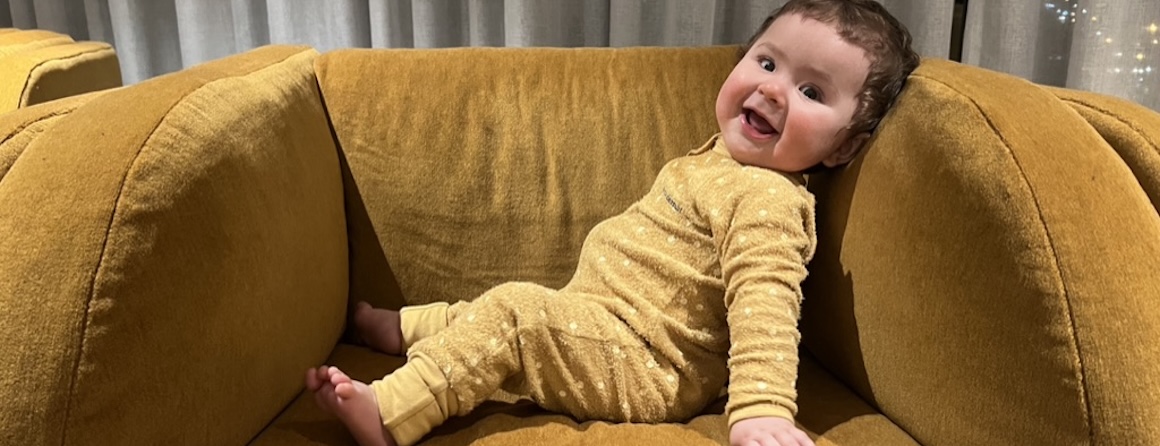
If it weren’t for a test that screens for genetic conditions, Giselle may not be the lively, cheeky toddler her parents know today.
Giselle, 14 months, is a ball of energy, not quite walking unassisted yet, but she’s close. The picture of health is a far cry from the fragile baby her parents once feared they might lose.
While Scarlett was pregnant, she and her husband, Justin, came across a Facebook ad for the BabyScreen+ study, which involved genomic screening for 500 treatable, childhood-onset condition.
“We thought it was a logical test to have and a good way to support science,” Scarlett said. “It just required an additional heel prick test so I didn’t think there was much reason not to do it.”
But what started as a simple decision led to life-changing news. At just seven weeks old, Giselle was diagnosed through BabyScreen+ with familial hemophagocytic lymphohistiocytosis (HLH).
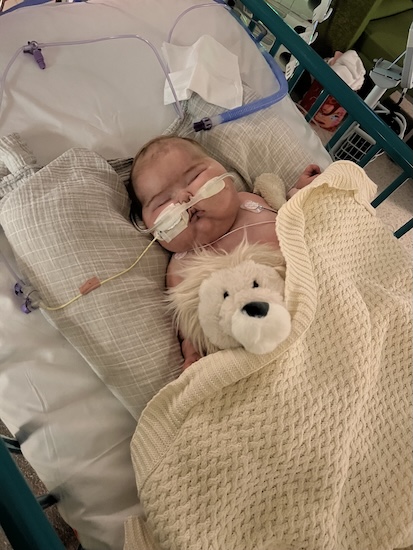
Image: Giselle was diagnoses with HLH
HLH is a rare genetic disorder where the immune system becomes dangerously overactivated, damaging the body's own tissues and organs. The life-threatening disorder can lead to organ damage and failure.
“I just cried once we received the diagnosis,” Scarlett said. “We went from thinking we had a healthy baby to the real possibility she might die.”
“Giselle was a very sick baby, but she didn’t look unwell. We knew nothing about HLH so we were in the dark about how sick she could get.”
Justin said if BabyScreen+ had not picked up the condition, Giselle’s symptoms would have escalated quickly, which could have resulted in severe neurological problems.
To treat HLH, Giselle required a bone marrow transplant. After the original full match donor fell though, Scarlett became the donor, providing a half-match.
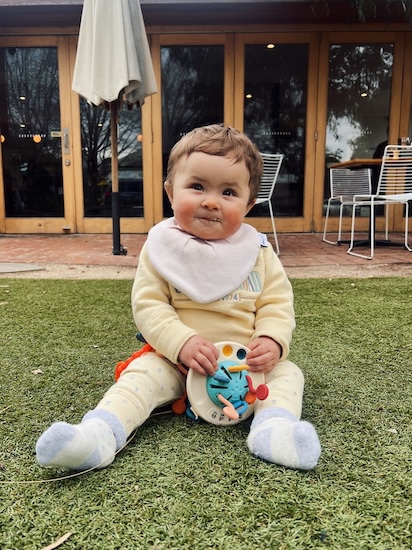
Image: Giselle required a bone marrow transplant
The transplant was a success, but Giselle spent months in hospital and, due to complications, required a stay in in intensive care for several weeks.
Justin said having since recovered and leaving the hospital earlier this year, Giselle, now 14 months, had a promising future ahead of her thanks to the genomic test.
“Despite a really challenging and at times heart-breaking process, we were so relived to finally have a diagnosis,” he said. “BabyScreen+ has been a huge benefit to Giselle’s health, allowing her to avoid many long-term complications.
“If BabyScreen+ didn’t exist we’d be coming from a standing start instead of running start. We were ahead of the game, which allowed her medical team to act quickly. Everyone family should have access to genomic screening.”
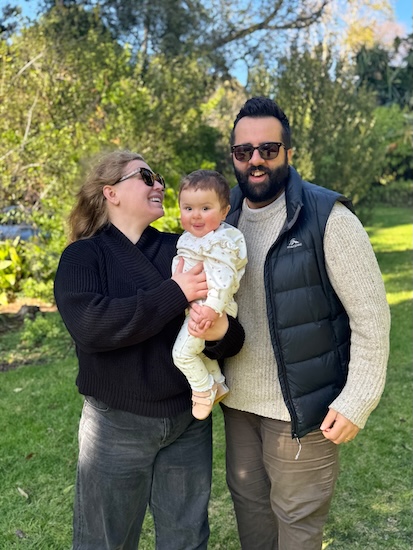
Image: Giselle and her parents Scarlett and Justin
It comes a new a new study, led by Murdoch Children’s Research Institute (MCRI) and Victorian Clinical Genetics Services (VCGS), found adding genomic sequencing to newborn blood screening would detect hundreds of additional childhood conditions, providing much earlier diagnosis and treatment.
The heel–prick test, which is offered to all Australian babies a few days after birth, covers 32 conditions.
Learn more about BabyScreen+.