Patient stories
Searching for support
Jerome didn't take his first breath on his own until eight minutes after being born. Delivered via emergency c-section, Jerome’s fragile lungs were failing, with doctors needing to urgently resuscitate him.
Jerome recovered for a full week in a Neonatal Intensive Care Unit (NICU) incubator before going home, seemingly healthy.
But even early on, Jerome’s mum Chris knew something wasn’t right. Jerome had no control of his head, felt floppy, had trouble with twisting movements and was not feeding well. While Chris’ paediatrician acknowledged that her son had numerous developmental delays, there were no clear answers.
Jerome underwent physiotherapy and saw numerous specialists in search of a diagnosis. Eventually, an MRI confirmed that Jerome’s brain had been damaged due to oxygen deprivation during his birth. He was formally diagnosed with dystonic cerebral palsy, which causes impaired movement, speech and body posture.
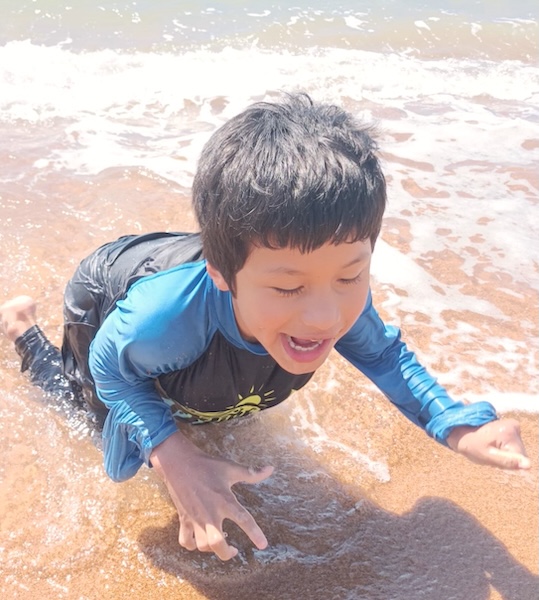
Image: Jerome at the beach
“It was such a relief to know Jerome’s diagnosis and understand why we were facing so many challenges, but it was then that we started a different journey,” Chris said.
"One of the trickiest parts has been communication, because Jerome is ten years old and essentially non-verbal, I speak on his behalf and need to help others understand what he is saying.”
Jerome uses Augmentative and Alternative Communication (AAC) methods, which ranges from nods and gestures to screen readers, specialised boards and head switch-based technology.
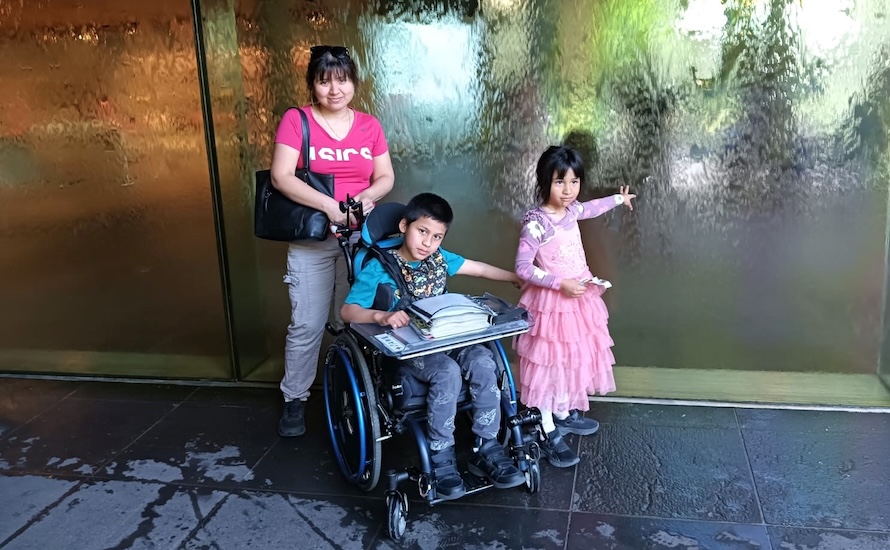
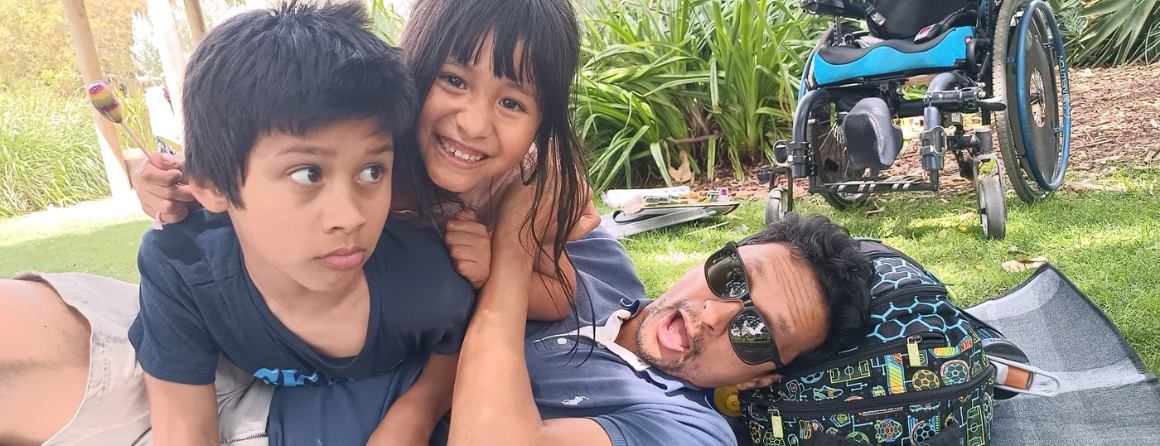
Image: Mum Chris with Jerome and daughter Mia
“The problem with AAC technologies is that they often lack detail, especially around feelings and wellbeing,” Chris said.
“I wanted to get Jerome a mental health assessment, but we haven’t been able to find a psychologist that is trained in adapting the current methods for children with cerebral palsy who use AAC and require more time to respond.”
Murdoch Children’s Research Institute’s (MCRI) Jacinta Pennacchia is currently recruiting young AAC users and their carers and families for a project that focuses on making mental health support more accessible to disabled children and young people like Jerome.
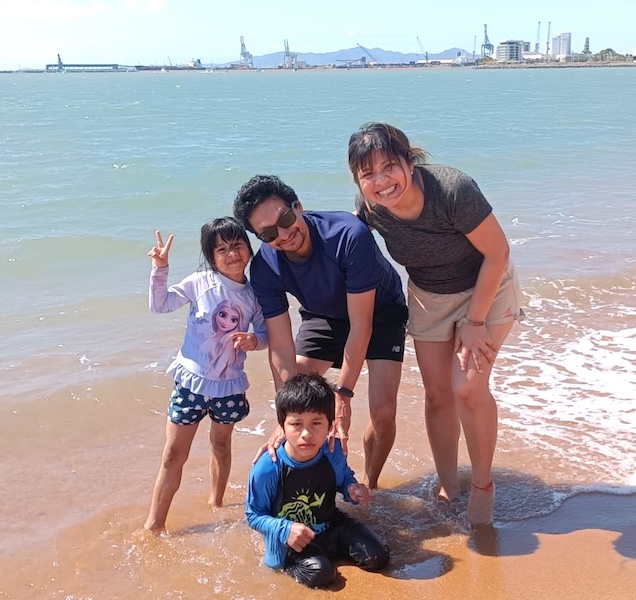
Image: Jerome (front) with sister Mia, dad Rowland and mum Chris
“We have been looking for a skilled communicator to help us, because right now we don’t have clear insights about Jerome’s mental health or how he is feeling day-to-day,” Chris said.
“I hope this research shines a light on the challenges that families of disabled children face and ensures that mental health services are no longer out of reach for us.”
Enrolments for Ms Pennacchia’s mental health study closed on March 7, 2025.
Read more about MCRI’s CP-Achieve Centre of Research Excellence.