Patient stories
Resilience forged against rare condition
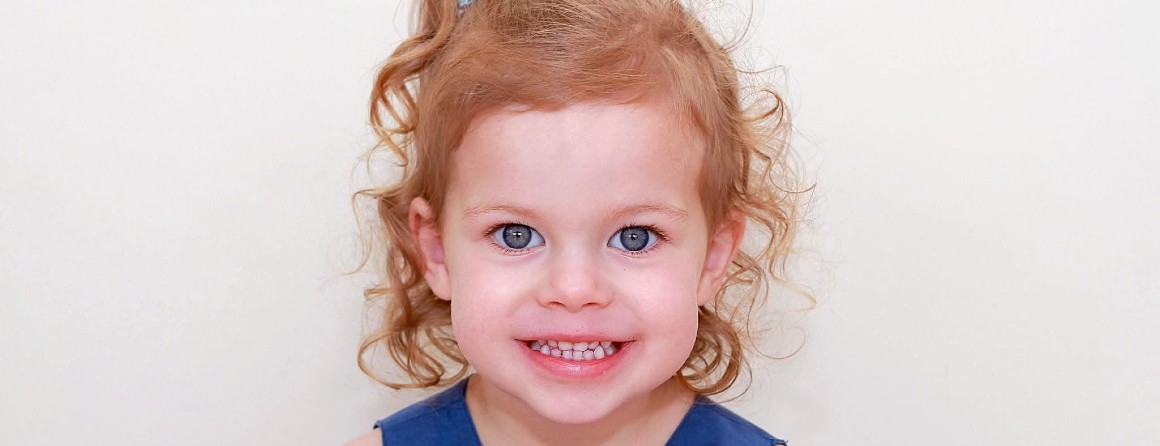
For Courtney what began as an arduous labour ended in an emergency caesarean and the discovery her newborn daughter had a rare, life-threatening condition.
In the operating theatre, the paediatrician noticed Lucy’s abdomen appeared unusually flat and her chest broader than most newborns.
Immediate tests confirmed Lucy had congenital diaphragmatic hernia (CDH), a condition that impacts development of the diaphragm and effects lung, heart, gut and brain function. CDH has a survival rate of about 50 per cent.
Courtney said, in hindsight, having a c-section likely saved her daughter’s life.
“I experienced a normal pregnancy but my labour was long and difficult,” she said. “Luckily though it meant Lucy had to be born via caesarean in the end and she didn't experience any potential, additional damage to her already fragile body.”
“Lucy required specialised care but was stabilised in our local hospital before being rushed to The Royal Children’s Hospital.
“Born in distress and with an infection, multiple doctors told us they were unsure if she would survive the hospital transfer, let alone surgery and then recovery.”
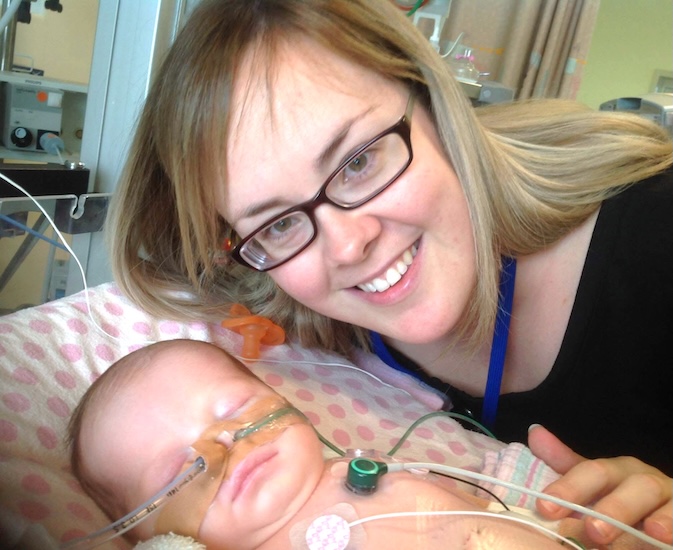
Image: Courtney with Lucy in hospital
A new paper from Murdoch Children’s Research Institute’s (MCRI) Dr Trisha Prentice and published in Seminars in Fetal and Neonatal Medicine (SFNM), found patients like Lucy are often well-managed early in life but don’t receive meaningful, ongoing support, especially as they reach adolescence.
“There is an urgent need for structured, teen-focused care that provides guidance and education on self-management, mental health support and successful transition to adult services,” Dr Prentice said.
“CDH survivors may experience long-term psychosocial challenges, including attention difficulties, emotional regulation issues and learning disabilities compared to their peers. Some complications such as scoliosis and mental health concerns are often not routinely followed up or recognised until adulthood. Due to these barriers, many patients don’t receive adequate care to help them thrive.”
Following major surgery and six weeks of intensive care, Lucy was able to be brought home. Following discharge, Lucy regularly saw a gastroenterologist, cardiologist, dietitian and respiratory expert as part of her treatment.
Courtney said while Lucy achieved all her early milestones, she and husband Denis decided Lucy would benefit from seeing a psychologist early on.
“It was important to get on the front foot with Lucy’s mental health,” Courtney said. “We wanted to ensure she wasn’t afraid of doctors or nurses and could speak up about pain.”
Lucy, now 11, said she had developed a strategy to cope with the tougher times, especially when the pain grows more frequent.
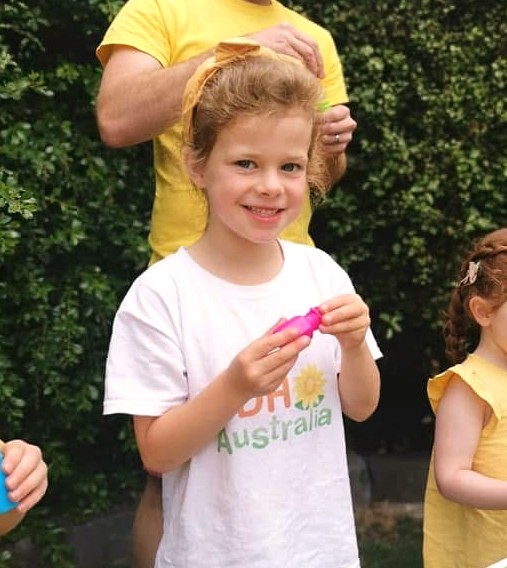
Image: Lucy, 11, has a handle on her health
“I get a surge of energy when things are very stressful. I think to myself, it might be hard, but I need to get through it,” she said.
“Sometimes I get sharp, quick pains around my chest and stomach, but I know what to do because I have the tools. I stay active and can still do all the things I love.”
The long-term mental health outcomes of patients like Lucy are being examined by MCRI’s Generation Victoria (GenV) project, which follows a statewide cohort of over 120,000 participants across their lifetime, including almost 50,000 children.
GenV Deputy Director and MCRI Director of Population Health Professor Sharon Goldfeld said the study would tackle the biggest health and development challenges facing all children, including quality of life after illness or injury.
“GenV’s long-term, whole-of-population approach is uniquely positioned to fill important gaps into how we can understand and make a difference to child and parent mental health,” she said.
“Over time, this national resource will help ensure that development and wellbeing are better understood and addressed throughout a child’s life, including those like Lucy with CDH.”
Courtney, who is also Vice-President of CDH Australia, said medical research was critical in closing care gaps and could change the game for children with rare or painful conditions.
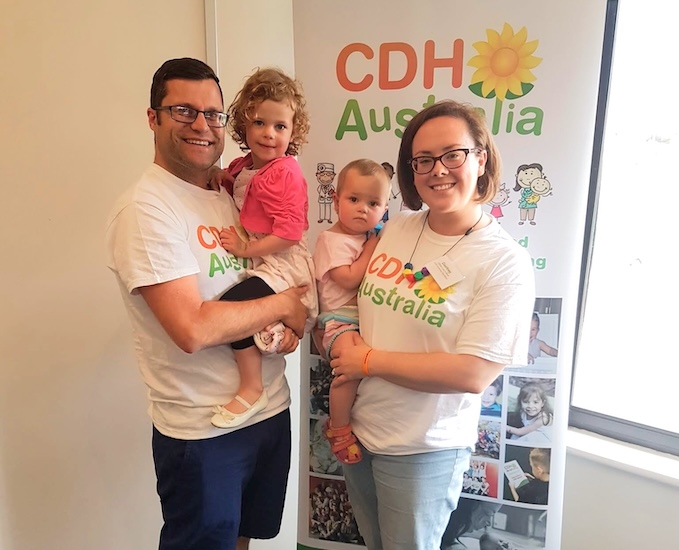
Image: Courtney (far right) with husband Denis and daughters Lucy (left) and Matilda (right)
“Researchers at MCRI are paving the way for better treatments and management of CDH, with the needs of young people truly at the forefront,” she said.
“Denis and I knew nothing about this condition before we had Lucy, and now I can say to other CDH families ‘we’ve got you, you’ll be okay, here’s some questions you need to ask.’ Hopefully one day there will be no need, but until then I am happy to do whatever I can to help others.”
Read more about MCRI’s Neonatal research and how to enrol your child in GenV.
If you or someone you know needs support, you can contact️:
Kids Helpline: 1800 55 1800
Headspace: 1800 650 890
Lifeline: 13 11 14
Beyond Blue: 1300 22 4636
Butterfly Foundation: 1800 334 673