Supporter stories
Facing a genetic condition with courage and creativity
- Details
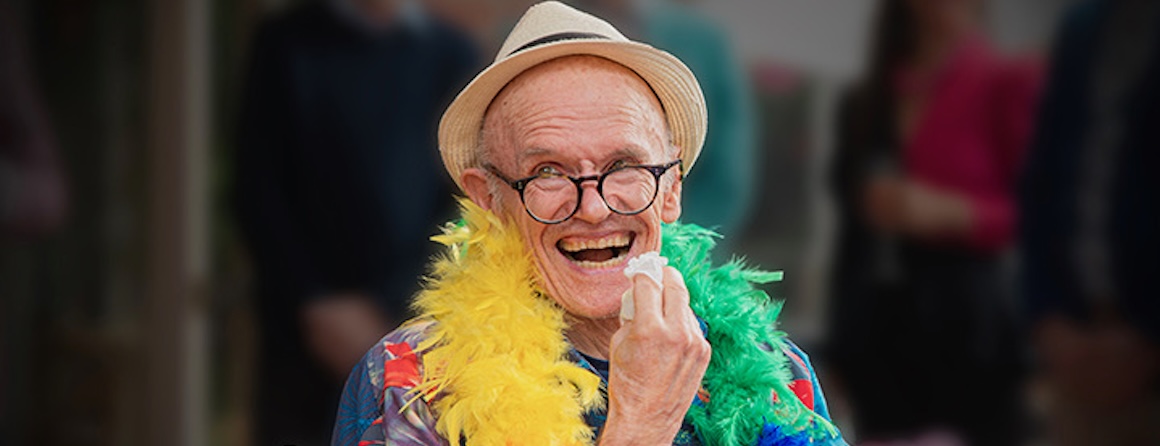
Despite having a rare, neurological disease, Dusan was a creative, curious soul right until the end.
Dusan passed away three years ago, aged 73, after a 20 year battle with RFC1 cerebellar ataxia with neuropathy and vestibular areflexia syndrome (CANVAS).
Beloved partner of Dr Nanette Presswell and father of their two daughters, Dusan’s passion for painting has inspired his family to raise money and awareness around the genetic condition.
Dusan was one of four brothers who were all diagnosed with the condition. Sadly, his brother John also passed away of RFC1 CANVAS complications just two months after Dusan. Today, their remaining brothers, George and Stevan, continue to live with its daily challenges.
RFC1 CANVAS spectrum disorder is caused by too many repeats of an error in a small section of the RFC1 gene. CANVAS affects the brain, peripheral nerves and inner ear. As symptoms advance, they severely affect movement, balance, speech and swallowing, often leading to a loss of independence and increasing reliance on others for daily care.
There is currently no cure for CANVAS with only symptom management available through ongoing medical care and supportive therapies.
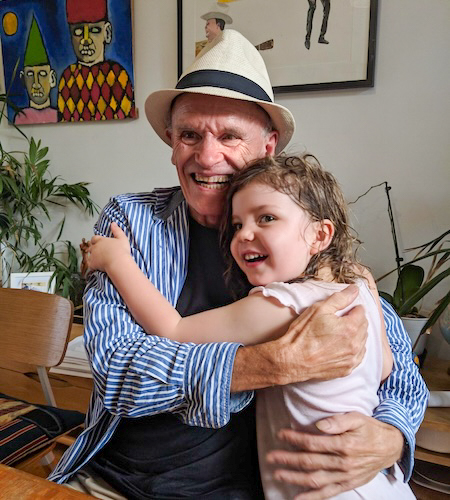
Image: Dusan and his granddaughter
Raising funds for RFC1 CANVAS research
To honour her partner, Nanette held a GoFundMe and an art exhibition with the goal of raising $100,000 for RFC1 CANVAS research. With the support of friends, family, colleagues and the global RFC1 community, almost $110,000 was donated to support Professor Paul Lockhart's research at Murdoch Children's Research Institute’s (MCRI) Bruce Lefroy Centre.
Thank you to everyone who helped raise funds to honour Dusan’s legacy and advance research into the genetic condition. A special thank you to Debra and Roger Amato for their generous gift, which helped close the gap and bring the total from $65,000 to just under $110,000 and to Joel, Dusan and Nanette’s nephew who ran two marathons in support.
The Bruce Lefroy Centre, based at MCRI, conducts research into neurogenetic diseases affecting both children and adults and was one of two research teams that discovered the RFC1 genetic error as the cause of CANVAS in 2019. The team diagnosed Dusan and his brothers and have ended the diagnostic odyssey for over 80 Australian families.
The extra funding will support further research into better understanding how RFC1 affects behaviour and function as well as growing tiny brain models in the lab to study the part of the brain that controls movement and balance. Utilising cutting-edge research, the goal is to discover more effective treatments for RFC1-CANVAS.