Advanced AI tool detects tiny brain lesions in children with epilepsy
- Details

An advanced AI tool can detect tiny brain lesions that cause severe epilepsy in children, allowing faster diagnosis, more precise treatment and a potential cure, according to a new study.
Developed by a team at Murdoch Children’s Research Institute (MCRI) and The Royal Children’s Hospital (RCH), the ‘AI epilepsy detective’ can find lesions (focal cortical dysplasias) the size of a blueberry, in up to 94 per cent of cases with the support of medical imaging.
MCRI’s Dr Emma Macdonald-Laurs, a RCH neurologist, who led the team that created the detector, said more accurate diagnosis of cortical dysplasia would lead to faster referrals for epilepsy surgery, fewer seizures and improved long-term developmental outcomes.
“Identifying the cause early lets us tailor treatment options and helps neurosurgeons plan and navigate surgery,” she said.

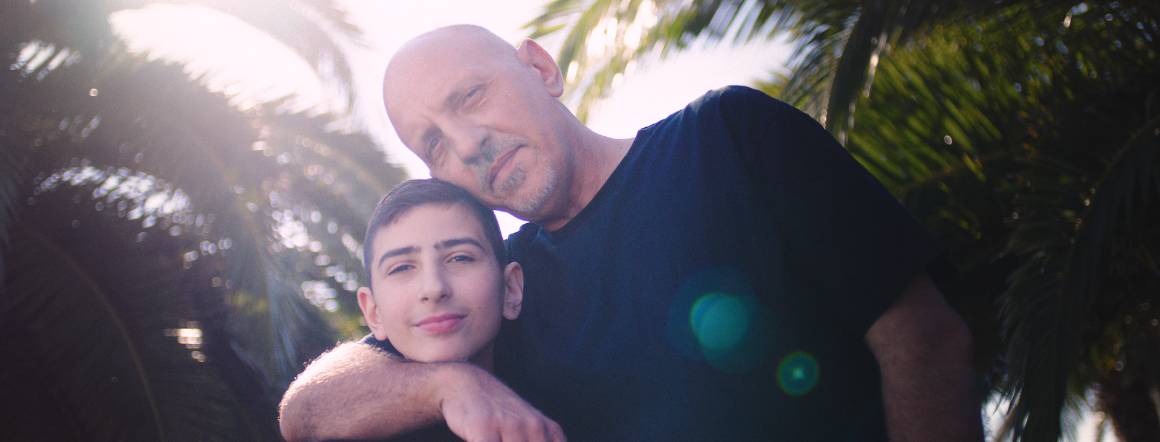
Image: Dr Emma Macdonald-Laurs
“With more accurate imaging, neurosurgeons can develop a safer surgical roadmap to avoid important blood vessels and brain regions that control speech, thinking and movement and removing healthy brain tissue. Children also avoid the need to have to undergo invasive testing.”
Published in Epilepsia, the MCRI led study involved 71 children at the RCH and 23 adults at the Austin Hospital with cortical dysplasia and focal epilepsy, which causes recurring seizures. Before using the AI detector’s keen eye, the study found 80 per cent of patients had their diagnosis missed by human examination of their MRI results.
MRI and FDG-positron emission tomography (FDG-PET scans) were used to train the detector, with children separated into training and test cohorts. A separate group of adult scans were used for additional validation of the detector’s performance.
Using information from both MRI and PET scans, the best result was recorded in the test cohort with a success rate of 94 per cent. Of the 17 children in the test group, 12 had surgery and 11 are now seizure free.
About one in 200 children has epilepsy, with more than 21,000 children in Victoria living with uncontrolled seizures. Cortical dysplasias, which develop when the baby is still in the womb, are a common cause of drug-resistant seizures.
“The seizures usually start out of the blue during the preschool or early school years before escalating to multiple times a day,” Dr Macdonald-Laurs said.
“Children often need to attend the emergency department or be admitted to hospital for treatment. Over time, frequent seizures impact on a child’s behaviour, mood and ability to learn.
“Epilepsy due to cortical dysplasia can, however, be improved or cured with epilepsy surgery if the abnormal brain tissue can be located and removed.”
But Dr Macdonald-Laurs said cortical dysplasias were hard to spot on routine MRIs, with less than half being recognised on a child’s first scan.
“Cortical dysplasias can be impossible for traditional MRI techniques to identify,” she said. “Failure to locate the abnormal tissue slows the pathway to a definitive diagnosis and may stop a child being referred for potentially curative epilepsy surgery.
“The longer a child continues to have uncontrolled seizures, the more likely they are to develop learning difficulties, including intellectual disability.”
Dr Macdonald-Laurs said with additional funding the team could test the detector in paediatric hospitals across Australia.
Royal, 5, successfully underwent surgery after scans, aided by the detector, identified a cortical dysplasia.
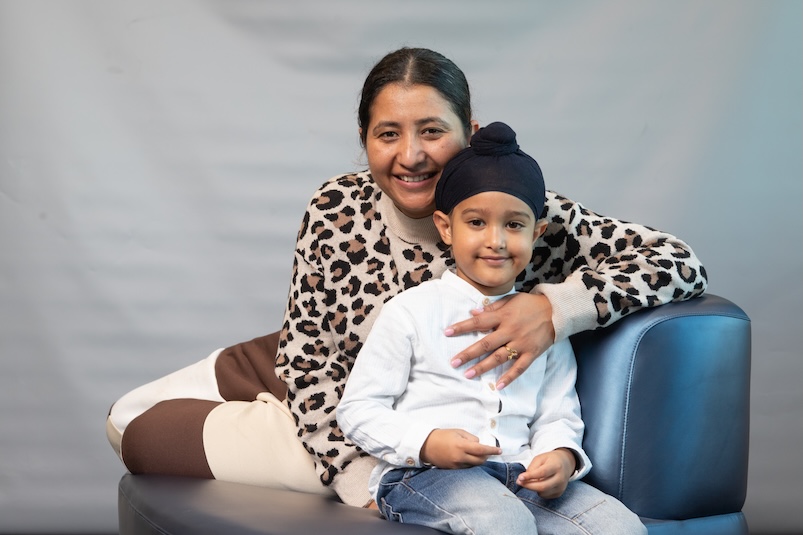
Image: Royal with his mum Gurjinder
Mum Gurjinder said he went from having multiple seizures a day to now being seizure free following the procedure.
Read more on Royal’s experience and recovery.
Researchers from The Royal Children’s Hospital, the University of Melbourne, Florey Institute of Neuroscience and Mental Health, Harvard Medical School and the Austin Hospital also contributed to the study.
Watch the 7NEWS report
Publication
Emma Macdonald-Laurs, Aaron E.L. Warren, Remika Mito, Sila Genc, Bonnie Alexander, Sarah Barton, Joseph Yuan-Mou Yang, Peter Francis, Heath R. Pardoe, Graeme Jackson and A. Simon Harvey. ‘Automated detection of bottom-of-sulcus dysplasia on MRI-PET in patients with drug-resistant focal epilepsy,’ Epilepsia. DOI: 10.1111/epi.18628
Available for interview
Dr Emma Macdonald-Laurs, MCRI Research Officer, Neuroscience and RCH neurologistand epileptologist
Dr Sila Genc, MCRI Clinical Scientist Fellow, Developmental Imaging and RCH Clinical Imaging Scientist
Upkar and Gurjinder, whose son Royal, 6, had a cortical dysplasia
Spiros, whose son John, 11, had a cortical dysplasia
Media contact
Murdoch Children's Research Institute
Phone: +61 457 365 848
Email:
show email address
About MCRI
MCRI is the largest child health research institute in Australia committed to making discoveries and developing treatments to improve child and adolescent health in Australia and around the world. They are pioneering new treatments, trialling better vaccines and improving ways of diagnosing and helping sick babies, children and adolescents. It is one of the only research institutes in Australia to offer genetic testing to find answers for families of children with previously undiagnosed conditions.
Funding
EML is supported by the Clifford Family PhD scholarship, the RTP PhD scholarship, the Australia New Zealand Child Neurology Society Kate Sinclair Memorial scholarship and the Melbourne Children’s Campus Clinician Scientist Fellowship. JYMY is supported by The Royal Children’s Hospital Foundation (RCHF 2022-1402), and The Kid’s Cancer Project (TKCP) Col Reynolds Fellowship. BA and SG are supported by The Royal Children’s Hospital Foundation (RCHF 2022-1402). RM is supported by an Australian Research Council Discovery Early Career Researcher Award (project number DE240101035). RM, HRP and GJ were supported by the Australian Epilepsy Project which receivedfunding from the Federal Government under the Medical Research Future Fund (Frontier Health and Medical Research Program - Grant Number RFRHPSI000008).