Federal Government commits $14.6 million to combat allergy crisis
- Details
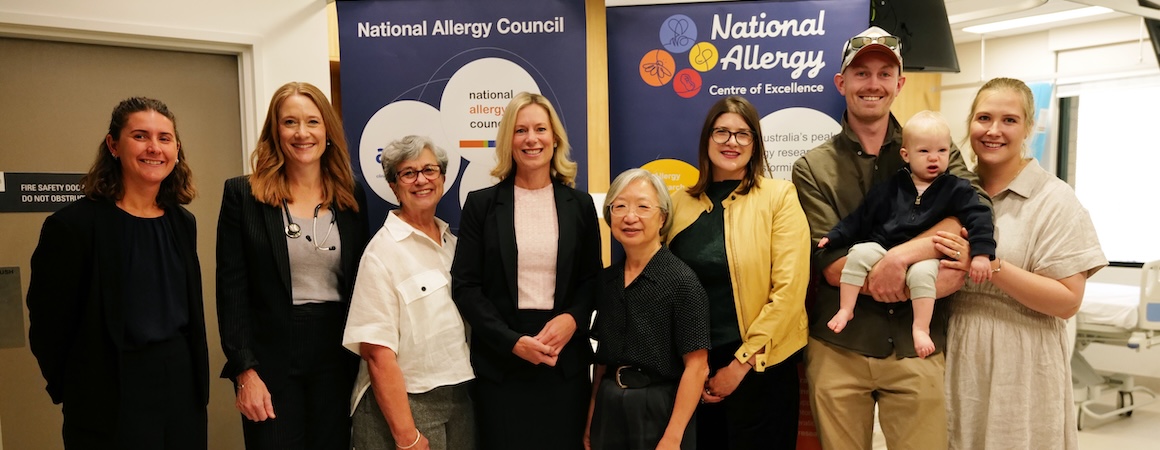
The Federal Government has announced a further $14.6 million to accelerate national allergy research and public health programs that support millions of Australians living with allergic disease.
The funding until June 2028 for the National Allergy Centre of Excellence (NACE) and the National Allergy Council (NAC), a partnership between the Australasian Society of Clinical Immunology and Allergy (ASCIA) and Allergy & Anaphylaxis Australia, was detailed in the 2025-2026 Mid-Year Economic and Fiscal Outlook (MYEFO).
Professor Kirsten Perrett, Director of the NACE hosted at Murdoch Children’s Research Institute (MCRI), said the federal commitment meant the peak allergy bodies could continue fast-tracking Australia’s evidence-based response to the widespread chronic condition.
“There is no cure and no time to waste when it comes to allergies, which touch almost every family, school and healthcare service,” she said. “Our focus is to address complex clinical challenges through embedded allergy research, rigorous evaluation and the rapid translation of emerging evidence into clinical care. We are ensuring Australia remains at the forefront of allergy research.”

Image: Professor Kirsten Perrett
Allergic disease is one of Australia’s most urgent public health challenges, now affecting 8.2 million people and costing the Australian economy $18.9 billion a year, according to a Deloitte Access Economic report. Costly Reactions: The economic and social cost of allergic disease in Australia was developed for ASCIA and the NAC.
Dr Sandra Vale, CEO of the NAC, also welcomed the government’s support for programs designed to improve health, save lives and reduce the burden of allergic disease.
“Allergies can take a huge physical and emotional toll on people with allergic reactions, anaphylaxis and while rare, deaths are increasing and present an everyday risk for many families,” she said. “This funding will directly support our work in delivering accessible, nationally standardised and evidence-based public health initiatives, education, training and everyday support for people living with allergic disease and those who care for them.”
Established in August 2022 with an initial $26.9 million in federal funding, the NAC and NACE have:
- Trained 233,000 school, children’s education and care, and healthcare professionals in life-saving anaphylaxis skills
- Trained 207,982 food service staff to provide safe food for people with food allergies
- Supported 5801 people through the National Allergy Helpline
- Provided 513,522 parents and healthcare professionals with evidence-based resources and advice through the Nip allergies in the Bub website
- Developed the NAC allergy assist education and specialist advice platform to support rural doctors to improve access to allergy care. More than 800 doctors currently access the platform, which was recently expanded to metropolitan GPs
- Enrolled 2269 people with allergies in five NACE embedded research programs, including the world-first, national, standardised peanut oral immunotherapy program (ADAPT), which was introduced at 10 paediatric hospitals across Australia in 2024
- Designed the NACE Allergy BioRepository (ALBI) to accelerate discoveries and improve health outcomes
- Analysed 768,118 people’s data from existing research to generate new knowledge, including the latest allergy prevalence rates
- Synthesised 5010 academic articles in Australia’s first drug and food allergy living evidence collection, underpinning clinical guidelines and public health programs
- Trained the next generation of allergy experts to drive critical research forward.
The peak bodies were established following a 2019 bipartisan Parliamentary Inquiry into Allergies and Anaphylaxis and subsequent Walking the Allergy Tightrope report, whichrecognised the critical need for a national plan of action.
Dr Melanie Wong, ASCIA nominated Director of the NAC, said: “The NAC and the NACE collaboration has already made significant inroads, and we now have an unprecedented opportunity to develop more targeted, effective public health responses to allergic disease in this country.”
For Edward, a nine-year-old from NSW, being allergic to milk, tree nuts and shellfish since he was a baby has re-shaped his family’s life.
“From the first reaction when he was six months old, I’ve planned every meal, birthday party, family holiday – always wondering if he’ll be ok,” Natalie, Edward’s mother, said. “The hardest part is the uncertainty because symptoms can be hidden, delayed and unpredictable.
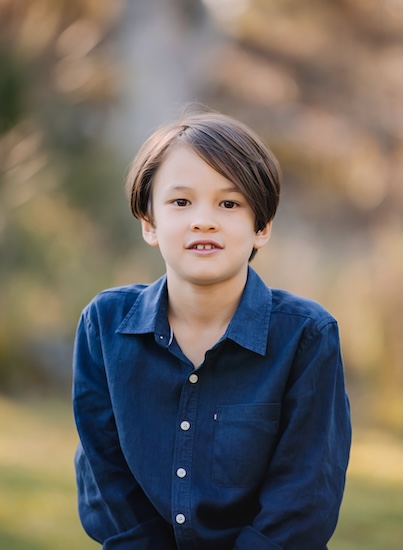
Image: Edward, nine, is allergic to milk, tree nuts and shellfish
“I would like to see stronger public education, better support for children’s mental wellbeing, and continued research into prevention and treatments like oral immunotherapy – so that families like mine can spend less time fearing food, and more time letting kids be kids."
“We’ve recently ventured overseas which was terrifying, and preparing for being in countries with different languages was a major step in our allergy journey. We used the Allergy & Anaphylaxis Australia chef cards translated in different languages, and have found helpful resources on the NAC website. I also joined the NACE Consumer Engagement Register and would like to see more research because it feels like allergies are still a big unknown.”

Image: Edward, nine years old, with his mother Natalie, father Martin and brother Leon (L-R).
Rhiannon, 28, of Victoria, is a NAC Allergy 250K youth program peer mentor and MCRI early-career allergy researcher, who has lived with severe food allergies, eczema and asthma since childhood.
“As someone who’s grown up with severe allergies, I know the challenges young people face and love supporting others through the NAC Allergy 250K Camps and online services,” she said. “My family’s strong history of allergic diseases inspired me to pursue a career in allergy research to understand what factors shape allergy development, and to ultimately improve prevention strategies and treatment options.”
Watch - Staggering surge in life-threatening reactions to food allergies | 9 News Australia
Available for interview
- Professor Kirsten Perrett, National Allergy Centre of Excellence Director; Paediatric Allergist; MCRI Group Leader, Population Allergy
- Dr Sandra Vale, National Allergy Council Chief Executive Officer
- Dr Melanie Wong, ASCIA nominated Director of the National Allergy Council and Clinical Immunologist/Allergy Specialist
- Maria Said, Allergy & Anaphylaxis Australia nominated Director and Co-chair of the National Allergy Council and A&AA Health Strategy and Advocacy Manager
- Image: Edward, nine years old, with his mother Natalie, father Martin and brother Leon
- Rhiannon, 28, Victoria, a NAC peer mentor and MCRI early-career allergy researcher, who has food allergies, eczema and asthma
Media contact
Murdoch Children's Research Institute
Phone:
show phone number
Email:
show email address
Social media
For more MCRI content, follow our social media channels below:



About the National Allergy Centre of Excellence (NACE)
The National Allergy Centre of Excellence, hosted at Murdoch Children’s Research Institute, is Australia’s peak allergy research body. Backed by a national network of 500 experts in drug, food, insect, and respiratory allergies, it is recognised as a European Academy of Allergy and Clinical Immunology (EAACI) Advanced Research Centre. The NACE builds critical national research infrastructure and collaboration that transforms consumer-centred allergy care.
About the National Allergy Council (NAC)
The National Allergy Council is a partnership between the Australasian Society of Clinical Immunology and Allergy (ASCIA) and Allergy & Anaphylaxis Australia (A&AA), Australia’s peak medical and patient support organisations for allergic disease. The National Allergy Council delivers evidence-based public health initiatives, education, training and support in consultation with key stakeholders, to improve the health and wellbeing of people with allergic disease.
About Murdoch Children’s Research Institute
Murdoch Children’s Research Institute (MCRI) is one of the world’s top three child health research institutes, dedicated to improving the health of children and adolescents in Australia and around the world. In 2026 MCRI celebrates its 40th anniversary, marking four decades of transforming child health through research, discovery and innovation. Its breakthroughs have improved diagnosis, informed global vaccine strategies, advanced precision medicine, and continue to redefine what’s possible for sick children. MCRI is one of the only research institutes in Australia to offer genetic testing to help families find answers for children with previously undiagnosed conditions.
Funding
The National Allergy Centre of Excellence and National Allergy Council are supported by funding from the Australian Government, Department of Health, Disability and Ageing.