
New network to make access to cutting-edge trials easier
- Details

Paediatric clinical trials across Victoria will become the national benchmark under a new network that will ensure more children have access to pioneering treatments closer to home.
The Victorian Paediatric Clinical Trials Network (VPCTN) led by Murdoch Children’s Research Institute (MCRI), in partnership with the Monash Children’s Clinical Trial Centre and Barwon Health, will make Victoria a first‑choice destination for commercially-sponsored paediatric trials.
Announced by Premier Jacinta Allan at MCRI’s 40th Anniversary Gala, the Victorian Government will provide $2 million towards the VPCTN.

Image: Premier Jacinta Allan speaking at MCRI's 40th Anniversary Gala
Making Victoria more attractive for industry‑sponsored trials
MCRI Professor Andrew Davidson said bringing together Victoria’s paediatric clinical trial sites and workforce would streamline processes, improve resource sharing and maximise efficiencies.
The VPCTN will deliver:
- A 25 per cent increase in new paediatric vaccine trials by June 2027 and a 50 per cent rise by 2030
- A 30 per cent increase in children participating in industry‑sponsored trials, a historically underserved population
- A 25 per cent boost in clinicians involved in paediatric clinical trials
Professor Davidson said the network would increase the range of cutting-edge therapies available and improve equity of access to high quality clinical trials, particularly for those from culturally and linguistically diverse communities and those living in rural, regional and outer metropolitan areas.

Image: Professor Andrew Davidson
How will a ‘One Trial, Many Sites’ model accelerate clinical trials?
The VPCTN will design and test a ‘One Trial, Many Sites’ model to safely enable the rapid opening of trials across multiple sites.
“The network will create and promote a single point of entry for industry and trial sponsors, initialling focusing on boosting vaccine studies before expanding to advanced therapy trials,” Professor Davidson said.
“By working collaboratively across sites, we can make Victoria a more attractive place for industry‑sponsored paediatric trials. This work will complement, not duplicate, existing initiatives across the sector.
“This approach will allow families to access study visits closer to home, while giving industry sponsors access to a larger and a more diverse pool of potential participants.”
Building a sustainable, skilled statewide workforce
Professor Davidson said the VPCTN was focused on having a long‑term impact.
“Our goal is not only to increase trial activity, but to build a system that is sustainable, efficient and genuinely centred on the needs of children and families,” he said.
“We will focus on developing a skilled workforce by delivering accessible, high‑quality training and creating an accessible statewide database detailing the capacity and interest of paediatric clinical trial sites.”
Life changing access to medications
Jasper, 9, was diagnosed with Crohn’s disease, at two years of age. The chronic inflammatory bowel disease causes long-term swelling, pain and irritation in the digestive tract.
Mum Annaliese said Jasper began treatment at The Royal Children’s Hospital but while standard treatments, including steroids and immunosuppression were initially effective, they lost efficacy over time.
To help alleviate his symptoms, Jasper was enrolled in a commercially sponsored clinical trial of vedolizumab, an experimental drug that was hope could treat moderate to severe Crohn's disease.
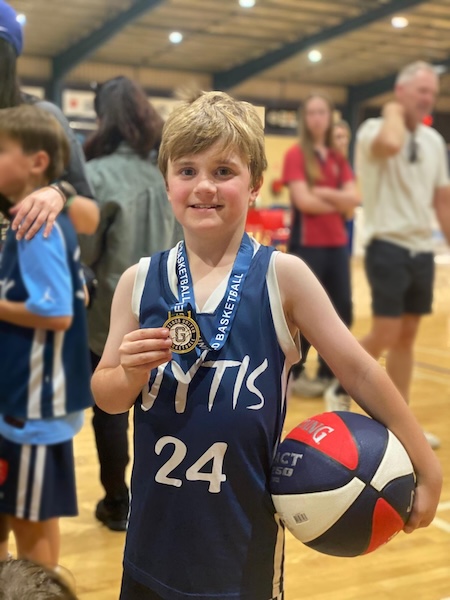
Jasper, 9, was diagnosed with Crohn's disease
The trial was led by the Melbourne Children's Trials Centre, a collaboration between MCRI, the RCH, The Royal Children's Hospital Foundation and the University of Melbourne.
Annaliese said the effect of vedolizumab was almost immediate, inducing complete remission.
But said she as Jasper grew, the trial protocol prevented his medical team from escalating the dose.
“Eventually the drug became no longer sufficient and his symptoms returned,” she said. "He was required to stop the trial and return to standard care, which had significant side effects.”
Fortunately for Jasper, Annaliese said compassionate access to vedolizumab was recently secured following advocacy from his medical team. He has now received his first post‑study dose.
“The medication has been a blessing, Jasper is now back to his normal self,” she said. “It has changed our lives having access to this treatment. He is no longer in pain, feeling bloated and nauseous or feeling depressed.
“You feel helpless and lonely when you have a very sick child. Giving families access to clinical trials close to home will significantly improve their quality of life.”
Funding
The Victorian Government will provide $2 million towards the Victorian Paediatric Clinical Trials Network. The Melbourne Children's Trials Centre is funded by The Royal Children’s Hospital Foundation.