
2000 Stories Study
- Project status: Active
Research area: Population Health > Centre for Adolescent Health

2000 Stories: Victorian Adolescent Health Cohort Study (VAHCS) and Victorian Intergenerational Health Cohort Study (VIHCS)
The study investigates mental and physical health problems and risk behaviours in the adolescent to young adulthood transition, and whether pre-conception factors can predict child and parental outcomes into childhood in the next generation.
The study investigates mental and physical health problems and risk behaviours in the adolescent to young adulthood transition, and whether pre-conception factors can predict child and parental outcomes into childhood in the next generation.
Victorian Adolescent Health Cohort Study (VAHCS)

2000 Stories: Victorian Adolescent Health Cohort Study (VAHCS) is a landmark longitudinal study spanning almost 30 years. The project began in 1992 with around 2000 Year 9 students who were 14 to 15 years of age. These students completed six surveys from Years 9 to12 and three surveys in young adulthood (aged around 21, 24 and 29). The same participants completed surveys at 35 and 41 years of age.
Comprehensive adolescent development insights
The first six surveys alone created one of the most comprehensive pictures of adolescent development in the world. We looked at many aspects of teenage health and behaviour, including mental health, personality and behaviour, school, family, and drug and alcohol use. This information has been used to improve the health of future generations by influencing policy and informing prevention programs.
Focus on long-term health impacts
More recently, we have focussed on how teenage experiences, health and lifestyles may affect physical and emotional health in adulthood and in the next generation. Our findings have helped bring global attention to the important role of adolescence in shaping future health.
Victorian Intergenerational Health Cohort Study (VIHCS)

Many of our original 2000 stories participants have children of their own, creating the unique opportunity to explore how the health of one generation may be related to the next. The Victorian Intergenerational Health Cohort Study (VIHCS) was launched in 2006 and aims to understand the processes that might influence many aspects of health and wellbeing across generations.
Examining childhood development
VIHCS looks at the processes of social and psychological development in childhood. It is one of the first studies in the world to embed a study of child development within an existing longitudinal study of parent psychosocial development.
Learning from parents and children
Following parents and children has allowed us to learn about the experience of becoming a parent, including the social, emotional and lifestyle changes that take place with this transition; and the health and wellbeing of our participants children as they grow up.
Participant recruitment and interviews
Between 2006 and 2014, we recruited 1,030 children from 665 of our original VAHCS participants. We invited parents to an interview during pregnancy, two months after birth, at their child’s first birthday, and as their child turned eight years old. We are currently reaching out to these parents as their children turn 15 years old – the same age as their parents were when they began taking part in the study. VIHCS children have also been invited to participate in surveys during childhood (at 8 years of age) and adolescence (15 years of age).
Our goal
We hope that the information collected during this stage of the study will significantly improve our understanding of how to best promote the health and wellbeing of the next generation of Australians.
Current research
15-year follow-up study
In 2022, our family study launched a 15-year follow up. Back in 1992 when our original participants joined the study, they were 15 years old – the same age as their children are now. This parallel provides a unique opportunity for us to understand how being an adolescent has changed from the 1990’s to today.
The research aims to create a comprehensive picture of adolescent development and understand the processes that may influence health and wellbeing across generations. Family study participants can expect something in the post as their child turns 15, followed by a call from our friendly research team to introduce the survey. As always, taking part in this part of the research is voluntary.
Our commitment to you
Privacy
Your privacy is protected when we receive your contact details, which are stored securely following strict protocols.
Ethics and confidentiality
All information collected is kept strictly confidential. Survey responses are anonymised by being coded and stored separately from your name and contact details.
Data security
All data is stored securely and in compliance with National Health and Medical Research guidelines, as well as The Royal Children’s Hospital Human Research Ethics Committee requirements.
Publication of results
Results of the study are published in professional journals and presented at key health conferences in Australia and internationally. No individual information will be identified in any publication or presentation.
Scientific Director – Professor Craig Olsson
Professor Craig Olsson is a developmental scientist specialising in population-based cohort studies of child and adolescent development.
He is actively involved in other Australasian cohort studies and is the National Convenor of the Australian Research Alliance for Children and Youth (ARACY) Longitudinal Studies Collaborative.
Professor Olsson is also the founding convener of LifeCourse, and is commited to helping researchers gain a better understanding of cohort studies and how they might be best used to advance understanding of child and adolescent health and development.
Deputy Director – Dr Elizabeth Spry
Dr Liz Spry is an investigator and Deputy Director of the Victorian Intergenerational Health Cohort Study (VIHCS).
She has been working with the study since 2009 in various roles, including Data Manager, Project Manager, and Postdoctoral Research Fellow, and manages the cohort’s publication and data strategy.
Dr Spry has a particular interest in the application of emerging methods in data science and causal inference.
Her research aims to explore how parents’ developmental histories and life experience impact the resources they bring to parenting, and how best to promote positive health outcomes for parents and children.
Senior Research Fellow – Dr Jessica Kerr
Dr Jessica Kerr joined the 2000 Stories team as an Investigator in 2021. In this role, Dr Kerr manages the publication strategy and collaborations within the Victorian Adolescent Health Cohort Study (VAHCS).
Her research harnesses population-based cohort data to examine life course outcomes associated with child and adolescent mental and physical health.
She aims to identify intervention targets to reduce high rates of all-cause and cause-specific mortality including suicide, substance use deaths, and early non-communicable disease deaths among adolescents and young adults.
Project Manager – Dr Carolina Murphy
Dr Carolina Murphy joined 2000 Stories in 2015. Initially coordinating the VIHCS arm of the study, Dr Murphy took over as Project Manager in 2021.
Dr Murphy has worked with infants, children, and families in several research projects. Her areas of interests include early intervention and child development. She also manages the Child to Adult Transition Study at MCRI.
Biostatistician – Hanafi Mohamad Husin
Hanafi Mohamad Husin (MBiostat) is a biostatistician with experience in analysing data from longitudinal observational health studies.
He is also interested in analysis methods that address missing data commonly found in longitudinal studies.
He supports key investigators and collaborators by reviewing and refining statistical analysis plans, performing complex data analyses, and advising on data collected in 2000 Stories.
He also provides technical support to project assistants for data collection.
Project Assistant – Ariella Graf
Ariella Graf is a Project Assistant with the 2000 Stories Study.
Since joining the team in 2022, she has been involved in coordinating participant communication, overseeing data collection, and implementing strategies to enhance engagement and retention.
With a background in neuroscience at the University of Melbourne, Ariella is passionate about understanding the factors shaping young people’s wellbeing and development.
She works across multiple cohort studies at the Centre for Adolescent Health, contributing to research that informs better support for adolescents through critical developmental stages.
Project Assistant – Esther Laurance
Esther Laurance re-joined the team in 2025 having previously worked on the project between 2019 and 2021.
Esther has experience contributing to a diverse range of social and health studies, with focus on longitudinal research into mental and physical health and development over the last four years.
She is passionate about contributing to health research and science communication.
Biostatistician – Susie Ellul
Susie Ellul is a biostatistician working within the Clinical Epidemiology and Biostatistics Unit (CEBU) at MCRI.
She joined the 2000 Stories team in 2024, providing high-level statistical expertise to researchers.
She has developed expertise in the analysis of longitudinal observational data and contributed to research in child and adolescent health over the life course.
Her passion is to help health researchers get the most from their data and have greatest impact.
Biostatistician – Dr Ghazaleh Dashti
Dr Ghazaleh Dashti (PhD, DDS, MPH) is a biostatistician and epidemiologist within CEBU, who joined the 2000 Stories team in 2020.
Her primary research interests are developing and using methods to improve causal inference from longitudinal observational studies.
She works across a range of health areas, including mental health, adolescent health, and cancer.
She provides high-level support in epidemiological and statistical methods to researchers who are interested in using the unique 2000 stories data.
Founding Scientific Director - Professor George Patton
Professor George Patton was the Scientific Director of 2000 Stories from 1993 until his passing in late 2022.
Professor Patton was a medically qualified epidemiologist with a clinical background in child and adolescent psychiatry.
In the early 1990s, Professor Patton assumed leadership of the Victorian Adolescent Health Cohort Study and together with Professor Olsson, later established the ground-breaking Victorian Intergenerational Health Cohort Study, which together form 2000 Stories.
Professor Patton was an remarkable researcher who made significant contributions to the adolescent health field.
Inaugural Scientific Director - Professor Glenn Bowes
Professor Glenn Bowes was a medically trained respiratory physician specialising in adolescent health, and was the Inaugural Director of the Centre for Adolescent Health at the Royal Children’s Hospital.
Professor Bowes designed and implemented the first wave of the Victorian Adolescent Health Cohort Study in 1992, before appointing Professor Patton to lead the survey into an ongoing cohort study.
Professors Bowes and Patton worked closely together across the adolescent waves of the survey.
Collaborations
Thanks to our key partners, funders, and supporters.
- University of Queensland - Centre for Youth Substance Abuse
- National Drug and Alcohol Research Centre
- University of Melbourne - Melbourne Institute of Applied Economic and Social Research
- University of Bristol - Centre for Academic Mental Health, and Bristol Medical School
- University of Melbourne - Melbourne School of Population and Global Health
- University of Otago - Dunedin Multidisciplinary Health and Development Study
- Cannabis Cohorts Research Consortium
- Deakin University - School of Psychology
- University of Tasmania - Menzies Institute for Medical Research
- University of the Sunshine Coast - School of Health and Behavioural Sciences
- University of Otago Christchurch - Dept Psychological Medicine
- King’s College London - Section for Women's Mental Health, Institute of Psychiatry, Psychology & Neuroscience
Funding
- National Health and Medical Research Council - NHMRC
- VicHealth
- Australian Rotary Health Mental Health of Young Australians Research Grant
- Australian Federal Government Department of Health and Ageing
- Murdoch Children’s Research Institute
Publications
View a full list of 2000 Stories academic papers
Supporting Mums
Our research findings suggest that the risk of Postnatal depression (PND) for mums could be dramatically reduced by effective interventions during pregnancy. Interventions aimed at reducing depressive symptoms and improving social support and quality relationships may halve the risk of PND.
Postnatal depression (PND) affects many women around the world and can limit women’s own ongoing wellbeing, as well as their capacity to enjoy being a parent and engaging with their infants. Mothers who experience mental health problems during their adolescence or young adulthood are most at risk. Mothers with previous mental health problems are up to five times more likely to experience PND than those without.
We explored potential ways to prevent PND for at-risk women. We used a sample of 398 mothers (600 pregnancies) from the Victorian Intergenerational Health Cohort Study (VIHCS). We assessed their mental health 12 times over 20 years, from adolescence to the first year postpartum.
We found that more than half the risk of PND in mothers with pre-pregnancy symptoms was mediated by depressive symptoms and a lack of social support during pregnancy. Partner support was important in reducing the risk of PND for these mothers. Our findings suggest we could potentially halve the risk of PND for at-risk mothers by effective intervention during pregnancy, to reduce their depressive symptoms and improve their social support and quality relationships.
Even greater opportunities to prevent PND may arise from a greater investment in preconception care, to disrupt the complex pathways increasing the risk of PND. We found persistent mental health problems of adolescence were associated with the greatest increase in risk of PND symptoms. Investing in adolescent mental health and education around healthy relationships may limit mental health symptom persistence and strengthen social support before pregnancy. Intervening well before pregnancy benefits women’s health and, it benefits the health and development of the next generation.
Research paper:
Spry EA, Moreno-Betancur M, Middleton M, Howard LM, Brown SJ, Molyneaux E, Greenwood CJ, Letcher P, Macdonald JA, Thomson KC, Biden EJ, Olsson CA, Patton GC. Preventing postnatal depression: a causal mediation analysis of a 20-year preconception cohort. Philos Trans R Soc Lond B Biol Sci. 2021 Jun 21;376(1827):20200028. doi: 10.1098/rstb.2020.0028. Epub 2021 May 3. PMID: 33938272; PMCID: PMC8090815.
Prospective Parents Mental Health Linked to Premature Birth
Dr Elizabeth Spry published a new study in 2020, one of the 2000 Stories investigators, in EClinicalMedicine. Findings from this study may offer innovative approaches to preconception care. Mum’s health is often the focus of children’s early growth and development. However, this study has shown that both Mum and Dad’s mental health are associated with the risk of premature birth.
Pre-term birth is common ‘but the underlying causes have been unknown’ says Dr Claire Wilson, the study’s co-lead. Dr Wilson notes that 'preterm birth can carry lifelong effects on health and development such as visual and hearing impairments and poor health and growth.' The study found that men with persistent stress and anxiety throughout adolescence and young adulthood were more likely to have a baby born premature. This link suggests that getting mental health right during adolescence may not only help the individual, but could have positive effects for their future child’s health and development.
Research paper:
Elizabeth A Spry, Claire A Wilson, Melissa Middleton, Margarita Moreno-Betancur, Lex W Doyle, Louise M Howard, Anthony J Hannan, Mary E Wlodek, Jeanie LY Cheong, Lindsey A Hines, Carolyn Coffey, Stephanie Brown, Craig A Olsson, George C Patton, Parental mental health before and during pregnancy and offspring birth outcomes: A 20-year preconception cohort of maternal and paternal exposure, eClinicalMedicine, Volume 27, 2020, 100564, ISSN 2589-5370.
Alcohol and parenthood
Does becoming a parent reduces problem alcohol use long term? A team of researchers, led by Rohan Borschmann, analysed data from 4,015 participants in 3 long-term cohort studies (the 2000 Stories study, the Australian Temperament Project, and the Christchurch Health and Development Study) over a 15-year period to investigate whether men and women drank less when they became parents. They found that while 25% of women who were not a parent reported recent binge drinking, only 7% of women with a 1-year-old reported recent binge drinking.
However, women only took a temporary time-out from drinking and after 5 years, women's drinking had returned to pre-parenting levels. Interestingly, men did not change their drinking behaviours about becoming a parent. We know that having a parent with an alcohol problem can potentially have many adverse outcomes for kids, so these findings highlight the need for investing in alcohol prevention programs in young adults before they become parents.
Research paper:
Borschmann R, Becker D, Spry E, Youssef GJ, Olsson CA, Hutchinson DM, Silins E, Boden JM, Moreno-Betancur M, Najman JM, Degenhardt L, Mattick RP, Romaniuk H, Horwood LJ, Patton GC; Cannabis Cohorts Research Consortium. Alcohol and parenthood: An integrative analysis of the effects of transition to parenthood in three Australasian cohorts. Drug Alcohol Depend. 2019 Apr 1;197:326-334. doi: 10.1016/j.drugalcdep.2019.02.004. Epub 2019 Feb 13. PMID: 30878883.
Let’s talk about Dads
Research from the 2000 Stories study has shown that men with a history of common mental health problems are four times more likely to experience mental health problems during their partner’s pregnancy. Health services and research have typically focused on mums’ mental health around pregnancy.
Elizabeth Spry, 2000 Stories investigator highlights the importance of the mental health of dads and the need to identify and support men with pre-existing mental health issues before they become fathers. Here’s what we found about expecting fathers’ mental health:
- During their partners pregnancy 1 in 10 men will experience mental health problems.
- The risk of pre-natal mental health problems are four times greater for those who have had similar problems in their teens or early 20s.
- Twenty-eight percent of men with prior mental health problems in both adolescence and young adulthood experience mental health problems during their partners pregnancy.
These findings highlight the need to attend to the mental health of men before they become fathers, with benefits for themselves and for their children.
Research paper:
Spry E, Giallo R, Moreno-Betancur M, Macdonald J, Becker D, Borschmann R, Brown S, Patton GC, Olsson CA. Preconception prediction of expectant fathers' mental health: 20-year cohort study from adolescence. BJPsych Open. 2018 Mar 5;4(2):58-60. doi: 10.1192/bjo.2017.10. PMID: 29971146; PMCID: PMC6020279.
Adolescence and the next generation
An article in one of the world's top academic journals, Nature was led by the Chief Investigator of our study Professor George Patton. This article, titled 'Adolescence and the next generation', highlights the importance of investing in adolescent health as this impacts on the health of the next generation. We know that the first 1,000 days of life are critically important for future health, but there is mounting evidence that influences on health begin well before conception and can track back to the parent's adolescence. With changing social trends, such as timing of parenthood, investments in improving young people's health will yield benefits not only for them but also for future generations.
Research paper:
Patton GC, Olsson CA, Skirbekk V, Saffery R, Wlodek ME, Azzopardi PS, Stonawski M, Rasmussen B, Spry E, Francis K, Bhutta ZA, Kassebaum NJ, Mokdad AH, Murray CJL, Prentice AM, Reavley N, Sheehan P, Sweeny K, Viner RM, Sawyer SM. Adolescence and the next generation. Nature. 2018 Feb 21;554(7693):458-466. doi: 10.1038/nature25759. Erratum in: Nature. 2018 Jul;559(7712):E1. doi: 10.1038/s41586-018-0069-3. PMID: 29469095.
Contact us
If you have any queries or if your contact details have recently changed, please contact our research team.
Phone: 1800 706 101 (toll free Australia)
Email:
show email address
2000 Stories Study
Murdoch Children's Research Institute
The Royal Children's Hospital
50 Flemington Road
Parkville VIC 3052
Australia
Update my contact details
To update your contact details please follow the link below.
Our research design is based on following people over time, so it’s really important that we can reach you as we can’t replace any of our participants.
Adolescent health newsroom
Global Adolescent Health

Connected Minds: exploring the effects of social media on adolescent wellbeing and development

Prof Enzo Porrello and Prof Susan Sawyer join Australian Academy of Health and Medical Sciences fellows

NHMRC grant to Prof Peter Azzopardi for adolescent health research

Landmark report reveals key challenges facing adolescents

What’s the difference between period pain and endometriosis pain?

Eight researchers awarded NHMRC Investigator Grants
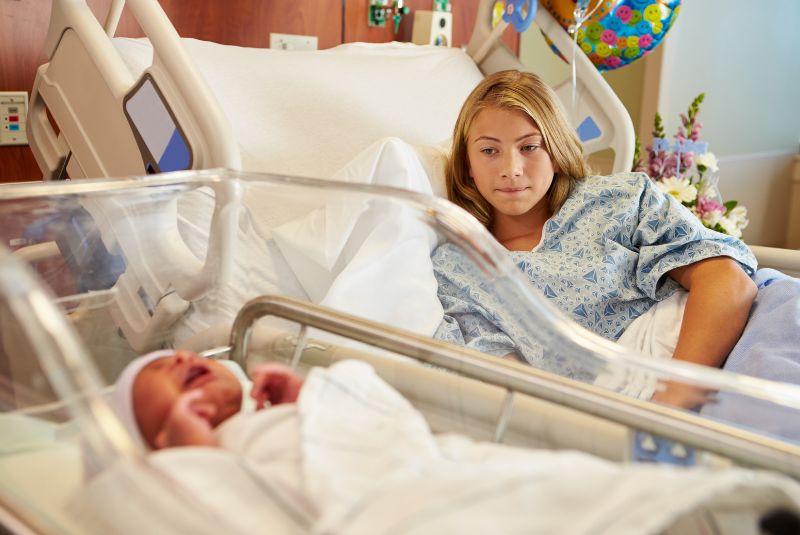
‘Adolescent, pregnant and forgotten’ – new research identifies maternal healthcare gap for millions of adolescent girls

Innovative digital program to decode youth mental health and well-being

Positive social-emotional environments in schools boosts student’s mental health

Australian Temperament Project Generation 3 (ATP Gen3)
CRE in Global Adolescent Health — 2020–2025 (archived)

Share //