
MATE-Asia study
- Project status: Active
Research area: Infection, Immunity and Global Health > Translational Microbiology
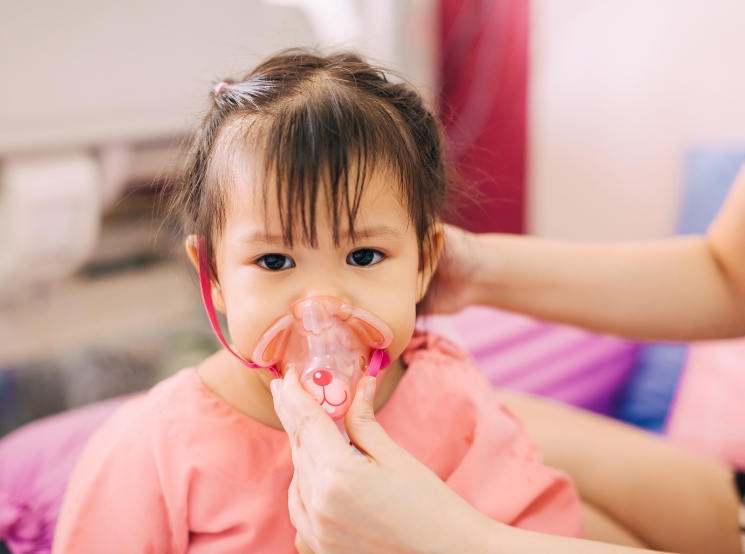
On target, on time: advancing diagnosis for children with complicated pneumonia across Asia
Using molecular diagnostics to improve the detection of childhood lung infections, enabling better patient care and informing vaccine strategies across Asia.
Using molecular diagnostics to improve the detection of childhood lung infections, enabling better patient care and informing vaccine strategies across Asia.
Our focus
Our study applies a new molecular diagnostic tool that we previously developed to improve the detection of bacteria causing complicated pneumonia (empyema) including the pneumococcal bacteria.
Our findings will enable clinicians to deliver more appropriate antibiotic treatments, and inform effective vaccine strategies, across six countries in Asia.
Complicated pneumonia (empyema) and research gap
Pneumonia is the leading cause of death among children worldwide. Pleural empyema, the buildup of infected fluid around the lungs, is one of its most serious complications, affecting about 5 per cent of hospitalised paediatric cases.
Treatment of empyema requires drainage of the infected pleural fluid and antibiotics. However, the current diagnostic test (traditional culture of the pleural fluid) often fails to identify the specific bacteria involved, forcing clinicians to treat children with prolonged broad-spectrum antibiotics.This approach is increasingly ineffective in regions such as Asia, where 40 per cent of global childhood pneumonia deaths occur and extensive use of broad-spectrum antibiotics has driven widespread resistance.
Compounding the impact on individual patient care, preventive public health efforts are hampered without data on the local pneumonia epidemiology. This critical knowledge gap delays efforts to deliver life-saving pneumococcal vaccines to Asia.
There is an urgent need to identify the bacteria causing empyema, such as pneumococcal bacteria, enabling targeted treatment and effective vaccine strategies.
Molecular tools to improve the diagnosis of pleural empyema
Our team has developed new molecular tests that improve the detection of bacterial species four-fold compared with traditional diagnostics. For the pneumococcal bacteria, our test was eight times more effective.
We are now applying these tests in our MATE-Asia study, recruiting 400 children with pleural infection across six Asian countries to identify pathogens, coinfections, and estimate vaccine-preventable cases. Countires include:
- Indonesia
- Thailand
- Philippines
- Cambodia
- Hong Kong
- Bangladesh
Contact us
For more information about this study please contact us.
Dr Eliza Nikolaou
Email:
show email address
Phone:
show phone number
Recruitment criteria
Recruitment is conducted overseas to our participating sites (see Funding & collaborations).
Participants who meet all the following eligibility criteria can be enrolled in the study:
- are under 18 years of age
- are admitted to a participating hospital with a diagnosis of community-acquired pneumonia complicated by empyema
- have had or will have a pleural fluid drainage procedure as part of clinical management
- are capable of participating in an informed consent process or has a parent/guardian with capacity to provide informed consent on their behalf, except if a waiver of consent is granted.
We are also recruiting participants who have a non-pneumonia empyema as controls for out study. Eligibility criteria is as follows:
- are under 18 years of age
- are admitted to a participating hospital with a non-pneumonia empyema and had or will have a pleural fluid drainage procedure as part of clinical management
- are capable of participating in an informed consent process or has a parent/guardian with capacity to provide informed consent on their behalf, except if a waiver of consent is granted.
Note: Mature minors may provide assent with parental consent according to each country’s regulations.
Key outcomes
Our project will improve empyema diagnosis by:
- increasing the detection of the causative organism enabling clinicians to deliver targeted antibiotics earlier
- improving patient management and antibiotic stewardship in the future.
This work is particularly critical in Asia, where antibiotic use and resistance are among the highest globally.
Successful completion of our study will ensure immediate implementation of our molecular diagnostic test as part of standard diagnosis on children with empyema in our sites in six Asian countries.
Our Asian partners have identified the importance of our research for clinical practice in their settings as a lack of an appropriate molecular method diminishes patient care.
Our findings will allow us to:
- deliver data on the prevalence of pneumococcal empyema and the causative serotypes in six countries in Asia.
- address the lingering misconception that pneumococcal disease is uncommon in the region and provide accurate information for decision-making for vaccine programs.
- establish a future platform to measure pneumococcal vaccine impact and the effect of formulation and/or schedule changes in Asia.
Principal Investigator
Professor Catherine Satzke, Principal Research Fellow/Group Leader, Translational Microbiology
Project Lead
Dr Eliza Nikolaou, Senior Research Fellow, Translational Microbiology.
MCRI research partners
We also work in collaboration with the following MCRI research groups:
Funding
Thank you to our generous sponsors.
- Thrasher Research Foundation
- National Health and Medical Research Council (NHMRC)
- Centre in Research Excellence in Pneumococcal Disease Control in the Asia-Pacific
Collaborating countries and sites
Indonesia
Principle Investigator, Dr Dodi Safari
- Eijkman Research Centre, Indonesia (testing site)
- Djamil Central General Hospital (RSUP Dr. M. Djamil)
- RS.Cipto Mangunkusumo National Central Public Hospital
- RSUD Arifin Achmad
- RSUD Provinsi NTB General Hospital
Thailand
Principle Investigators Prof Kulkanya Chokephaibulkit and A/Prof Wanatpreeya Phongsamart
- Siriraj Hospital
- Queen Sirikit National Institute of Child Health
Phillippines
Principle Investigator, Prof Anna Ong-Lim
- Philippines General Hospital
- Lung Center of the Philippines
Cambodia
Principle Investigator, Prof Paul Turner
- Angkor Hospital for Children
Hong Kong
Principle Investigator, Prof Gary Wong
- Prince of Wales Hospital, Hong Kong
Bangladesh
Principle Investigator, Dr Senjuti Saha
- Child Health Research Foundation (CHRF)
Key publications
Jacobson J, Fabri L, Osowicki J, Shanthikumar S, Costa AM, Ortika B, Wee-Hee A, Pragassen M, Gatt C, Gonis G, Nguyen C, Rozen T, Teague W, Buttery J, Clifford V, Mulholland K, Steer A, Ranganathan S, Daley A, Dunne E, Satzke C. Evaluation of a multiplex-qPCR for paediatric pleural empyema-An observational study in hospitalised children. PLoS One. 2024 Jun 25;19(6):e0304861. doi: 10.1371/journal.pone.0304861. PMID: 38917227; PMCID: PMC11198775.

Share //