Studying rheumatic heart disease in a dish
- Project status: Active
Research area: Stem Cell Medicine > Heart Regeneration
Rheumatic heart disease (RHD) is a global healthcare problem affecting 55 million people worldwide. In Australia, RHD disproportionately affects Aboriginal and Torres Strait Islander people.
This research uses induced pluripotent stem cell-derived models of heart valve tissue to understand the role the immune system plays in Rheumatic heart disease (RHD) and advance treatments to improve the lives of people living with RHD.
This research uses induced pluripotent stem cell-derived models of heart valve tissue to understand the role the immune system plays in Rheumatic heart disease (RHD) and advance treatments to improve the lives of people living with RHD.
This research uses induced pluripotent stem cell-derived models of heart valve tissue to understand the role the immune system plays in Rheumatic heart disease (RHD) and advance treatments to improve the lives of people living with RHD.
Purpose of research
Rheumatic heart disease (RHD) is caused by Group A Streptococcus infection that triggers irreversible damage to valve tissue which means the heart cannot function effectively. There is currently no treatment to repair tissue once it’s damaged, nor vaccine to protect against infection.
As such, there is an urgent need to better understand the mechanisms of disease and identify early treatment options for patients without relying on valve replacement surgery.
Study details
This program of research, led by Dr Holly Voges, aims to address this gap in knowledge to improve treatment of RHD and other heart valve diseases.
The main aim is to understand the role of the immune system in heart valve damage, using the world’s first human heart valve tissue made from stem cells.
The long-term goal of this research is to apply this new knowledge to find better medicine to reverse tissue damage and improve lives of people with RHD.
The main aim is to understand the role of the immune system in heart valve damage, using the world’s first human heart valve tissue made from stem cells.
The long-term goal of this research is to apply this new knowledge to find better medicine to...
The main aim is to understand the role of the immune system in heart valve damage, using the world’s first human heart valve tissue made from stem cells.
The long-term goal of this research is to apply this new knowledge to find better medicine to reverse tissue damage and improve lives of people with RHD.
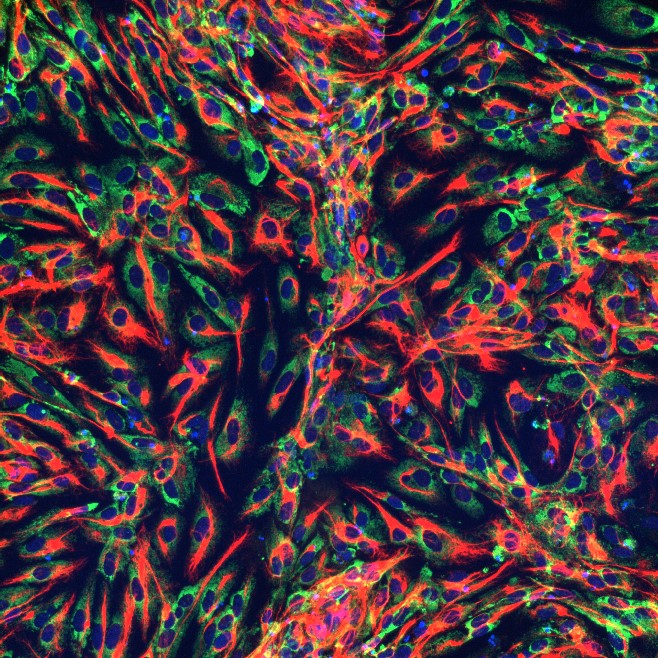
Image: Heart valve cells derived from stem cells.
Partnering with First Nations communities
RHD is a valve disease that affects over 11,000 people in Australia, which is projected to increase to 15,000 by 2031. In Australia, the rates of RHD amongst Aboriginal and Torres Strait Islander people are 60 times that of non-indigenous Australians. Sadly, historical practices and policies have damaged trust in medical research amongst some First Nations communities.
Therefore, we are striving to create an RHD stem cell research program that is guided by cultural safety for Aboriginal and Torres Strait Islander communities. To this end we are partnering with key organisations to ensure we have strong First Nations community and patient input into all aspects of the program.
Funding
- National Health and Medical Research Council
- National Heart Foundation
- CASS Foundation
- Therapeutic Innovation Australia
- Fox Family Foundation
- Scobie and Claire MacKinnon Trust
Collaborators
- Professor Christian Brizard, Royal Children’s Hospital
- Professor Andrew Steer, Murdoch Children’s Research Institute
- Dr Bo Remenyi, Royal Darwin Hospital
- Ms Vicki Wade, Menzies School of Health Research
- Dr Hannah Frost, Murdoch Children’s Research Institute
- Ms Annette Gaulton, Wadja Royal Children’s Hospital
- Ms Selene White, Wadja Royal Children’s Hospital

Team photo from left: Adriano Morandini, Jessica Durrant-Whyte, Holly Voges, Serene Yeow, Adam Piers.
Contact us
Dr Holly Voges, Team Leader
Email:
show email address
Phone:
show phone number
Heart disease newsroom

MCRI’s 40th Anniversary Gala celebrates four decades of discovery

Multi-pronged plan to address childhood obesity crisis

Accelerating discoveries into genetic and childhood heart diseases

Denmark’s Queen Mary and King Frederik tour MCRI

New biotech company to accelerate treatments for heart disease

Celebrating Australian excellence across the arts and sciences

Old mates come together for MCRI

New software tool could help better understand childhood cancer
Using human stem cells, genomics and AI to solve childhood heart disease

Positive experiences can protect children’s heart health

Students’ blood pressure checked at school to help lower heart disease risk

Stem cell researchers secure funding for research into genetic heart disease

Share //