Dr Natasha Tuano
Dr Natasha Tuano
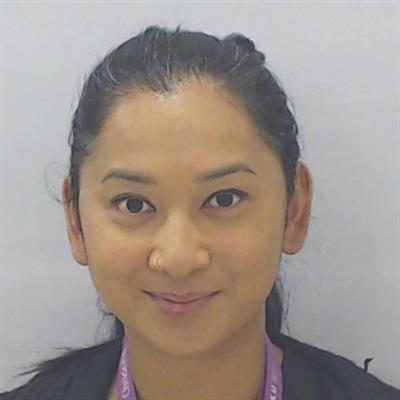
Dr. Natasha Tuano is a Senior Research Officer working with A/Prof. Richard Mills on Duchenne muscular dystrophy by developing a non-viral CRISPR based therapy in collaboration with Prof. Niels Geijsen to restore Dystrophin expression using bioengineered skeletal muscle as a disease model, as part of the ReNEW program.
Natasha completed her Bachelor of Science with Honours at The University of Melbourne. Following on from her undergraduate studies, Natasha completed her PhD at Monash University under Prof. Assam El-Osta and Dr. Jun Okabe studying the role of a lysine methyltransferase, Set7 in stem cell derived smooth muscle cells and differentiation.
In 2017, Natasha was employed as a Research Fellow with A/Prof. Joseph (Sefi) Rosenbluh at Monash University in the Department of Biochemistry and Monash Biomedicine Discovery Institute. Natasha’s focus was to utilise pooled CRISPR technology for loss/gain of function screens to identify breast cancer risk genes.
Becoming a mother to a premature baby, Natasha took an interest in the vision and goals at Me&, a discovery stage biotechnology company involved in developing cell-based milk for preterm infants and worked as a Research Scientist II.
Natasha completed her Bachelor of Science with Honours at The University of Melbourne. Following on from her undergraduate studies, Natasha completed her PhD at Monash University under Prof. Assam El-Osta and Dr. Jun Okabe studying the role of a lysine methyltransferase, Set7 in stem cell derived smooth muscle cells and differentiation.
In 2017, Natasha was employed as a Research Fellow with A/Prof. Joseph (Sefi) Rosenbluh at Monash University in the Department of Biochemistry and Monash Biomedicine Discovery Institute. Natasha’s focus was to utilise pooled CRISPR technology for loss/gain of function screens to identify breast cancer risk genes.
Becoming a mother to a premature baby, Natasha took an interest in the vision and goals at Me&, a discovery stage biotechnology company involved in developing cell-based milk for preterm infants and worked as a Research Scientist II.
Dr. Natasha Tuano is a Senior Research Officer working with A/Prof. Richard Mills on Duchenne muscular dystrophy by developing a non-viral CRISPR based therapy in collaboration with Prof. Niels Geijsen to restore Dystrophin expression using...
Dr. Natasha Tuano is a Senior Research Officer working with A/Prof. Richard Mills on Duchenne muscular dystrophy by developing a non-viral CRISPR based therapy in collaboration with Prof. Niels Geijsen to restore Dystrophin expression using bioengineered skeletal muscle as a disease model, as part of the ReNEW program.
Natasha completed her Bachelor of Science with Honours at The University of Melbourne. Following on from her undergraduate studies, Natasha completed her PhD at Monash University under Prof. Assam El-Osta and Dr. Jun Okabe studying the role of a lysine methyltransferase, Set7 in stem cell derived smooth muscle cells and differentiation.
In 2017, Natasha was employed as a Research Fellow with A/Prof. Joseph (Sefi) Rosenbluh at Monash University in the Department of Biochemistry and Monash Biomedicine Discovery Institute. Natasha’s focus was to utilise pooled CRISPR technology for loss/gain of function screens to identify breast cancer risk genes.
Becoming a mother to a premature baby, Natasha took an interest in the vision and goals at Me&, a discovery stage biotechnology company involved in developing cell-based milk for preterm infants and worked as a Research Scientist II.
Natasha completed her Bachelor of Science with Honours at The University of Melbourne. Following on from her undergraduate studies, Natasha completed her PhD at Monash University under Prof. Assam El-Osta and Dr. Jun Okabe studying the role of a lysine methyltransferase, Set7 in stem cell derived smooth muscle cells and differentiation.
In 2017, Natasha was employed as a Research Fellow with A/Prof. Joseph (Sefi) Rosenbluh at Monash University in the Department of Biochemistry and Monash Biomedicine Discovery Institute. Natasha’s focus was to utilise pooled CRISPR technology for loss/gain of function screens to identify breast cancer risk genes.
Becoming a mother to a premature baby, Natasha took an interest in the vision and goals at Me&, a discovery stage biotechnology company involved in developing cell-based milk for preterm infants and worked as a Research Scientist II.
Top Publications
- Shi, W, Luo, Y, Wang, Y, Burrows, JM, Black, D, Civitarese, A, Perlaza-Jimenez, L, Zhang, P, Manning, M, Tuano, N, et al. CRISPR screens identify PRMT7 as a therapeutic target to enhance T cell-mediated killing in breast cancer.. NPJ Breast Cancer 12(1) : 24 2026 view publication
- Pocock, MW, Reid, JD, Robinson, HR, Charitakis, N, Krycer, JR, Foster, SR, Fitzsimmons, RL, Lor, M, Devilée, LAC, Batho, CAP, et al. Maturation of human cardiac organoids enables complex disease modeling and drug discovery.. Nat Cardiovasc Res 4(7) : 821 -840 2025 view publication
- Xi, X, Liu, L, Tuano, N, Tailhades, J, Mouradov, D, Steen, J, Sieber, O, Cryle, M, Nguyen-Dumont, T, Segelov, E, et al. SRP19 and the protein secretion machinery is a targetable vulnerability in cancers with APC loss.. Proc Natl Acad Sci U S A 122(15) : e2409677122 2025 view publication
- Tuano, NK, Beesley, J, Manning, M, Shi, W, Perlaza-Jimenez, L, Malaver-Ortega, LF, Paynter, JM, Black, D, Civitarese, A, McCue, K, et al. CRISPR screens identify gene targets at breast cancer risk loci.. Genome Biol 24(1) : 59 2023 view publication
- Davies, R, Liu, L, Taotao, S, Tuano, N, Chaturvedi, R, Huang, KK, Itman, C, Mandoli, A, Qamra, A, Hu, C, et al. CRISPRi enables isoform-specific loss-of-function screens and identification of gastric cancer-specific isoform dependencies.. Genome Biol 22(1) : 47 2021 view publication
Page 1 of 2
Share //