
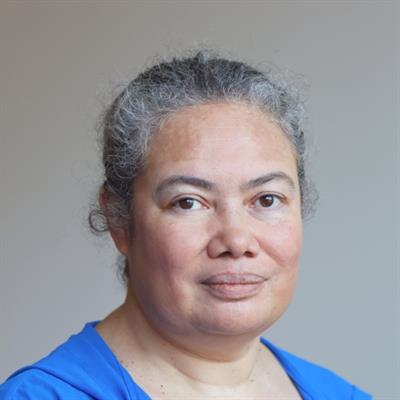
Dr Suzanne Mavoa
Dr Suzanne Mavoa
Details
Role
Team Leader/GenV Princ Research Fellow
Group
GenV
Contact
Available for student supervision
Associate Professor Mavoa is a health geographer and environmental epidemiologist researching how the environments we live in impact health across the lifecourse. She is internationally recognised as a leader in geospatial methods in health research and regularly invited to provide geospatial expertise and advice to diverse health research and practice globally. Examples include built environment and physical activity research (Brazil, Spain), greenspace and mental health research (Canada, New Zealand), and disability inclusive development (South-East Asia).
She also contributed to the global Spatial Lifecourse Epidemiology Reporting Standards, led the development and delivery of geospatial content for a UNICEF Health Systems course (now a MOOC) and advises UN Habitat on the development and geospatial measurement of Quality of Life indicators for cities globally.
Within Australia, Associate Professor Mavoa led the technical development of National Liveability indicators (2012-2016). These geospatial indicators were used in the Health and Wellbeing plans of 51/79 Victorian Local Government Areas (2015-17). Nationally, selected indicators were used in the Prime Minister and Cabinet’s 2017 National Cities Performance Framework, and now form the basis of the Australian Urban Observatory and Healthy City report cards.
Her track record includes more than 140 peer-reviewed publications, $15m in funding as CI, 15 prizes/awards, 29 invited talks (8 international), 16 sutdent and 2 postdoctoral trainee supervisions, and 6 invited and funded international research visits to share her geospatial expertise.
Associate Professor Mavoa is currently a 2024 veski FAIR fellow researching how aspects of the environment influence child health, and where and how to best intervene. She also currently leads a Geospatial and Environmental Health team, who are a) developing a suite of address level environmental indicators (e.g. air pollution, greenness, climate, access to services, food), and b) enabling GenV for environmental health reasearch.
She also contributed to the global Spatial Lifecourse Epidemiology Reporting Standards, led the development and delivery of geospatial content for a UNICEF Health Systems course (now a MOOC) and advises UN Habitat on the development and geospatial measurement of Quality of Life indicators for cities globally.
Within Australia, Associate Professor Mavoa led the technical development of National Liveability indicators (2012-2016). These geospatial indicators were used in the Health and Wellbeing plans of 51/79 Victorian Local Government Areas (2015-17). Nationally, selected indicators were used in the Prime Minister and Cabinet’s 2017 National Cities Performance Framework, and now form the basis of the Australian Urban Observatory and Healthy City report cards.
Her track record includes more than 140 peer-reviewed publications, $15m in funding as CI, 15 prizes/awards, 29 invited talks (8 international), 16 sutdent and 2 postdoctoral trainee supervisions, and 6 invited and funded international research visits to share her geospatial expertise.
Associate Professor Mavoa is currently a 2024 veski FAIR fellow researching how aspects of the environment influence child health, and where and how to best intervene. She also currently leads a Geospatial and Environmental Health team, who are a) developing a suite of address level environmental indicators (e.g. air pollution, greenness, climate, access to services, food), and b) enabling GenV for environmental health reasearch.
Associate Professor Mavoa is a health geographer and environmental epidemiologist researching how the environments we live in impact health across the lifecourse. She is internationally recognised as a leader in geospatial methods in health research...
Associate Professor Mavoa is a health geographer and environmental epidemiologist researching how the environments we live in impact health across the lifecourse. She is internationally recognised as a leader in geospatial methods in health research and regularly invited to provide geospatial expertise and advice to diverse health research and practice globally. Examples include built environment and physical activity research (Brazil, Spain), greenspace and mental health research (Canada, New Zealand), and disability inclusive development (South-East Asia).
She also contributed to the global Spatial Lifecourse Epidemiology Reporting Standards, led the development and delivery of geospatial content for a UNICEF Health Systems course (now a MOOC) and advises UN Habitat on the development and geospatial measurement of Quality of Life indicators for cities globally.
Within Australia, Associate Professor Mavoa led the technical development of National Liveability indicators (2012-2016). These geospatial indicators were used in the Health and Wellbeing plans of 51/79 Victorian Local Government Areas (2015-17). Nationally, selected indicators were used in the Prime Minister and Cabinet’s 2017 National Cities Performance Framework, and now form the basis of the Australian Urban Observatory and Healthy City report cards.
Her track record includes more than 140 peer-reviewed publications, $15m in funding as CI, 15 prizes/awards, 29 invited talks (8 international), 16 sutdent and 2 postdoctoral trainee supervisions, and 6 invited and funded international research visits to share her geospatial expertise.
Associate Professor Mavoa is currently a 2024 veski FAIR fellow researching how aspects of the environment influence child health, and where and how to best intervene. She also currently leads a Geospatial and Environmental Health team, who are a) developing a suite of address level environmental indicators (e.g. air pollution, greenness, climate, access to services, food), and b) enabling GenV for environmental health reasearch.
She also contributed to the global Spatial Lifecourse Epidemiology Reporting Standards, led the development and delivery of geospatial content for a UNICEF Health Systems course (now a MOOC) and advises UN Habitat on the development and geospatial measurement of Quality of Life indicators for cities globally.
Within Australia, Associate Professor Mavoa led the technical development of National Liveability indicators (2012-2016). These geospatial indicators were used in the Health and Wellbeing plans of 51/79 Victorian Local Government Areas (2015-17). Nationally, selected indicators were used in the Prime Minister and Cabinet’s 2017 National Cities Performance Framework, and now form the basis of the Australian Urban Observatory and Healthy City report cards.
Her track record includes more than 140 peer-reviewed publications, $15m in funding as CI, 15 prizes/awards, 29 invited talks (8 international), 16 sutdent and 2 postdoctoral trainee supervisions, and 6 invited and funded international research visits to share her geospatial expertise.
Associate Professor Mavoa is currently a 2024 veski FAIR fellow researching how aspects of the environment influence child health, and where and how to best intervene. She also currently leads a Geospatial and Environmental Health team, who are a) developing a suite of address level environmental indicators (e.g. air pollution, greenness, climate, access to services, food), and b) enabling GenV for environmental health reasearch.
Top Publications
- Mygind, L, Greenwood, C, Letcher, P, Mavoa, S, Lycett, K, Wang, Y, Flensborg-Madsen, T, Bentsen, P, Macdonald, JA, Thomson, K, et al. Is Neighborhood Nature an Ecological Precursor of Parenting Practices, Infant-parent Bonding, and Infant Socioemotional Function?. 2026 view publication
- Mavoa, S, Eagleson, S, Rigby, M, Badland, HM, Johnson, A, Cerin, E, Timperio, A, Thornton, L, Clinch, D, Dennekamp, M, et al. Enabling GenV for spatial research. 2026 view publication
- Mygind, L, Clark, GM, Bigelow, FJ, Fuller-Tyszkiewicz, M, Knibbs5, LD, Mavoa, S, Flensborg-Madsen, T, Bentsen, P, Lum, J, Enticott, PG. Green matter: is there an association between vegetation cover around the home and social brain function in childhood?. 2026 view publication
- Mygind, L, Bower, IS, Stevenson, MP, Mavoa, S, Bentsen, P, Enticott, PG. Seven practices that bias our understanding of benefits of nature for human health: suggestions for future research. 2026 view publication
- Kerr, J, Mavoa, S, Schroers, R-D, Eagleson, S, Exeter, D, Watkins, A, Thornton, L. Measuring area-level disadvantage in Australia: development of a locally sensitive indicator. Australian Population Studies 5(2) : 15 -28 2026 view publication
Page 1 of 32
Share //