Genomic tool highly effective at detecting rare disease diagnoses
- Details
A newly developed open-source tool designed for rigorous reanalysis of genomic data is highly effective at detecting new rare disease diagnoses. And the tool’s ability to frequently and automatically reexamine stored DNA data will ensure more timely answers for hundreds of families.
World-leading research has found Talos, created and validated by researchers in Australia and the US, was able to find rare disease diagnoses at scale, quickly, and at low cost, addressing a major bottleneck.
The findings, published in Nature Medicine, noted the tool was remarkably efficient, identifying new genetic diagnoses in more than 200 patients where genomic testing had failed to find the cause for their condition. The results also lay the groundwork for AI-enabled approaches in this rapidly growing field of genomic medicine.
The research was led by Murdoch Children's Research Institute (MCRI) and Victorian Clinical Genetics Services (VCGS) in collaboration with the Centre for Population Genomics (a joint initiative between MCRI and the Garvan Institute of Medical Research), the Broad Institute of MIT and Harvard and Microsoft Research.
How is Talos transforming outcomes for rare disease families?
MCRI Professor Zornitza Stark, also a clinical geneticist at VCGS, said Talos would transform outcomes for patients and families affected by rare disease.
In Australia, genetic conditions, such as muscular dystrophy, affect more than one in every 17 people.
Professor Stark said while genomic testing had revolutionised rare disease diagnosis, more than half of patients remained undiagnosed after their initial test.
“Unlike most medical investigations, genomic data can be stored long-term and re‑analysed as knowledge advances,” she said. “However, manual reanalysis is labour‑intensive, costly and difficult to implement at scale, meaning few patients currently benefit.

Image: Professor Zonitza Stark
“We developed Talos to overcome these barriers by automating the reanalysis process. The tool integrates monthly updates of new knowledge about genes and variants and their role in disease, automatically only flagging potential new diagnoses. This allows the reanalysis process to be scaled to thousands of patients and to be performed frequently.”
High efficiency, low cost and rapid turnaround
The researchers first validated Talos using two previously analysed rare disease cohorts involving 1,089 patients from across the US and Australia. Talos successfully identified about 90 per cent of already known diagnoses and returned an average of just 1.3 candidate variants per family, demonstrating a high efficiency rate.
Broad Institute Associate Member Kaitlin Samocha, also an Assistant Professor in the Center for Genomic Medicine at Massachusetts General Hospital and Harvard Medical School said, “As genetic sequencing becomes a standard part of healthcare, the backlog of undiagnosed families is growing rapidly. We designed Talos to return only a few variants per patient, reducing the analytical bottleneck and speeding up the time to diagnosis.”
For the study, the team then tested Talos in a cohort of 4,735 children and adults with rare diseases. The families had previously undergone genomic testing either through Australian Genomics or VCGS, but diagnosis remained a mystery. Talos identified 241 new diagnoses, delivering a 5.1 per cent additional diagnostic yield across a wide range of conditions spanning neurodevelopmental, cardiac and renal disorders.
What are the benefits of delivering new diagnoses at scale?
More than half of the additional diagnoses resulted from advances in scientific knowledge. The median time for Talos to make a new diagnosis once additional knowledge became publicly available was 32 days, with some diagnoses achieved in as little as one day. The estimated cost was less than USD$12 to run the initial workflow on every 1000 genomes and then less USD $2 per year to run the reanalysis monthly.
Importantly, the study noted that the new diagnoses were already having a wider impact on families. Further testing has already taken place in more than 50 additional family members, informing surveillance, treatment and reproductive decision‑making, particularly for inherited heart conditions.
Professor Daniel MacArthur, Director of the Centre for Population Genomics, said the findings highlighted the rapid pace of genomic discovery and the importance of systematic reanalysis.
“Every year, hundreds of new gene–disease associations and thousands of new variant interpretations are published,” he said. “Automated reanalysis allows us to translate that knowledge into real clinical benefit for families much faster than traditional models.”

Image: Professor Daniel MacArthur
The work also establishes foundations for the integration of artificial intelligence tools into the diagnosis of genetic conditions, a focus of the newly formed Australian Alliance for Secure Genomics and AI in Rare Disease (AASGARD) consortium, led by Professor MacArthur and his team.
Microsoft Research Principal Researcher Jeremiah Wander said; “Talos is open‑source, auditable, and designed to run on standard computing infrastructure, with low ongoing costs when deployed at scale. The study provides critical evidence to inform future policy around rare disease diagnostics.”
Real-world impact for families
Annabelle, 5, has ReNU syndrome, a rare genetic disorder, which causes severe intellectual and physical disabilities. She is visually impaired, non-verbal and has significant developmental delays.
Annabelle was enrolled in the Acute Care Genomics study, led by MCRI and VCGS, which delivers ultra-rapid genomic testing for critically ill newborns with suspected genetic conditions.
Her genomic data was kept on file and reanalysed years later using Talos. ReNU syndrome was identified in 2025, and soon after, Annabelle received a diagnosis thanks to the tool.
Read more about Annaelle’s journey and the difference a diagnosis makes.
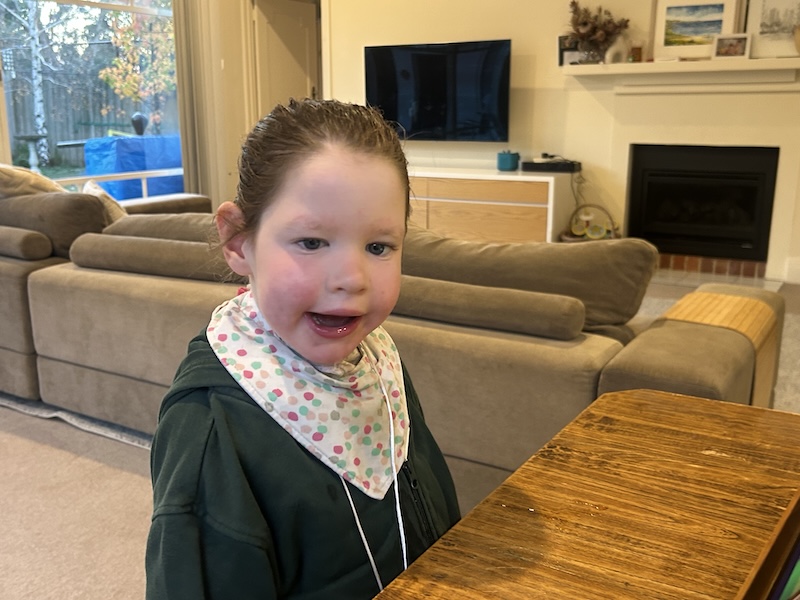
Image: Annabelle, 5, was diagnose with ReNU syndrome
Publication
Matthew J Welland, K.D. Ahlquist, Paul De Fazio, Christina Austin-Tse, Lynn Pais, Laura Wedd, Samantha Bryen, Rocio Rius, Michael Franklin, Caitlin Morrison, Giles Hall, Laura Gauthier, Alex Bloemendal, David I Francis, Andrew J Mallett, Amali Mallawaarachchi, Paul J Lockhart, Richard Leventer, Ingrid E Scheffer, Katherine B Howell , Karin S Kassahn, Hamish S Scott, Julie McGaughran, John Christodoulou, David R Thorburn, Bryony A Thompson, Chirag V Patel, Greg Smith, Anne O’Donnell-Luria, Simon Sadedin, Heidi L Rehm, Sebastian Lunke, Jeremiah Wander, Kaitlin E Samocha, Cas Simons, Daniel G MacArthur and Zornitza Stark. ‘Automated reanalysis of genomic data for rare disease diagnostics at scale,’ Nature Medicine. DOI: 10.1038/s41591-026-04477-5
*The content of this communication is the sole responsibility of MCRI and does not reflect the views of the NHMRC.
Available for interview
Professor Zornitza Stark, MCRI Group Co–Leader, Translational Genomics and VCGS Clinical Geneticist
Professor Daniel MacArthur, Centre for Population Genomics Director
Kiera, whose daughter Annabelle was diagnosed with ReNU syndrome using Talos
Media contact
Murdoch Children's Research Institute
Phone: show phone number
Email: show email address
Social media
For more MCRI content, follow our social media channels below:



About Murdoch Children’s Research Institute
Murdoch Children’s Research Institute (MCRI) is one of the world’s top three child health research institutes, dedicated to improving the health of children and adolescents in Australia and around the world. In 2026 MCRI celebrates its 40th anniversary, marking four decades of transforming child health through research, discovery and innovation. Its breakthroughs have improved diagnosis, informed global vaccine strategies, advanced precision medicine, and continue to redefine what’s possible for sick children. MCRI is one of the only research institutes in Australia to offer genetic testing to help families find answers for children with previously undiagnosed conditions.
Funding
The study was funded by the Australian Government’s Genomics Health Futures Mission (MRF2008820). The research conducted at the Murdoch Children's Research Institute was supported by the Victorian Government 's Operational Infrastructure Support Program. J.Ch. is supported by The Royal Children's Hospital Foundation as The Chair in Genomic Medicine. Analysis was supported by the Centre for Population Genomics (Garvan Institute of Medical Research and Murdoch Children’s Research Institute) and funded in part by a National Health and Medical Research Council investigator grant to DGM (2009982). KBH is supported by an MCRI Clinician-Scientist Fellowship and research funding from the MRFF and NHMRC. AJM is supported by a Queensland Health Advancing Clinical Research Fellowship. DRT is supported by research funding from the MRFF, NHMRC and Mito Foundation. This investigation was supported in part by a grant from Microsoft Corporation. Sequencing and prior analysis of the Australian Genomics rare disease cohorts were funded by the National Health and Medical Research Council (GNT1113531 and GNT2000001) and the Genomics Health Futures Mission (GHFM76747 and EPCD000028). Sequencing and prior analysis of the RGP cohort were provided by the Broad Institute Center for Mendelian Genomics (Broad CMG) and were funded by the National Human Genome Research Institute (NHGRI) grants UM1HG008900 (with additional support from the National Eye Institute, and the National Heart, Lung and Blood Institute), U01HG011755 (GREGoR consortium), R01HG009141, and in part by the Chan Zuckerberg Initiative Donor-Advised Fund at the Silicon Valley Community Foundation (funder DOI 10.13039/100014989) grants 2019-199278, 2020-224274, 2022-316726, 2022-309464) and in part by a research grant from Illumina Inc.