Exploring the future of child health through art and science
- Details
The future of child health and medicine will be explored in a special in-conversation between Murdoch Children’s Research Institute (MCRI) Chief Scientist Professor Melissa Little and acclaimed Melbourne artist Patricia Piccinini, on Saturday 15 August.
Moderated by Atlanta Colley, the conversation will explore how art can help make sense of a field moving toward once‑unimaginable solutions for currently incurable conditions.

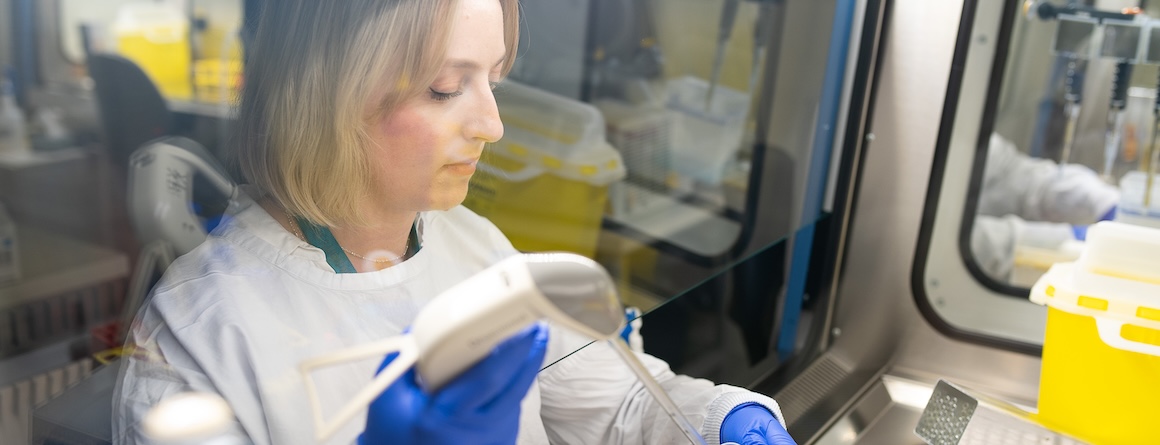
Image: MCRI Chief Scientist Professor Melissa Little
Art meets stem cell science
The discussion will be anchored in Patricia’s new artwork Células Madre, commissioned for the Science Gallery Melbourne EMERGENCE[Y] exhibition. The artwork is the cornerstone of the Melbourne arm of the transnational collaboration Hope Springs Eternal, funded by the Novo Nordisk Foundation Center for Stem Cell Medicine, reNEW.
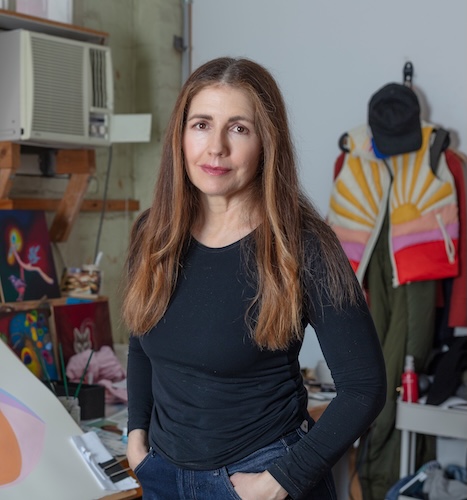
Image: Patricia Piccinini
MCRI Stem Cell Ethics and Policy Group Leader and project lead Professor Megan Munsie said Hope Springs Eternal was a unique opportunity for scientists and artists to work together in a co-curatorial process.
“It’s all about how technologies and futures are explored and shared, and will be showcased across galleries and museums in Copenhagen, Leiden and Melbourne," she said.
"Across each location we have worked with different artists allowing the project to respond to local contexts and communities.
“At its core Hope Springs Eternal is a shared commitment to engage audiences with science not as a finished story, but as something still in progress."
Células Madre revisits Patricia’s earlier work, Still Life with Stem Cells (2002), reimagining the central figure as a young mother, alongside an amorphous, life-supporting structure shaped by the realities of contemporary stem cell research.
To develop the work, Patricia visited MCRI laboratories and worked closely with reNEW Melbourne stem cell researchers. These exchanges gave a window into how researchers were advancing new approaches to treat and better understand diseases affecting children globally.
Through direct engagement with scientists and their work, Patricia gained insight into both the complexity of the science and how it was evolving in practice. “I was struck by both the beauty and strangeness of this science,” she said.
![EMERGENCE[Y] Células Madre. Credit: Phoebe Powell](/images/2026/7/EMERGENCEY-Células-Madre.jpg)
Image: EMERGENCE[Y] Células Madre. Credit: Phoebe Powell
Broader conversations
Patricia’s new commission is presented alongside Still Life with Stem Cells for the first time, creating a dialogue across two decades of scientific and artistic change.
Also included in EMERGENCE[Y], Cecilie Waagner Falkenstrøm’s An Internal Other (2026) follows its Copenhagen run with a Melbourne showing. It invites audiences to explore the ethical and personal questions that emerging stem cell technologies may raise through a series of interactive speculative scenarios.
All pieces will be on display from 6 June to 5 December in the EMERGENCE[Y] exhibition, which explores how adaptation unfolds in every layer of life and how adaptation becomes not only a biological imperative, but a creative and ethical act.
Join a free National Science Week program on the future of stem cell
The in-conversation is the centrepiece of a day of free programming at Science Gallery Melbourne, presented in partnership with reNEW Melbourne and MCRI on 15 August.
MCRI Stem Cell Medicine scientists will highlight their discoveries in five lightening talks:
- Dr Rhiannon Werder who is researching stem cell-grown lung tissue to transform the discovery of new therapies for respiratory disease
- Dr Callum Dark who grows muscle tissue in the lab to find treatments for muscle conditions that affect people as they get older
- Dr Kellie Veen who makes 3D models of specific brain regions to understand Alexander disease, a progressive and fatal childhood disease
- Dr Jessica Vanslambrouck who is using new ideas to grow kidney tissue in the lab that could one day improve treatments for patients with kidney disease
- Dr Roslyn Le Gautier who brings together researchers, patients and clinicians to help shape new treatments, including stem cell technologies, to meet patients’ needs.
Don’t miss this opportunity to hear from world-leading voices at the intersection of art and science, and to experience cutting-edge research in a new light.
Secure your place and explore the full program.
Funding acknowledgements
reNEW has provided funding for the Hope Springs Eternal transnational exhibition and art-science project that explores the cultural and historical dimensions of stem cell medicine. reNEW Principal Investigator and PREPARE researchers Associate Professor Louise Whiteley, Professor Ken Arnold and Professor Munsie, and Hope Springs Eternal Project Manager Pernille Lystlund Matzen, lead this project.
reNEW is an international consortium based at the University of Copenhagen in Denmark, Murdoch Children’s Research Institute in Australia and Leiden University Medical Center in the Netherlands. reNEW is supported by a Novo Nordisk Foundation grant number NNF21CC0073729.
Banner Image: Dr Rhiannon Werder.

Share //