Tool for identifying children at risk of speech disorders
- Details

Melbourne researchers have developed a tool for identifying children at risk of speech disorders, reducing unnecessary treatment for common speech errors that often resolve on their own.
The research, led by Murdoch Children’s Research Institute (MCRI) and published in the Archives of Disease in Childhood, identifies red flags to help guide speech therapy referrals. Additionally, the data confirms for the first time in more than two decades that speech errors are common and vary widely up to six years of age.
For the study, 1179 participants aged 2-12 years were recruited from schools, childcare centres and kindergartens across Victoria and NSW. Trained speech and language therapists assessed children using a picture naming task.
How common are disordered speech errors in children?
It found developmental speech errors was common in children aged two to six, but by seven years 90 per cent could form all sounds. Only minor differences in speech were seen between eight and 12 years. Disordered speech errors that occurred in less than 10 per cent of children included vowel errors, transpositions such as ‘efelant’ for elephant and mixing up speech sounds such as ‘glack’ for black.
Compared with historical data from 20 years ago, some sounds were acquired more slowly and some common errors took longer to resolve. Importantly, there was no evidence that children’s speech had become more disordered.
Why are so many children referred for speech theory?
MCRI Professor Angela Morgan said despite speech disorders being an increasing challenge for paediatricians, there was limited evidence to guide detection and referrals for those at risk of persistent problems.
“The lack of research forces a trial-and-error approach, which can result in critical resources being wrongly directed,” she said. “This is compounded by the absence of any official English speech data being published for over two decades. New data is also needed to find out how new technologies, like phones and devices, are changing children's speech.”

Image: Professor Angela Morgan
MCRI Dr Daisy Shepherd said the large representative study provided a much-needed updated description and understanding of speech performance.
How will the new speech assessment tool help?
Professor Morgan said the new assessment tool would ensure fewer children were incorrectly assigned to wait lists and less resources wasted on treating speech error patterns that were likely to resolve in time.
“We found lots of young children can struggle to pick up speech correctly, which may explain why so many families seek support for speech development in the preschool years,” she said. “Furthermore, our data suggests speech is mastered more slowly and common errors are taking longer to outgrow compared with previous generations.
“Our tool identifies the children experiencing the most difficulty within their age group using speech tasks and will support healthcare professionals to improve detection and referral for disordered speech errors.”
Isla, 9, has childhood apraxia of speech, a rare speech disorder that hinders the brain's ability to plan and co-ordinate the muscle movements necessary for clear speech.
Mum Sheree said Isla was referred to speech therapy at about two years of age after she failed to meet early developmental milestones. But despite a paediatrician acting on it quickly, the family still waited four months to see a speech therapist.
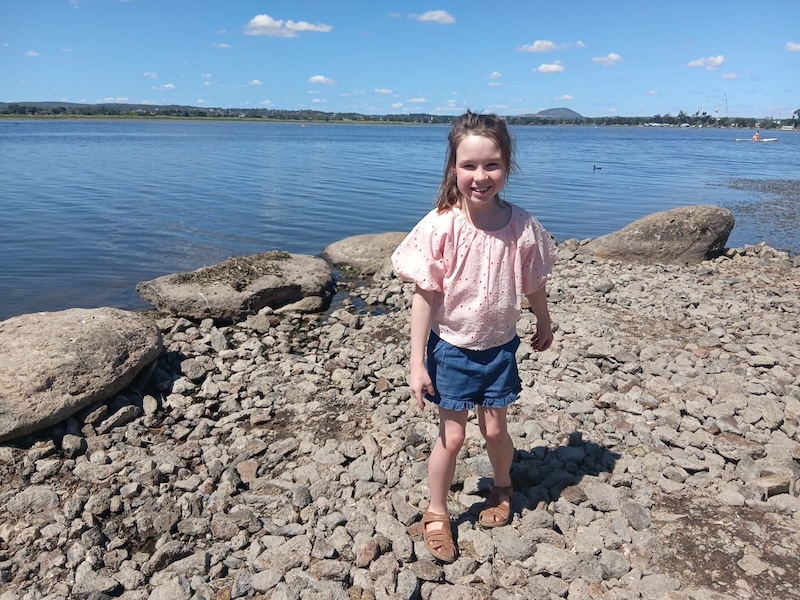
Image: Isla has come a long way with speech therapy
Read more about Isla’s experience with a speech disorder and how therapy helped.
Researchers from the University of Melbourne and Redenlab also contributed to the study.
Publication
Daisy Shepherd, Olivia van Reyk, Adam P Vogel, Simone deBono, Charlotte Boulton, Ashleigh Hill, Tully Coldrey, Francesca Coles and Angela Morgan. ‘Red flags for speech impairment: who should we refer to speech therapy?’ Archives of Disease in Childhood. DOI: 10.1136
*The content of this communication is the sole responsibility of MCRI and does not reflect the views of the NHMRC.
Available for interview
- Professor Angela Morgan, MCRI Group Leader, Speech and Language
- Dr Daisy Shepherd, MCRI Researcher, Clinical Epidemiology and Biostatistics
- Sheree, whose daughter Isla, 9, has childhood apraxia of speech
Media contact
Murdoch Children's Research Institute
Phone:
show phone number
Email:
show email address
Social media
For more MCRI content, follow our social media channels below:



About Murdoch Children’s Research Institute (MCRI)
Murdoch Children's Research Institute (MCRI) is the largest child health research institute in Australia committed to making discoveries and developing treatments to improve child and adolescent health in Australia and around the world. They are pioneering new treatments, trialling better vaccines and improving ways of diagnosing and helping sick babies, children and adolescents. It is one of the only research institutes in Australia to offer genetic testing to find answers for families of children with previously undiagnosed conditions.
Funding
This study was supported by the National Health and Medical Research Council (NHMRC) Development Grant Scheme (1153614, AM), Centre of Research Excellence Grants (CRE-SLANG: 1116976, AM) and the Translational Centre for Speech Disorders (2015727, AM). AM was supported by a NHMRC Practitioner Fellowship (1105008) and Investigator Grant (1195955). Additional funding was provided by the Independent Research Institute Infrastructure Support Scheme and the Victorian State Government Operational Infrastructure Program. Open Access funding was enabled and organised by CAUL and its member institutions. DS was supported by the Lorenzo and Pamela Galli Medical Research Trust.

Share //