TWESP: Typhoid Wastewater Environmental Surveillance Project
- Project status: Active
Research areas > Infection, Immunity and Global Health > Enteric Diseases
Wastewater surveillance for Salmonella Typhi and Salmonella Paratyphi A in Indonesia
Typhoid fever remains an important cause of illness for children and adolescents in many parts of Asia, including Indonesia.
However, understanding how widely the disease is circulating can be difficult because clinical surveillance is limited and laboratory confirmation is rarely performed.
Our project is using wastewater surveillance to generate evidence on typhoid circulation to inform vaccine policy in Indonesia.
Typhoid fever remains an important cause of illness for children and adolescents in many parts of Asia, including Indonesia.
However, understanding how widely the disease is circulating can be difficult because clinical surveillance is limited and...
Typhoid fever remains an important cause of illness for children and adolescents in many parts of Asia, including Indonesia.
However, understanding how widely the disease is circulating can be difficult because clinical surveillance is limited and laboratory confirmation is rarely performed.
Our project is using wastewater surveillance to generate evidence on typhoid circulation to inform vaccine policy in Indonesia.
About our project
The Typhoid Wastewater Environmental Surveillance Project (TWESP) uses wastewater epidemiological surveillance to detect Salmonella Typhi in community wastewater samples. Wastewater surveillance involves testing sewage and other environmental samples to identify disease-causing organisms circulating within a population.
Key publication
Oktaria V, Murni IK, Handley A, Donato CM, Nuryastuti T, Supriyati E, McCarthy DT, Watts E, Dinari R, Sari HM, Thobari JA, Laksono IS, Bines JE. Environmental surveillance for Salmonella Typhi to detect the typhoid burden in Yogyakarta, Indonesia. Int J Hyg Environ Health. 2025 May;266:114572. doi: 10.1016/j.ijheh.2025.114572. Epub 2025 Mar 30. PMID: 40163994; PMCID: PMC12042821.
Collaborations
This is a collaborative research project led by the Murdoch Children’s Research Institute (MCRI) in partnership with Universitas Gadjah Mada (UGM) in Indonesia.
Research teams from UGM and MCRI have shown that wastewater surveillance is feasible in Indonesia. The project successfully implemented sampling across various locations, including:
- Wastewater treatment plants
- Communal sanitation systems
- Rivers
- Septic tanks
Testing in Yogyakarta has detected Salmonella Typhi in environmental samples, with genomic sequencing confirming the presence of the bacteria.
Our focus for 2026–2027
TWESP continues to monitor wastewater for Salmonella Typhi and will expand its testing to include Salmonella Paratyphi A throughout 2026 and 2027.
The findings from this project will provide important evidence to inform national discussions on introducing a typhoid conjugate vaccine in Indonesia.
Research team and funding support
This research is led by Murdoch Children’s Research Institute (MCRI) in partnership with Universitas Gadjah Mada.
The MCRI lead investigator is Professor Julie Bines from the Enteric Diseases group.
This project is supported by the Gates Foundation, USA.
Contact us
For more information on the project, please contact us.
Professor Julie Bines, Group Leader, Enteric Disease group
Email:
show email address
Emma Watts, Research Program Manager
Email:
show email address
Get the latest from MCRI
COVID-19 booster strategies provide lasting immunity
Exploring the future of child health through art and science

Australia’s first guidelines to target high blood pressure in children
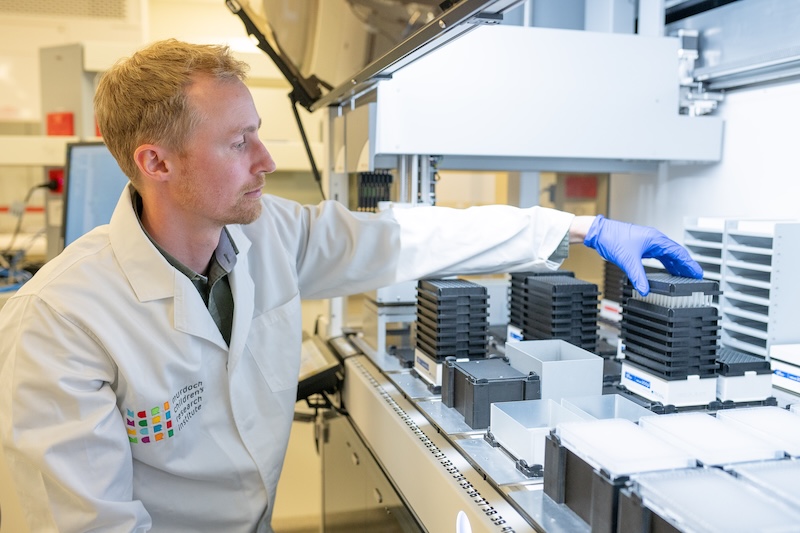
MCRI receives stem cell medicine grant to advance drug discovery
Introducing our 2025 Annual Report
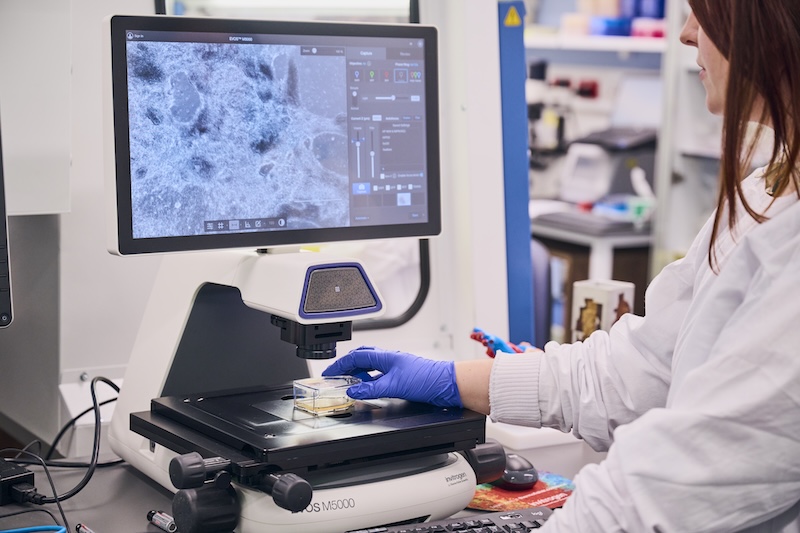
Children at centre of stem cell research decisions with MRFF grant

Vale Patricia Ilhan

Genomic tool highly effective at detecting rare disease diagnoses

Social media use linked to poorer mental health in early adolescence
Safety concerns biggest barrier to vaccination

Accelerating recovery for children with concussion
Early lung damage mapped in children with cystic fibrosis

Share //