Aboriginal health
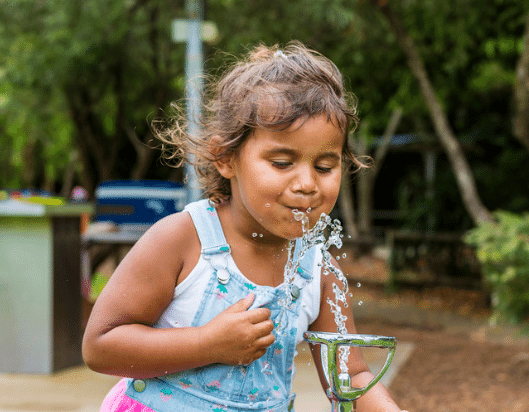
Aboriginal and Torres Strait Islander child health
We’re working to improve the health and wellbeing of Aboriginal and Torres Strait Islander people including infants, children, adolescents, mothers and families living in metropolitan, regional and rural Australia.
We aim to generate new knowledge about what keeps families and communities strong, what enables healing and recovery and ways for services and systems to promote resilience and wellbeing.
Our Aboriginal health research
Our Aboriginal health research
We are working with the Aboriginal Health Council of South Australia to undertake a study involving 344 Aboriginal children and their mothers and carers living in urban, regional and remote areas of South Australia.
The study aims to enable the voices of diverse Aboriginal children and families in South Australia to inform policy and practice in health, education, and social care settings. Another major goal is to identify factors that promote social and emotional wellbeing and resilience.
Early findings showed that Aboriginal-led services in South Australia have improved Aboriginal families’ access to, and experiences of, antenatal care. This led to renewed funding for Aboriginal-led maternity care at the Women’s and Children’s Hospital in Adelaide.
We are currently analysing findings from the follow-up study of children and their families, which was conducted as the children were beginning primary school and preparing to follow-up families again when the children are 14-16 years old.
We’re producing Australia’s first national roadmap for Indigenous adolescent health. This will document priority health needs and evidence-based actions to improve health and wellbeing. We’re engaging Aboriginal and Torres Strait Islander adolescents and Elders to drive and govern the project including a national survey. This will create a group of upskilled Aboriginal and Torres Strait Islander youths to take leadership in health.
Aboriginal and Torres Strait Islander communities have one of the world’s highest rates of Strep A disease which can cause rheumatic heart disease, stroke and death in adolescents and young adults. We’re working in a national consortium on vaccines against Strep A which will soon begin testing two vaccines.
Impacts of our research
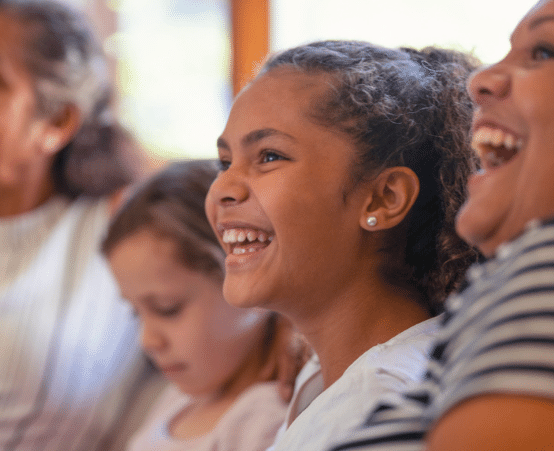
Impacts of our research
- Evidence from our Aboriginal Families Study informed the redesign of Aboriginal maternity and early childhood services in South Australia. This led to improved access to pregnancy care for Aboriginal families.
- Our policy briefs summarise evidence from our longitudinal research and advise governments and health services on social determinants of the health and wellbeing of Aboriginal families.
- Research we co-led found that a culturally adapted early childhood program for Aboriginal children improved language, development and communication skills in infants from unemployed families.
- Our study on the health and wellbeing of Indigenous adolescents in Australia and input to a global commission on adolescent health revealed that one-third of our Aboriginal and Torres Strait Islander population is aged 10 to 24. However, rates of death are higher than non-Indigenous adolescents, with 80 per cent potentially avoidable. There are also higher rates of disease and injuries.
- We developed the first socially inclusive measure of resilience in middle childhood by working in partnership with Aboriginal families and communities. Our Childhood Resilience Study is building a better understanding of how children can grow up to be strong and resilient despite experiences of social adversity and trauma.
- Our Stronger Futures Centre of Research Excellence (CRE) worked to improve social and emotional wellbeing, as well as family functioning and resilience. This is aimed at families and communities impacted by intergenerational trauma, family violence and social inequality.
Our vision
Our vision
Our vision is to improve health, wellbeing and equity for Aboriginal and Torres Strait Islander children, young people and families. We’re aiming for long-term health improvements and the reversal of upward trends in mental health disorders, self-harm and suicide.
Donate to MCRI
Help our researchers make life-changing discoveries in child health.
Get the latest information
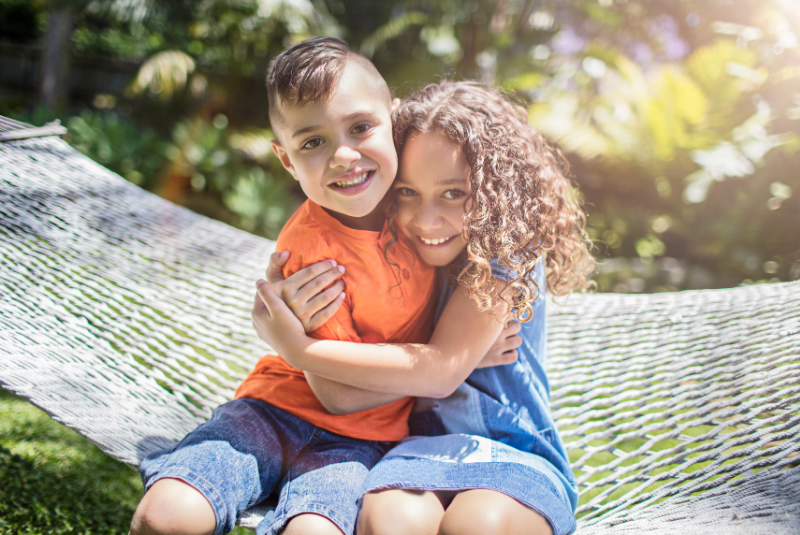
MCRI joins ground-breaking Aboriginal Health Research Accord
Murdoch Children’s Research Institute (MCRI) has proudly become a member of the Victorian...
Read more
Meet our brilliant minds: Associate Professor Graham Gee
Murdoch Children’s Research Institute (MCRI) Associate Professor Graham Gee is committed to...
Read more
New national network created to support child and family hubs
A new network has been created to support and advocate for community hubs, a wraparound care...
Read more
MCRI adds further support to the Voice to Parliament
Murdoch Children’s Research Institute has joined key national and Victorian health services in...
Read more
Murdoch Children’s Research Institute supports an Aboriginal and Torres Strait Islander Voice to Parliament
Statement on the Voice by Murdoch Children’s Research Institute. In 2023, Australians will...
Read more
Aboriginal researcher receives national award to support the healing and recovery needs of Indigenous survivors of child sexual abuse
Murdoch Children’s Research Institute researcher Dr Graham Gee has received a national award...
Read more
Eight projects awarded federal funding to improve child and maternal health
Eight Murdoch Children’s Research Institute-led projects aiming to improve child health...
Read more
Aboriginal Families Study
The Aboriginal Families Study is a prospective mother and child cohort study investigating the...
Read more
Program for Aboriginal kids shows promising impacts on language and development skills
A culturally adapted early childhood program for Aboriginal children has shown promising impacts...
Read more
Prestigious award for infectious disease research
Professor Andrew Steer has been awarded a prestigious $1.25 million Viertel Fellowship for his...
Read more
Indigenous health conference showcases innovative projects benefiting children, young people and families
A study looking at how Aboriginal children use English at school is among the projects to be...
Read moreShare //