
Air pollution linked to having a peanut allergy during childhood
- Details

Exposure to higher levels of air pollution as a baby is linked to having a peanut allergy throughout childhood, according to a new study. And policies aimed at tackling poor air quality could potentially reduce the prevalence and persistence of peanut allergies, it stated.
The research, led by Murdoch Children’s Research Institute (MCRI) and the University of Melbourne, found being exposed to higher levels of air pollution from infancy was associated with increased odds of developing a peanut allergy and having the allergy persist across the first 10 years of life. However, the same association was not seen for egg allergy or eczema.
Published in the Journal of Allergy and Clinical Immunology, the study is the first to explore the link between air pollution and challenge-proven food allergy over the first decade of life.
The research involved 5,276 children in Melbourne from the HealthNuts study, recruited at age one and followed-up at four, six and 10 years. The research team used estimates of the annual average concentration of fine particulate matter (PM2.5) and nitrogen dioxide (NO2) at each participant’s residential address at the time of each follow up.
MCRI Associate Professor Rachel Peters said the study found that higher levels of air pollution were a risk factor for the development and persistence of peanut allergies. This was despite Melbourne having generally good air quality compared to our international counterparts, she said.

Image: Associate Professor Rachel Peters
“The rise in allergy prevalence has occurred at a similar time to increased urbanisation, leading to the belief that environmental factors may be contributing to high allergy rates,” Associate Professor Peters said.
“Eczema and food allergy most often develop in infancy. Both immune conditions can naturally resolve over time, but for some they can persist throughout adolescence and into adulthood.”
“This is the first study to use an oral food challenge, the gold-standard of food allergy diagnosis, to investigate the relationship between food allergy and air pollution.”
University of Melbourne’s Dr Diego Lopez said the co-exposure of peanut allergens in the environment and air pollutants could be increasing the allergy risk.
“Air pollutants have an irritant and inflammatory effect that may boost the immune systems pro-allergic response, potentially triggering the development of food allergies,” he said.
“However, the underlying mechanisms of how air pollution increases the risk of a peanut allergy, and why eczema and egg allergy aren’t impacted in the same way, need to be explored further.”
Allergic disease is one of Australia's greatest public health challenges, with one in 10 developing a food allergy in their first year of life.
Associate Professor Peters said policies aimed at tackling air pollution could potentially reduce the development and persistence of peanut allergy.
“The research highlights the importance of early-life interventions aimed at reducing exposure to air pollution, which could potentially prevent peanut allergies and other poor child health outcomes,” she said.
“Improving city design to support greater air quality regulation, better promoting public transport and switching to non-combustion fuels may help turn the tide on peanut allergy.”
Mae, 8, was diagnosed with peanut, diary and egg allergies at 8 months old after an allergic reaction saw her breakout in hives across her entire body. She has since gone onto have several anaphylaxis reactions.
Read more about Mae’s experience and how her family manages the multiple food allergies.
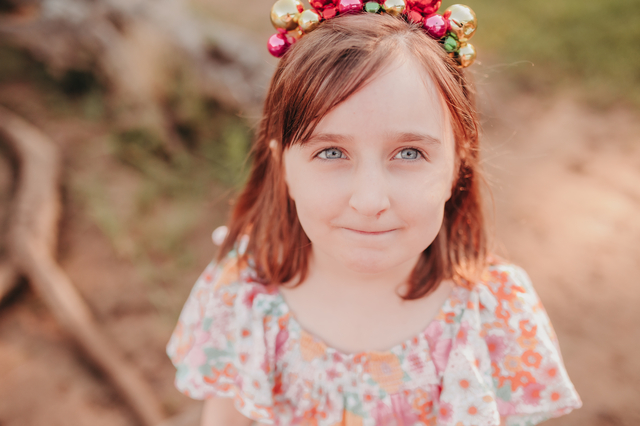
Image: Mae, 8, who has peanut, diary and egg allergies
The GenV study, tracking the health and wellbeing of Victorians from birth to old age, is also starting to look at the impact of air pollution and climate change on children’s health. GenV has gathered data from more than 120,000 participants, including 48,000 babies.
MCRI researchers are linking information on heat vulnerability with perinatal and child health data from the GenV cohort and are seeking to include temperature extremes and climate related disaster evidence in the future.
Dr Suzanne Mavoa said this would improve our understanding of how climate change impacts the health of children and families, identify those most at risk and test policies and interventions to better protect against severe weather events.
Associate Professor Peters is the National Allergy Centre of Excellence (NACE) Epidemiology Lead and a Centre for Food Allergy Research (CFAR) Associate Investigator. Both national research bodies are hosted at MCRI to help accelerate allergic disease research across Australia.
Researchers from Monash University, The University of Sydney, Sydney Local Health District, The Royal Children's Hospital, University of Queensland, Deakin University and the Environment Protection Authority Victoria also contributed to the findings.
Publication: Diego J. Lopez, Caroline J. Lodge, Dinh S. Bui, Nilakshi T.Waidyatillake, John C.Su, Luke D. Knibbs, Rushani Wijesuriya, Kirsten P Perrett, Jennifer J Koplin, Victoria X Soriano, Kate Lycett, Yichao Wang, Suzanne Mavoa, Shyamali C. Dharmage, Adrian J. Lowe and Rachel L. Peters. ‘Early life air pollution is associated with persistent peanut, but not egg allergy, across the first ten years,’ Journal of Allergy and Clinical Immunology: In Practice. DOI: 10.1016/j.jaci.2024.08.018
*The content of this communication is the sole responsibility of MCRI and does not reflect the views of the NHMRC.
Available for interview
Associate Professor Rachel Peters, MCRI Team Leader, Population Allergy
Dr Diego Lopez, the University of Melbourne, Allergy and Lung Health Unit
Eleanor Jenkin, whose daughter Mae, 8, has multiple food allergies
Media contact
Murdoch Children's Research Institute
Phone: +61 457 365 848
show email address
About Murdoch Children’s Research Institute
Murdoch Children's Research Institute is the largest child health research institute in Australia committed to making discoveries and developing treatments to improve child and adolescent health in Australia and around the world. They are pioneering new treatments, trialling better vaccines and improving ways of diagnosing and helping sick babies, children and adolescents. It is one of the only research institutes in Australia to offer genetic testing to find answers for families of children with previously undiagnosed conditions.
Funding
The study was supported by funding from the National Health & Medical Research Council (NHMRC) of Australia (GNT 491233/ GNT 1006215/ GNT1101344), the Ilhan Food Allergy Foundation, AnaphylaxiStop, the Charles and Sylvia Viertel Medical Research Foundation and the Victorian Government's Operational Infrastructure Support Program. RP, CL, K.P.P. and AL are supported by NHMRC awards. KPP is also funded by a Melbourne Children’s Clinician-Scientist Fellowship. DL was supported by the University of Melbourne and Becas Carlos Antonio Lopez scholarship.