Optimising Breathing Support at Extubation in Very Preterm Infants: A Clinical Study (PrePAP)
- Project status: Active
Research area: Clinical Sciences > Neonatal Research
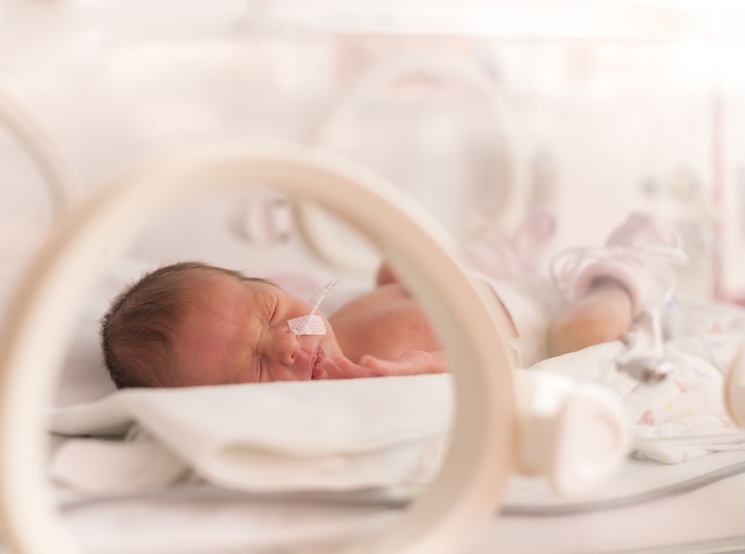
The first clinical trial determining the effects of pre-extubation continuous positive airway pressure (PrePAP) in very preterm infants.
This study will test whether extubation with prePAP compared to extubation without prePAP improves oxygen levels in very preterm infants.
The study is supported by the ZOLL® Foundation which funds early-stage researchers in undertaking meaningful research to improve the care of people with heart and lung conditions.
This study will test whether extubation with prePAP compared to extubation without prePAP improves oxygen levels in very preterm infants.
The study is supported by the ZOLL® Foundation which funds early-stage researchers in undertaking meaningful...
This study will test whether extubation with prePAP compared to extubation without prePAP improves oxygen levels in very preterm infants.
The study is supported by the ZOLL® Foundation which funds early-stage researchers in undertaking meaningful research to improve the care of people with heart and lung conditions.
Why is this study important?
Babies born very preterm (before 32 weeks of pregnancy) have lungs that are still developing. They often need help to breathe using a mechanical ventilator with a tube in their windpipe.
While life-saving, spending too long on a ventilator can injure these fragile lungs. Doctors and nuses aim to move these babies to gentler breathing support through a nosepiece (non-invasive ventilation) as soon as it’s safe. This process is called extubation.
Sometimes, babies need the breathing tube put back in (re-intubation). This can be stressful and may lead to longer stays in intensive care. Our research team wants to find better ways to reduce this risk and improve support during extubation.
About prePAP
After extubation, the most common breathing support is nasal continuous positive airway pressure (CPAP). CPAP gently pushes air through the nose to keep lungs open.
CPAP can start before or after extubation. When started before, it’s called prePAP (pre-extubation CPAP). PrePAP is becoming more common because it may help lung function during the entire procedure—but this hasn’t been proven yet.
How the study works
Babies born before 30 weeks of pregnancy who are ready for extubation will be randomly assigned to:
- Extubation with prePAP, or
- Extubation without prePAP (CPAP starts after tube removal).
Results will guide best practice and lay the foundation for a future international trial.
Information for families of participants
Parent(s)/legal guardian(s) of babies will be invited to participate by a member of the research team.
Babies can be enrolled in the PrePAP Trial if they:
- Are admitted to a participating neonatal intensive care unit
- Were born before 30 weeks of pregnancy (<30 weeks’ gestational age)
- Have been on a mechanical ventilator for at least 4 hours
- Are deemed clinically stable by their clinical team
Prospective informed consent must be provided by the baby’s parent(s) or legal guardian(s) prior to enrolment.
Babies enrolled in the PrePAP Trial will be randomly assigned to the type of extubation procedure: extubation with prePAP or extubation without prePAP.
All babies will be monitored closely and information from the mechanical ventilator, CPAP device and clinical monitoring machines will be collected to provide information to understand how their lungs respond before, during, and after their extubation.
Lung imaging sub-study
Some babies may also participate in an optional sub-study where babies will have images of their lungs taken during this study.
This will involve using a soft fabric belt that is placed around their chest to record changes in their lungs before, during, and after their extubation.
The purpose of this sub-study is to provide greater information about what changes are occurring in the lungs during extubation with and without prePAP.
All babies involved in the PrePAP Trial will receive the same high level of care from their clinical team.
Contact
Georgia Stephen
PhD Student, Neonatal Research
show phone number
show email address
Lung disease newsroom

Dr Rhiannon Werder receives MRFF grant to transform lung disease care
Resilience forged against rare condition

Flourishing with a chronic condition

Stem cell models to decode chronic lung diseases
Resolving respiratory infections

Targeting post-viral pulmonary fibrosis

Lung Disease
Global action needed to solve the medical oxygen crisis

Searching for support

Hep B vaccine does not increase risk of chronic lung disease in preterm babies

Meet our brilliant minds: Prue Pereira-Fantini

Metcalf Prize awarded to Dr Rhiannon Werder

Share //