Victorian Cerebral Palsy Register (VCPR)
- Project status: Active
Research area: Clinical Sciences > Neurodisability and Rehabilitation
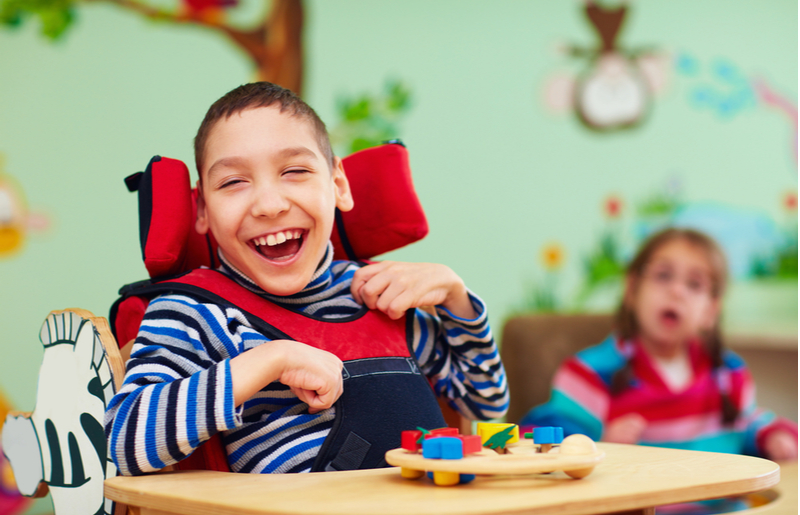
The VCPR is a long-running population-based register and study of cerebral palsy in Victoria.
Founded in 1987, the VCPR project involves the collection of health information on people with cerebral palsy who were born, have lived, or have received health services in Victoria from 1970 onwards.
Founded in 1987, the VCPR project involves the collection of health information on people with cerebral palsy who were born, have lived, or have received health services in Victoria from 1970 onwards.
Our purpose
The purpose of the VCPR project is to ensure a sustainable, high-quality, population-based register of Victorians with cerebral palsy and to use this information to contribute to the creation and sharing of knowledge about cerebral palsy in Victoria, nationally, and internationally.
What we do
The VCPR team primarily identifies new cases of cerebral palsy via children’s engagement with The Royal Children’s Hospital (RCH), Monash Children’s Hospital, or the Victorian Paediatric Rehabilitation Service.
After confirming eligibility and obtaining consent from families, we collect demographic, causal, and clinical information on each child from the relevant electronic medical records.
This information forms the basis for our epidemiological and causal research program. In addition, we contribute data to the Australian Cerebral Palsy Register and collaborate on national and international epidemiological projects. The VCPR is also frequently used as a platform to facilitate other cerebral palsy research.
More information
Oceania Academy of Cerebral Palsy and other Childhood-onset Disabilities
Contact us
Victorian Cerebral Palsy Register (VCPR)
The Royal Children's Hospital
50 Flemington Road
Parkville VIC 3052
Australia
Gina Hinwood, Research Assistant
Phone:
show phone number
Email: [email protected]
Information for participants
What does involvement mean?
Involvement of families is greatly valued by VCPR staff and researchers. Families of eligible children are contacted about the project and consent is provided on an opt out basis.
Unless families or individuals with cerebral palsy choose not to be contacted about research opportunities, they may also receive invitations from time to time to participate in suitable projects about cerebral palsy.
Why is participation important?
We are grateful to each participant in the VCPR project. Collection of information about all Victorians with cerebral palsy ensures that:
- Our epidemiologists can monitor Victorian trends in cerebral palsy prevalence, clinical profile, and survival, thereby providing important supportive evidence for the impact of changes in society, pregnancy and delivery, and management of sick newborns.
- Victoria continues to contribute 25% data to the Australian Cerebral Palsy Register. This large national dataset is used for regular epidemiology reports and for research, conference presentations, and peer-reviewed publications about cerebral palsy in Australia and internationally.
- Birth information, genetic test results, brain scans, and clinical data are used to identify the likely causal pathway for each child with cerebral palsy and, consequently, the contribution of various causal pathways and risk factors to the development of cerebral palsy in the Victorian population.
- The VCPR continues to provide substantial support for many other research projects and higher degree students.
- We will use our population dataset to ensure all children in Victoria are appropriately engaged with surveillance programs aimed at preventing secondary impairments such as hip displacement.
How is participant privacy protected?
The Victorian Cerebral Palsy Register fulfils state privacy legislation and is governed by the Human Research Ethics Committee of the Royal Children’s Hospital, Melbourne. Under this ethics oversight, we will never provide a person outside the VCPR team with information about participants without first seeking the consent of the participant or family.
How do we keep in touch?
Periodic newsletters from the VCPR help keep participants abreast of the latest news.
Chief Investigator
Other Investigators
- Dr Sue Reid, Senior Research Officer, Manager, and Data Custodian
- Professor Christine Imms, Neurodisability and Rehabilitation
- Professor Rod Hunt, Neonatal Research
Team members
- Gina Hinwood (Research Assistant)
- Angela Guzys (Research Assistant)
We are very grateful for the support provided to the VCPR by our key partners, funders, and supporters.
Funding
- Victorian Department of Health
- The Cerebral Palsy Alliance Research Foundation
- Cerebral Palsy Australia
- Cerebral Palsy Support Network
- The Lorenzo and Pamela Galli Research Trust
- The Royal Children’s Hospital Research Foundation
- Private donors
Collaborators
A key VCPR collaborator is the Australian Cerebral Palsy Register group.
Research outputs
At the end of 2025, VCPR data had been used to support:
- 159 research studies
- 52 higher degree students
Key publications
Smithers-Sheedy H, Goldsmith S, Gibson C, Reid SM, Hansen M, Watson L, Auld M, Badawi N, McIntyre S, ACPR Group . (2026). Simplifying the language in the proposed description of cerebral palsy: Less is more. Dev Med Child Neurol, 68(4), 571 - 572. DOI: 10.1111/dmcn.16420
Reid SM, Hinwood GL, Guzys AT, Hunt RW, Reddihough DS. (2025). Major structural congenital anomalies and causal pathways in people with cerebral palsy. Dev Med Child Neurol, 67(3), 374 - 381. DOI: 10.1111/dmcn.16073
Reid SM, Vendeleur M, Wurzel D, Frayman K, Osowicki J, Crompton K, Baikie G, Antolovich G, Guzys A, Cooper MS. (2025). Respiratory admissions and impact of COVID-19 lockdowns for children with severe cerebral palsy. Dev Med Child Neurol, 67(12), 1582 - 1589. DOI: 10.1111/dmcn.16346
Waight E, McIntyre S, Woolfenden S, Goldsmith S, Reid S, Watson L, Britton PN, Webb A, Hansen M, Badawi N, Smithers-Sheedy H. (2025). Cause-Specific Secular Trends and Prevention Measures of Post-Neonatally Acquired Cerebral Palsy in Victoria and Western Australia 1975-2014: A Population-Based Observational Study. J Paediatr Child Health, 61(3), 424 - 432. DOI: 10.1111/jpc.16760
Reid SM, Hinwood GL, Guzys AT, Hunt RW, Reddihough DS. (2024). Neonatal well-being and timing of brain injury in persons with cerebral palsy born at term or late preterm. Dev Med Child Neurol, 66(7), 892 - 901. DOI: 10.1111/dmcn.15829
Smithers-Sheedy H, Waight E, Goldsmith S, Reid S, Gibson C, Scott H, Watson L, Auld M, Kay F, Wiltshire C, Hinwood G, Webb A, Martin T, Badawi N, McIntyre S, ACPR Group . (2024). Cerebral palsy in Australia: birth prevalence, 1995-2016, and differences by residential remoteness: a population-based register study. Med J Aust, 221(10), 533 - 539. DOI: 10.5694/mja2.52487
Smyth R, Reid SM, Paton K, Guzys AT, Wakefield CE, Amor DJ. (2024). Causation in cerebral palsy: Parental beliefs and associated emotions. Dev Med Child Neurol, 66(2), 258 - 266. DOI: 10.1111/dmcn.15708
Cerebral palsy newsroom
Automated infant movement scoring: from smartphones to screening

CP-Pathfinding: Fitness for Life

NHMRC Ideas Grants to advance childhood treatments and diagnoses
Pain education for children with cerebral palsy (CP)

Tackling cerebral palsy with a strong spirit
Gene discovery in cerebral palsy study
AI technology helps identify cerebral palsy in babies
Orthopaedics Research
Grant to improve mental health outcomes for children with neurodevelopmental disorders
Screen cCMV project

Neurodevelopment Flagship
CP-Achieve – CRE in Cerebral Palsy — 2020–2025 (archived)
Share //