
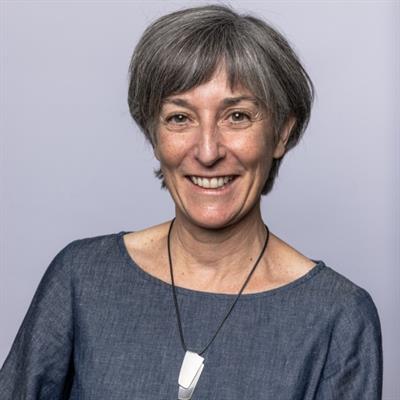
Dr Maree Faux
Dr Maree Faux
Contact
Phone
show phone number
Dr Maree Faux is a biochemist and cancer cell biologist, a Senior Research Officer in the Neuro-oncology Group at Murdoch Children's Research Institute (MCRI) and an Honorary Research Fellow in the Department of Surgery, at the University of Melbourne.
Maree’s research aims to understand the biology and biochemical signalling pathways important in normal cell function and the molecular changes that contribute to cancer. Maree’s work has included the discovery of scaffolding complexes that anchor protein kinases and phosphatases to specific subcellular locations and understanding of how truncation of APC in colon tumours affects fundamental cellular processes. She is currently coordinating the developmental biology and cancer research activities in the Neuro-oncology Group. Her research aims to discover new transcriptional regulatory mechanisms and characterise these at the molecular and genomic level in normal development and in childhood cancer.
Over the course of her career, Maree has developed expertise in protein biochemistry and cancer cell biology and has made significant contributions to her field. She is passionate about research discovery and has continually pursued innovative ideas by developing and implementing new procedures to address research question. She is committed to nurturing talent and developing careers through mentoring and supervision of students and colleagues.
Maree’s research aims to understand the biology and biochemical signalling pathways important in normal cell function and the molecular changes that contribute to cancer. Maree’s work has included the discovery of scaffolding complexes that anchor protein kinases and phosphatases to specific subcellular locations and understanding of how truncation of APC in colon tumours affects fundamental cellular processes. She is currently coordinating the developmental biology and cancer research activities in the Neuro-oncology Group. Her research aims to discover new transcriptional regulatory mechanisms and characterise these at the molecular and genomic level in normal development and in childhood cancer.
Over the course of her career, Maree has developed expertise in protein biochemistry and cancer cell biology and has made significant contributions to her field. She is passionate about research discovery and has continually pursued innovative ideas by developing and implementing new procedures to address research question. She is committed to nurturing talent and developing careers through mentoring and supervision of students and colleagues.
Dr Maree Faux is a biochemist and cancer cell biologist, a Senior Research Officer in the Neuro-oncology Group at Murdoch Children's Research Institute (MCRI) and an Honorary Research Fellow in the Department of Surgery, at the University of...
Dr Maree Faux is a biochemist and cancer cell biologist, a Senior Research Officer in the Neuro-oncology Group at Murdoch Children's Research Institute (MCRI) and an Honorary Research Fellow in the Department of Surgery, at the University of Melbourne.
Maree’s research aims to understand the biology and biochemical signalling pathways important in normal cell function and the molecular changes that contribute to cancer. Maree’s work has included the discovery of scaffolding complexes that anchor protein kinases and phosphatases to specific subcellular locations and understanding of how truncation of APC in colon tumours affects fundamental cellular processes. She is currently coordinating the developmental biology and cancer research activities in the Neuro-oncology Group. Her research aims to discover new transcriptional regulatory mechanisms and characterise these at the molecular and genomic level in normal development and in childhood cancer.
Over the course of her career, Maree has developed expertise in protein biochemistry and cancer cell biology and has made significant contributions to her field. She is passionate about research discovery and has continually pursued innovative ideas by developing and implementing new procedures to address research question. She is committed to nurturing talent and developing careers through mentoring and supervision of students and colleagues.
Maree’s research aims to understand the biology and biochemical signalling pathways important in normal cell function and the molecular changes that contribute to cancer. Maree’s work has included the discovery of scaffolding complexes that anchor protein kinases and phosphatases to specific subcellular locations and understanding of how truncation of APC in colon tumours affects fundamental cellular processes. She is currently coordinating the developmental biology and cancer research activities in the Neuro-oncology Group. Her research aims to discover new transcriptional regulatory mechanisms and characterise these at the molecular and genomic level in normal development and in childhood cancer.
Over the course of her career, Maree has developed expertise in protein biochemistry and cancer cell biology and has made significant contributions to her field. She is passionate about research discovery and has continually pursued innovative ideas by developing and implementing new procedures to address research question. She is committed to nurturing talent and developing careers through mentoring and supervision of students and colleagues.
Top Publications
- Faux, MC, Ma, C, Kane, SR, Samson, A, Hirokawa, Y, Priebe, I, Cosgrove, L, Singh, R, Christie, M, Brown, G, et al. Pyrvinium Pamoate and BCL-XL Inhibitors Act Synergistically to Kill Patient-Derived Colorectal Adenoma Organoids. Organoids 4(3) : 15 2026 view publication
- Frank, D, Bergamasco, M, Mlodzianoski, MJ, Kueh, A, Tsui, E, Hall, C, Kastrappis, G, Voss, AK, McLean, C, Faux, M, et al. Trabid patient mutations impede the axonal trafficking of adenomatous polyposis coli to disrupt neurite growth. eLife 12: 2026 view publication
- Frank, D, Bergamasco, M, Mlodzianoski, M, Kueh, A, Tsui, E, Hall, C, Kastrappis, G, Voss, AK, McLean, C, Faux, M, et al. Trabid patient mutations impede the axonal trafficking of adenomatous polyposis coli to disrupt neurite growth. 2026 view publication
- Tan, CW, Zhu, R, Kane, SR, Au, M, Zhang, X, Hirokawa, Y, Faux, MC, Burgess, AW. ErbB Receptor Stimulation Is Required for Mouse Colon Adenoma Organoids to Form Crypts. 2026 view publication
- Corona, SP, Walker, F, Weinstock, J, Lessene, G, Faux, M, Burgess, AW. Dual Drug Targeting to Kill Colon Cancer Cells. 2026 view publication
Page 1 of 11
Career information
Share //