
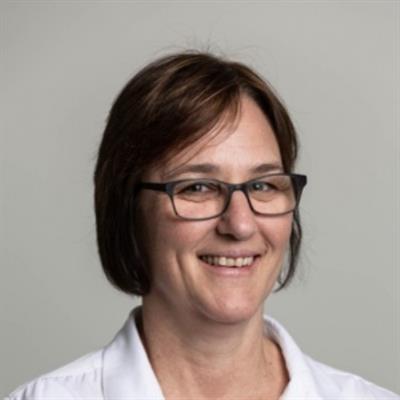
A/Prof Shireen Lamande
A/Prof Shireen Lamande
Details
Role
Princ Res Fellow, Lead, Bone & Cartilage
Research area
Stem Cell Medicine
Group
Blood Development
Associate Professor Shireen Lamande is a Principal Research Fellow and Lead, Bone & Cartilage in the Blood Development group at the Murdoch Children’s Research Institute (MCRI), a University of Melbourne Principal Fellow and an Associate Investigator with the Novo Nordisk Foundation Center for Stem Cell Medicine, reNEW.
A/Professor Lamande has over 30 years’ experience studying human skeletal development and correct bone, cartilage, joint and muscle function, which are determined by complex interactions between developmental signalling pathways.
Her lab has developed new protocols to differentiate induced pluripotent stem cells into cartilage and bone cells, to model these systems and functions.
They use these lab-grown cartilage and bone cells to understand the molecular basis of bone, cartilage and joint disorders to improve diagnosis, as well identify new therapeutic targets and test new treatments to ultimately improve the quality of life for children with these debilitating conditions. This includes collaborating with genetic counsellors to ensure that there is support for the families of these children.
A/Professor Lamande was recently awarded an NHMRC Ideas grant and published a novel protocol for developing and growing long bones in a laboratory setting in PNAS (Proceedings of the National Academy of Sciences of the USA).
Shireen chairs the Melbourne Children’s Institutional Biosafety Committee, sits on the Melbourne Children’s Graduate Research Committee and has chaired and participated in more than 30 PhD Advisory Committees
A/Professor Lamande has over 30 years’ experience studying human skeletal development and correct bone, cartilage, joint and muscle function, which are determined by complex interactions between developmental signalling pathways.
Her lab has developed new protocols to differentiate induced pluripotent stem cells into cartilage and bone cells, to model these systems and functions.
They use these lab-grown cartilage and bone cells to understand the molecular basis of bone, cartilage and joint disorders to improve diagnosis, as well identify new therapeutic targets and test new treatments to ultimately improve the quality of life for children with these debilitating conditions. This includes collaborating with genetic counsellors to ensure that there is support for the families of these children.
A/Professor Lamande was recently awarded an NHMRC Ideas grant and published a novel protocol for developing and growing long bones in a laboratory setting in PNAS (Proceedings of the National Academy of Sciences of the USA).
Shireen chairs the Melbourne Children’s Institutional Biosafety Committee, sits on the Melbourne Children’s Graduate Research Committee and has chaired and participated in more than 30 PhD Advisory Committees
Associate Professor Shireen Lamande is a Principal Research Fellow and Lead, Bone & Cartilage in the Blood Development group at the Murdoch Children’s Research Institute (MCRI), a University of Melbourne Principal Fellow and an Associate...
Associate Professor Shireen Lamande is a Principal Research Fellow and Lead, Bone & Cartilage in the Blood Development group at the Murdoch Children’s Research Institute (MCRI), a University of Melbourne Principal Fellow and an Associate Investigator with the Novo Nordisk Foundation Center for Stem Cell Medicine, reNEW.
A/Professor Lamande has over 30 years’ experience studying human skeletal development and correct bone, cartilage, joint and muscle function, which are determined by complex interactions between developmental signalling pathways.
Her lab has developed new protocols to differentiate induced pluripotent stem cells into cartilage and bone cells, to model these systems and functions.
They use these lab-grown cartilage and bone cells to understand the molecular basis of bone, cartilage and joint disorders to improve diagnosis, as well identify new therapeutic targets and test new treatments to ultimately improve the quality of life for children with these debilitating conditions. This includes collaborating with genetic counsellors to ensure that there is support for the families of these children.
A/Professor Lamande was recently awarded an NHMRC Ideas grant and published a novel protocol for developing and growing long bones in a laboratory setting in PNAS (Proceedings of the National Academy of Sciences of the USA).
Shireen chairs the Melbourne Children’s Institutional Biosafety Committee, sits on the Melbourne Children’s Graduate Research Committee and has chaired and participated in more than 30 PhD Advisory Committees
A/Professor Lamande has over 30 years’ experience studying human skeletal development and correct bone, cartilage, joint and muscle function, which are determined by complex interactions between developmental signalling pathways.
Her lab has developed new protocols to differentiate induced pluripotent stem cells into cartilage and bone cells, to model these systems and functions.
They use these lab-grown cartilage and bone cells to understand the molecular basis of bone, cartilage and joint disorders to improve diagnosis, as well identify new therapeutic targets and test new treatments to ultimately improve the quality of life for children with these debilitating conditions. This includes collaborating with genetic counsellors to ensure that there is support for the families of these children.
A/Professor Lamande was recently awarded an NHMRC Ideas grant and published a novel protocol for developing and growing long bones in a laboratory setting in PNAS (Proceedings of the National Academy of Sciences of the USA).
Shireen chairs the Melbourne Children’s Institutional Biosafety Committee, sits on the Melbourne Children’s Graduate Research Committee and has chaired and participated in more than 30 PhD Advisory Committees
Top Publications
- Shu, CC, Zaki, S, Blaker, C, Smith, SM, Burkhardt, D, Kung, L, Rowley, L, Sampurno, L, Elefanty, AG, Bateman, JF, et al. 672 Human iPSC-derived superficial-zone, deep-zone or hybrid chondrocyte organoids for osteochondral defect repair – first in-vivo study in rat. Osteoarthritis and Cartilage 33: s463 -s464 2025 view publication
- Lamandé, SR, Ng, ES, Cameron, TL, Kung, LHW, Sampurno, L, Rowley, L, Lilianty, J, Patria, YN, Stenta, T, Hanssen, E, et al. Modeling human skeletal development using human pluripotent stem cells.. Proc Natl Acad Sci U S A 120(19) : e2211510120 2023 view publication
- Yeung, C-YC, Olesen, AT, Wilson, R, Lamandé, SR, Bateman, JF, Svensson, RB, Magnusson, SP, Kjaer, M. Proteome profiles of intramuscular connective tissue: influence of aging and physical training.. J Appl Physiol (1985) 134(5) : 1278 -1286 2023 view publication
- Yammine, KM, Mirda Abularach, S, Sampurno, L, Bateman, JF, Lamandé, SR, Shoulders, MD. Using CRISPR/Cas9 to generate a heterozygous COL2A1 p.R719C iPSC line (MCRIi019-A-6) model of human precocious osteoarthritis.. Stem Cell Res 67: 103020 2023 view publication
- Blank, M, McGregor, NE, Rowley, L, Kung, LHW, Crimeen-Irwin, B, Poulton, IJ, Walker, EC, Gooi, JH, Lamandé, SR, Sims, NA, et al. The effect of carbamazepine on bone structure and strength in control and osteogenesis imperfecta (Col1a2 +/p.G610C ) mice.. J Cell Mol Med 26(14) : 4021 -4031 2022 view publication
Page 1 of 22
Career information
Share //