Automated infant movement scoring: from smartphones to screening
- Project status: Active
Research area: Clinical Sciences > Developmental Imaging

Using AI to help detect motor disability earlier, so children get help sooner
Our project will develop new AI models to analyse infant movements from smartphone video, aiming to identify early signs of motor disability, such as cerebral palsy, and enable earlier diagnosis and support for children and improve outcomes for patients and their families.
Our project will develop new AI models to analyse infant movements from smartphone video, aiming to identify early signs of motor disability, such as cerebral palsy, and enable earlier diagnosis and support for children and improve outcomes for...
Our project will develop new AI models to analyse infant movements from smartphone video, aiming to identify early signs of motor disability, such as cerebral palsy, and enable earlier diagnosis and support for children and improve outcomes for patients and their families.
The challenge
Cerebral palsy is the most common cause of physical disability in children, yet early detection remains a major challenge.
In the first few months of life, changes in the appearance or timing of an infant’s movements can be early warning signs of cerebral palsy. However, fewer than half of babies with cerebral palsy have identifiable risk factors at birth, and only one in five are diagnosed within the first six months of life. As a result, many children miss the window when intervention is most effective.
While current clinical assessments are highly accurate, they rely on specialised expertise, are difficult to scale, and are typically delivered through tertiary healthcare services. Long wait times and limited access mean many families experience prolonged uncertainty before receiving answers.
There is an urgent need for accessible, scalable tools that support early identification of motor disability, regardless of geography or socioeconomic background.
Our approach
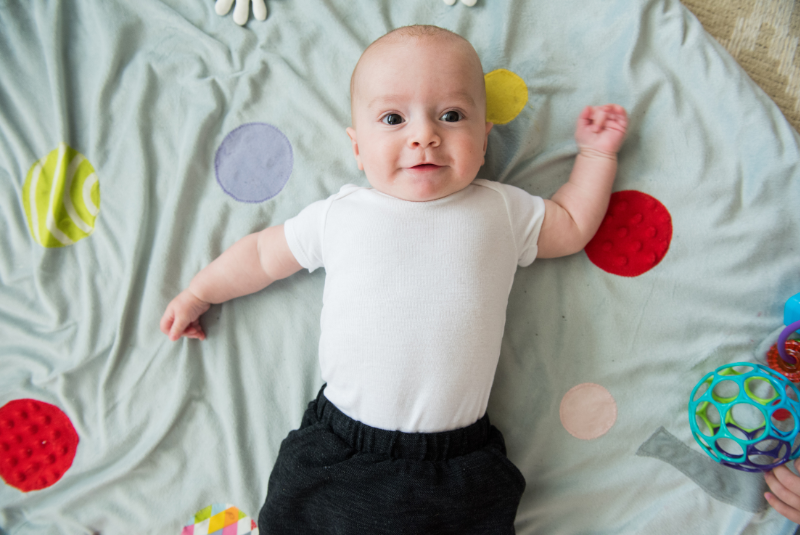
We apply artificial intelligence (AI) models to analyse short smartphone videos of infants at three months of age, identifying subtle movement patterns associated with cerebral palsy.
Using advanced computer vision techniques and large‑scale infant video data accessed through GenV, this project will develop the technical foundations required for screening at population scale. The approach is designed to support early identification outside specialist settings, improving access to screening and reducing delays in diagnosis.
Our impact
By enabling earlier detection at scale, this work aims to accelerate pathways to intervention and improve outcomes for children and their families, while also strengthening understanding of how early movement patterns relate to later development.
Our project aims to:
- Improve health and developmental outcomes for children
- Reduce diagnostic delays and uncertainty for families
- Support more timely and targeted interventions
- Lower long‑term healthcare and disability‑related costs.
Key researchers
- Associate Professor Gareth Ball, Research Lead & Principal Research Fellow, Developmental Imaging
- Dr Elyse Passmore, Clinical Scientist Fellow, Developmental Imaging
Funding
This project is currently seeking funding.
Collaborations
This project brings together experts in paediatric neurology, artificial intelligence and computer vision, population health and data science, and clinical screening and early intervention, with key collaborations providing access to large‑scale infant datasets through GenV.
Publications
Passmore E, Kwong AL, Greenstein S, Olsen JE, Eeles AL, Cheong JLY, Spittle AJ, Ball G. Automated identification of abnormal infant movements from smart phone videos. PLOS Digit Health. 2024 Feb 22;3(2):e0000432. doi: 10.1371/journal.pdig.0000432. PMID: 38386627; PMCID: PMC10883563.
More information
- MCRI News - AI technology helps identify cerebral palsy in babies, 2024
- RCH News - Champions for Children: Meet Elyse Passmore
Contact us
For more information on this study, please contact us.
A/Prof Gareth Ball, Principal Research Fellow, Developmental Imaging
Email:
show email address
Dr Elyse Passmore, Clinician-Scientist Fellow, Developmental Imaging
Email:
show email address
Cerebral palsy newsroom
CP-Pathfinding: Fitness for Life

NHMRC Ideas Grants to advance childhood treatments and diagnoses

Pain education for children with cerebral palsy (CP)

Tackling cerebral palsy with a strong spirit
Gene discovery in cerebral palsy study
AI technology helps identify cerebral palsy in babies
Orthopaedics Research
Grant to improve mental health outcomes for children with neurodevelopmental disorders
Screen cCMV project

Neurodevelopment Flagship
CP-Achieve – CRE in Cerebral Palsy — 2020–2025 (archived)

New project to improve health and well-being of young people with cerebral palsy

Share //