Intergenerational Health
Partnering with communities to understand trauma and strengthen future generations.
Our vision & purpose
We’re working towards a more equitable, inclusive world where children, families and communities experience safety, belonging and opportunities for growth.
The Intergenerational Health group aims to improve the health and wellbeing of children, young people and families.
We focus on generating and translating knowledge to promote resilience and break intergenerational cycles of trauma, family violence and social inequity.
Key research focus
We have three main areas of focus:
- Lived experience: building a greater understanding of the causes and consequences of intergenerational trauma at a population level, and within Aboriginal and Torres Strait Islander, migrant and refugee background communities.
- Strengthening the capacity of policy, workforce and systems to provide culturally safe and trauma responsive care to families and communities.
- Knowledge into action: working in partnership with communities, workforce and policy makers to create and translate knowledge into action to promote resilience and address the causes and impacts of intergenerational trauma, family violence and social inequity.
We collaborate with a diverse range of health services and community-based agencies, including primary care services, public hospitals, early childhood services, Aboriginal community organisations and refugee advocacy and settlement services.
Intergenerational Health group initiatives
Stronger Futures Centre of Research Excellence
We established and co-lead the Stronger Futures Centre of Research Excellence, Australia’s first national collaborative centre working with Aboriginal and Torres Strait Islander communities and communities of refugee background to break intergenerational cycles of trauma and social inequity.
Visit the Stronger Futures website
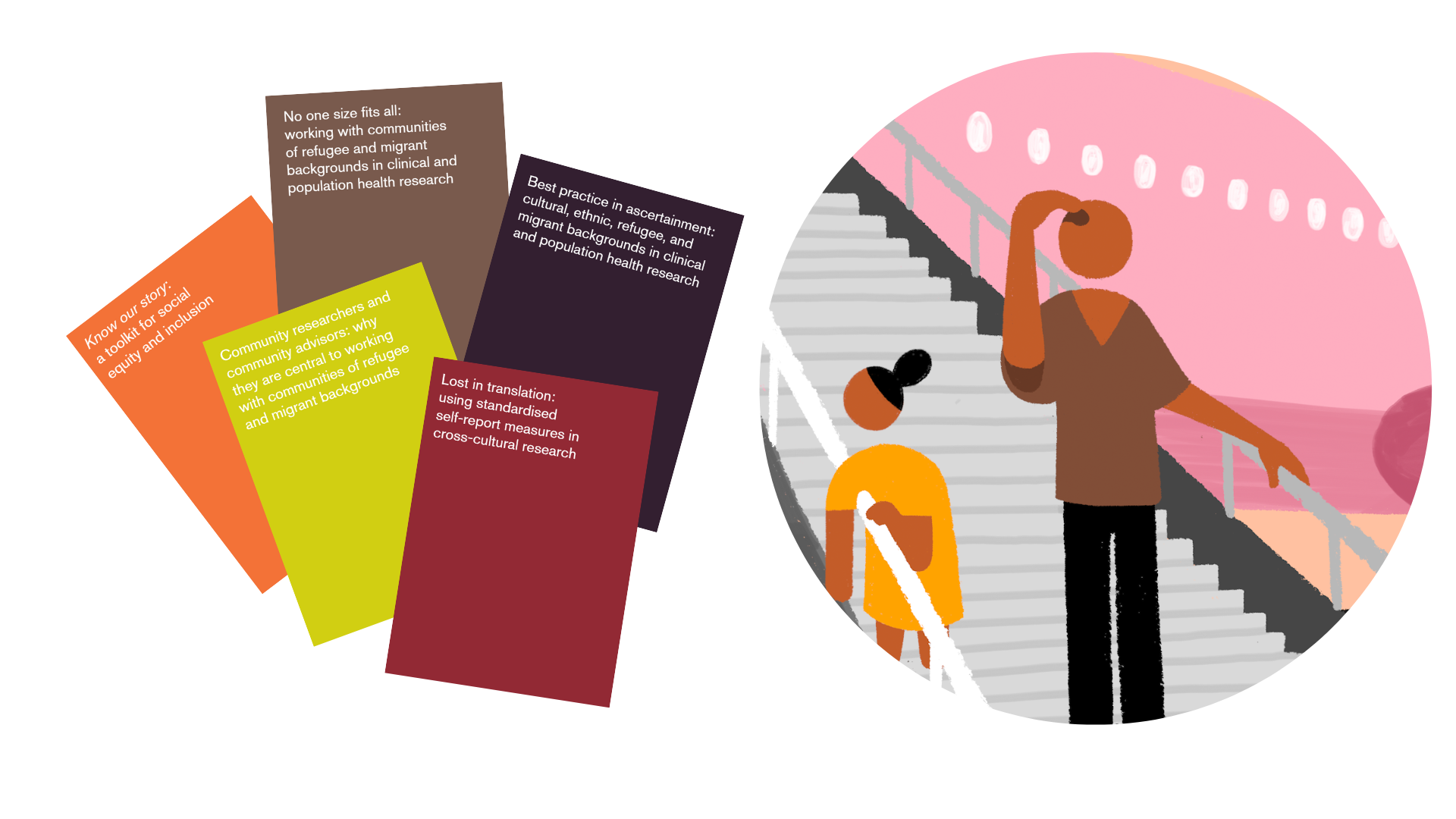
Know Our Story: a toolkit for social equity and inclusion
The Know Our Story initiative aims to inspire, encourage and support clinical and public health researchers to work towards greater inclusion of culturally diverse populations in research.
The toolkit includes five resources available online and an animation. The five resources cover topics such as best practice approaches to consultation, collaboration, and working with community advisors and community researchers to co-design approaches to research.
Watch to find out more about 'Know Our Story'
Animation directed and animated by Darcy Prendergast, audio by Ben Matthews. Production company Oh Yeah Wow. Characters developed and voiced by members of the Intergenerational Health group.
Group Leaders

Team Leaders


Group Members





Our projects
Aboriginal Families Study
The Aboriginal Families Study is a prospective mother and child cohort study investigating the health and wellbeing of 344 Aboriginal children and their mothers living in urban, regional and remote areas of South Australia.
The study was developed in response to gaps in the evidence available to inform health policy and services and was preceded by extensive consultation with Aboriginal communities and services in South Australia.
Major areas of focus include maternal health and wellbeing; children's health; wellbeing and development; engagement with health services; and connections to family, community, culture and language.
Read more...
Childhood Resilience Study
Despite the growing interest in resilience, there are few resilience measures for children. We have developed the first multi-domain, socially inclusive measure of childhood resilience, co-designed with Aboriginal and refugee background communities.
Extensive community consultation and engagement identified resilience factors that were not evident in existing published literature.
We are using the Childhood Resilience Questionnaire to help us understand what is important for children to grow up strong in families experiencing multiple challenges such as poverty, racism, intergenerational trauma and family violence.
Read more...
Family Foundations Evaluation Study
Family Foundations is a family-based intervention that focuses on the critical early years of children’s lives and engages all parents/caregivers in the family. The study focuses on strengthening the skills needed to navigate stressful life circumstances and minimise the impact they can have on mental health and family relationships.
In partnership with Professor Mark Feinberg (Penn State University) and community health partners, we are evaluating the implementation of Family Foundations in Australia. The knowledge generated by this project will contribute to improved opportunities for the effective provision of mental health care to families during crises and hardship.
Read more...
Mothers' and Young People's Study
The Mothers' and Young People's Study is a multi-wave, prospective cohort study initially designed to investigate women's health after childbirth.
Over time, the study has expanded to include an investigation of children's and young people's health and wellbeing and the extent to which mothers' and children's health are inextricably linked. Evidence from the study on the impact of the COVID-19 pandemic on young people’s mental health informed the Victorian Government’s response during and in the aftermath of the pandemic.
Over 1,500 women were recruited to the study from six Melbourne metropolitan hospitals between 2003-2005. We have recently completed follow-up of mothers and young people as the young people in the study turn 18 years of age.
Read more...
Working Out Dads Project
Working Out Dads is an innovative six-week group-based peer support program for fathers of young children experiencing mental health difficulties and significant life stress.
We are conducting a randomised trial to test the effectiveness and cost-effectiveness of the Working Out Dads intervention in reducing fathers’ mental health difficulties in early parenthood.
Read more...Our Stories
The Our Stories study aims to hear the stories of young people who have experienced challenges during childhood or adolescence.
The study explores how a variety of challenges such as the death or illness of a family member, experiences of family and community violence, and discrimination based on race, ethnicity or sexual identity affect health, wellbeing, and relationships in young adult life.
More on Our Stories (Stronger Futures)
Completed projects
Bridging the Gap: Partnerships for change in refugee child and family health
The Bridging the Gap partnership brought together health service clinicians and managers, policy makers and researchers to co-design, implement and evaluate sustainable improvements in the quality of maternity and early childhood health care for families of refugee background. Bridging the Gap included initiatives to:
- increase access to professional interpreters for women during labour
- increase identification of families of refugee background in public hospitals and maternal and child health services
- co-design and trial a new model of group pregnancy care for Karen women from Burma.
Evaluation included the use of interrupted time series design to examine health service use and maternal and child health outcomes over a 3-year period of implementation.
Iterative Plan-Do-Study-Act cycles were used to support program design and implementation, within the constraints of existing resources.
Group Pregnancy Care Study
Group Pregnancy Care is an innovative model of antenatal care co-designed with communities of refugee background, health services and community organisations. The Group Pregnancy Care program aims to create culturally safe places for women to connect and access information, care, and support in their own language.
Formative evaluation has been conducted in collaboration with Foundation House and health services providing care to families of refugee background in Melbourne’s west and northern suburbs.
More on Group Pregnancy Care (Stronger Futures)
Listening to What Matters
Listening to What Matters aimed to understand the experiences of families of refugee background and the health professionals caring for them during pregnancy and early parenthood during the COVID-19 pandemic.
More on Listening to What Matters (Stronger Futures)
Making Sense of the Unseen: Understanding Women’s Experiences of Suicidality in the Perinatal Period
Although women are usually in frequent contact with health services during pregnancy and the following year, suicide is a leading cause of maternal death in Australia and other high-income countries.
Despite this, there has been very little research exploring women’s experiences of suicidality at this stage of their lives. Making Sense of the Unseen addresses this important gap in our knowledge.
More on Making Sense of the Unseen (Stronger Futures)
Strong Families Strong Babies Study
This project aimed to co-design and evaluate innovative practice changes to reorient maternity and early childhood services to support women and families.
The Strong Families Strong Babies partnership developed two practice change initiatives: the Strong Families Strong Babies Pregnancy and Postnatal Support Group for Punjabi-speaking women, and an initiative focused on removing system-level barriers to quality interpreter services generated in collaboration with the Matu-speaking Chin community advisory group.
More on Strong Families Strong Babies Study (Stronger Futures)
Working Together to Make Pregnancy Safer
Some women and families are more likely to experience stillbirth than others, including women of The Working Together to Make Pregnancy Safer project has developed culturally appropriate stillbirth prevention resources in women’s preferred languages for use in Australian maternity settings.
We also contributed to creation of online professional development for health professionals and interpreters working with women and families of refugee and migrant backgrounds during pregnancy.
More on Working Together to Make Pregnancy Safer (Stronger Futures)
Funding
- National Health and Medical Research Council (NHMRC)
- Medical Research Future Fund (MRFF)
- North Western Melbourne Primary Health Network
- Commonwealth Department of Health
- Victorian Department of Health
- The Royal Children’s Hospital Foundation
- Eisen Foundation
- Oak Foundation
Collaborations
- Aboriginal Communities and Families Health Research Alliance
- Aboriginal Health Council of South Australia Ltd
- Ballarat and District Aboriginal Health Co-operative
- Berry Street
- Clothing the Gaps Foundation
- Deakin University
- Drummond Street Family Services
- Foundation House (Victorian Foundation for Survivors of Torture and Trauma)
- Garra Kombrook (Victorian Aboriginal Health Service)
- Judith Lumley Centre, La Trobe University
- McMaster University, Canada
- Melton Maternal and Child Health Service
- Merri Health
- Orygen
- Queensland Program of Assistance to Survivors of Torture and Trauma (QPASTT)
- Safe Pathways to Healing Sexual Assault Prevention Working Group
- Safer Families Centre of Research Excellence
- South Australian Health and Medical Research Institute
- Stillbirth Centre of Research Excellence
- Stronger Futures Centre of Research Excellence
- Tweddle Child and Family Health Service
- Trinity College, Dublin, Ireland (MAMMI Study)
- University of Birmingham, UK
- The University of Melbourne
- University of Western Australia
- VICSEG New Futures
- Victorian Aboriginal Child Care Agency (VACCA)
- Victorian Aboriginal Community Controlled Health Organisation (VACCHO)
- Wadja Aboriginal Family Place, The Royal Children’s Hospital
- Western Health
- Yoowinna Wurnalung Aboriginal Healing Service
Featured publications
Preventing mental health problems in mothers with a history of childhood abuse through reducing their risk of intimate partner violence: A causal mediation analysis in an Australian pregnancy cohort. Gartland et al., Child Abuse Negl. 2025 Dec;170:107703.
Physical and mental health of women exposed to intimate partner violence in the 10 years after having their first child: an Australian prospective cohort study of first-time mothers. Brown et al., BMJ Open. 2020 Dec 21;10(12):e040891.
Understanding cannabis use and mental health difficulties in context with women's experiences of stressful events and social health issues in pregnancy: The Aboriginal Families Study. Mensah et al., .Comprehensive Psychiatry. 2024 May;131:152455.
Mapping Aboriginal children’s social and emotional wellbeing: Development and validation of a new tool in an Aboriginal cohort study. Nikolof et al., First Nations Health and Wellbeing - The Lowitja Journal, 2025; 3.
Development and validation of a multidimensional, culturally and socially inclusive Child Resilience Questionnaire (parent/caregiver report) to measure factors that support resilience: a community-based participatory research and psychometric testing study in Australia. Gartland et al., .BMJ Open. 2022 Jun 20;12(6):e061129.
Get the latest at MCRI
COVID-19 booster strategies provide lasting immunity
Exploring the future of child health through art and science
Australia’s first guidelines to target high blood pressure in children
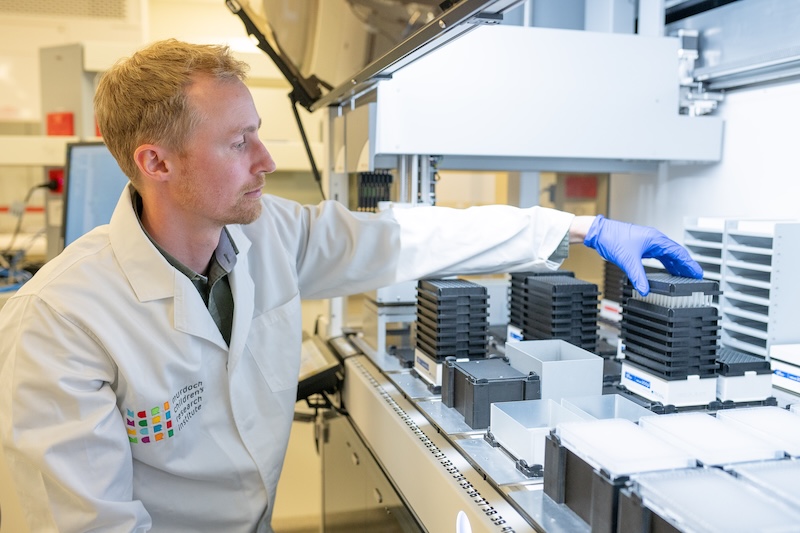
MCRI receives stem cell medicine grant to advance drug discovery
Introducing our 2025 Annual Report
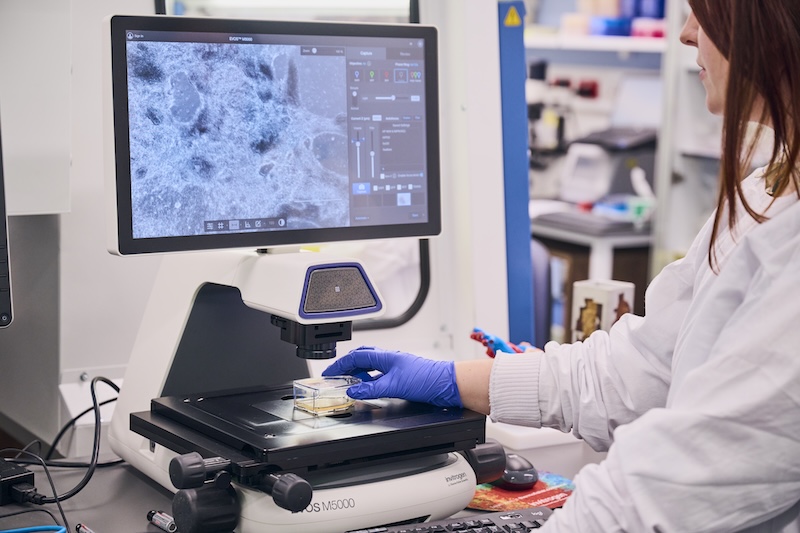
Children at centre of stem cell research decisions with MRFF grant

Vale Patricia Ilhan
Genomic tool highly effective at detecting rare disease diagnoses

Social media use linked to poorer mental health in early adolescence
Safety concerns biggest barrier to vaccination

Accelerating recovery for children with concussion
Early lung damage mapped in children with cystic fibrosis