Decoding Broken Hearts
- Project status: Active
Research area: Stem Cell Medicine > Heart Regeneration
Decoding Broken Hearts project
A collaboration between MCRI and Gladstone Institutes in San Francisco, utilising stem cell technology and artificial intelligence to understand and treat the underlying causes of childhood heart disease.
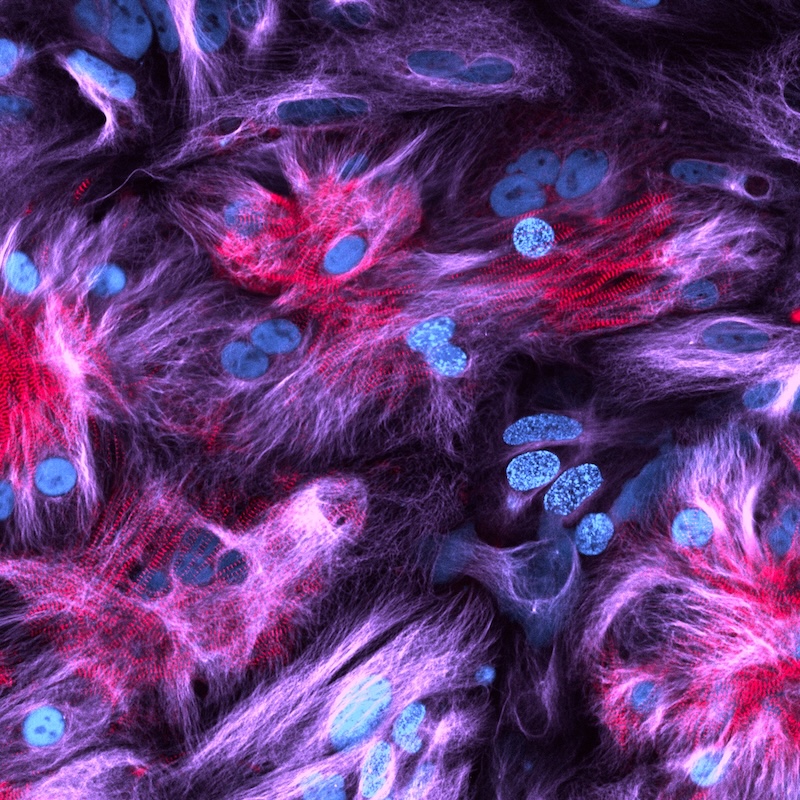
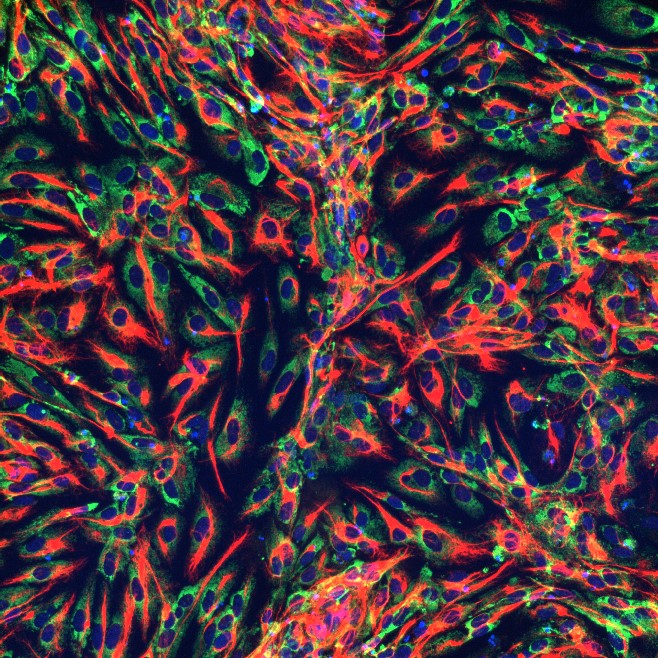
Image: Proliferation (blue) of heart muscle cells (red) in a stem cell derived 2D cardiac model.
Image credit: Dr Frankie Butera and Rachel Morris (Heart Regeneration and Disease Groups, Prof Enzo Porrello and Prof David Elliott).
A collaboration between MCRI and Gladstone Institutes in San Francisco, utilising stem cell technology and artificial intelligence to understand and treat the underlying causes of childhood heart disease.
Image: Proliferation (blue) of heart muscle...
A collaboration between MCRI and Gladstone Institutes in San Francisco, utilising stem cell technology and artificial intelligence to understand and treat the underlying causes of childhood heart disease.
Image: Proliferation (blue) of heart muscle cells (red) in a stem cell derived 2D cardiac model.
Image credit: Dr Frankie Butera and Rachel Morris (Heart Regeneration and Disease Groups, Prof Enzo Porrello and Prof David Elliott).
The challenge
Heart disease is one of the most common serious health conditions affecting children, occurring in up to one in 100 births. It includes congenital heart defects and disorders of the heart muscle, both of which impair the heart’s ability to pump blood effectively. In severe cases, these conditions progress to heart failure, a life‑threatening stage where the heart can no longer meet the body’s needs.
Current treatments do not address the underlying cause of disease and offer only temporary relief. For children with end‑stage heart failure, heart transplantation is the only option. Yet transplantation is not a cure, donor organs are scarce, and children face lifelong immunosuppression, frequent hospitalisation, reduced quality of life and poor long‑term survival.
We urgently need new therapies that prevent progression to heart failure and improve outcomes for children.
Purpose of our research
For children with heart failure, treatment options are limited:
- Heart transplants are constrained by donor availability.
- Transplant recipients face poor medium-to-long-term survival rates.
- Lifelong immunosuppression diminishes quality of life.
A new path forward
We have established a global partnership with the Gladstone Institute to leverage world‑class expertise in children’s health, computational biology and stem cell medicine to accelerate the development of precision therapies for childhood heart disease.
This collaboration aims to transform treatment for kids by identifying the molecular pathways that predict patient outcomes and tailoring therapies to each child’s unique biology.
Our approach combines cutting‑edge stem cell technologies with advanced computational analysis to uncover the mechanisms driving heart disease. Using artificial intelligence, we analyse large patient datasets to understand how dysregulated genes contribute to disease progression. By mapping these gene pathways, we can design and test targeted interventions that prevent heart failure before it occurs.
With donor support, we will accelerate this international effort and advance the development of novel therapies that can change the future for children living with heart disease.
Study details
The Decoding Broken Hearts initiative leverages two technologies:
- MCRI's advanced stem cell technologies: Building on their pioneering 2017 breakthrough, MCRI researchers can now produce thousands of “miniature” human heart tissues from stem cells weekly. These 3D models accurately mimic the human heart in laboratory conditions, enabling unprecedented experimentation at scale.
- Gladstone Institutes' AI capabilities: Cutting-edge artificial intelligence systems analyse the enormous datasets generated by stem cell experiments to identify the underlying causes of heart disease and predict how individual patients might respond to specific therapies.
Collaborative approach
The success of the Decoding Broken Hearts initiative is driven by an international research team.
Funding
- Novo Nordisk Foundation Center for Stem Cell Medicine, reNEW
- Philanthropic support
Contact us
Dr Adam Piers, Program Manager
Email:
show email address
Heart disease newsroom

From checkout to children’s heart research

MCRI’s 40th Anniversary Gala celebrates four decades of discovery

Multi-pronged plan to address childhood obesity crisis

Accelerating discoveries into genetic and childhood heart diseases
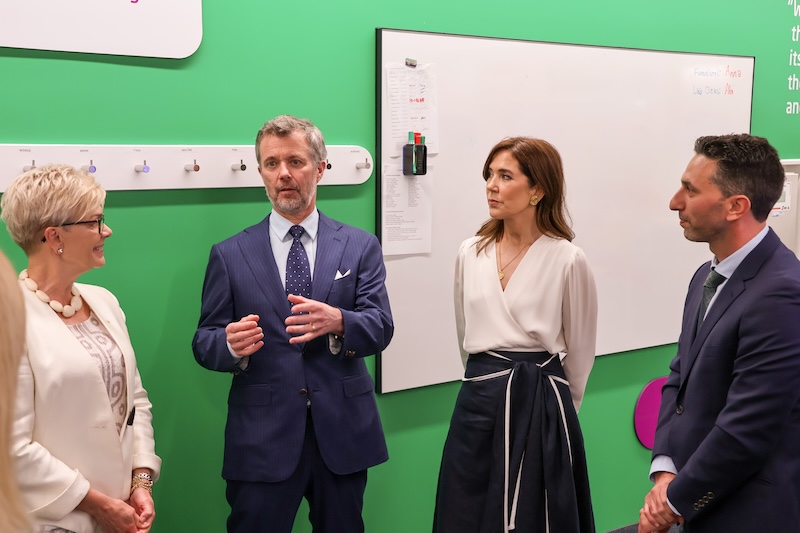
Denmark’s Queen Mary and King Frederik tour MCRI

New biotech company to accelerate treatments for heart disease

Celebrating Australian excellence across the arts and sciences

Artwork from the heart

Heart Foundation Future Leader fellowship for Dr Holly Voges
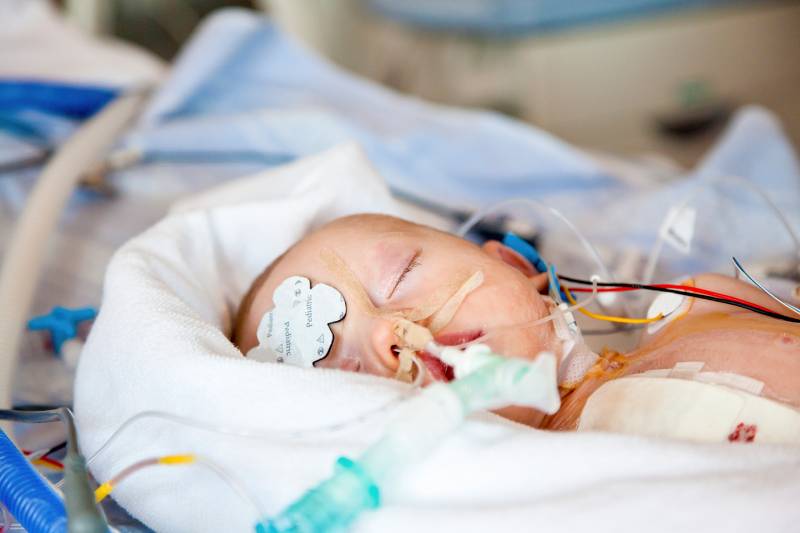
Infant and family wellbeing after cardiac surgery: life as a pre-schooler

Old mates come together for MCRI
Studying rheumatic heart disease in a dish

Share //